Posted on — 3 Comments

Glaciers: how they form, types of glaciers, and why glaciers are important

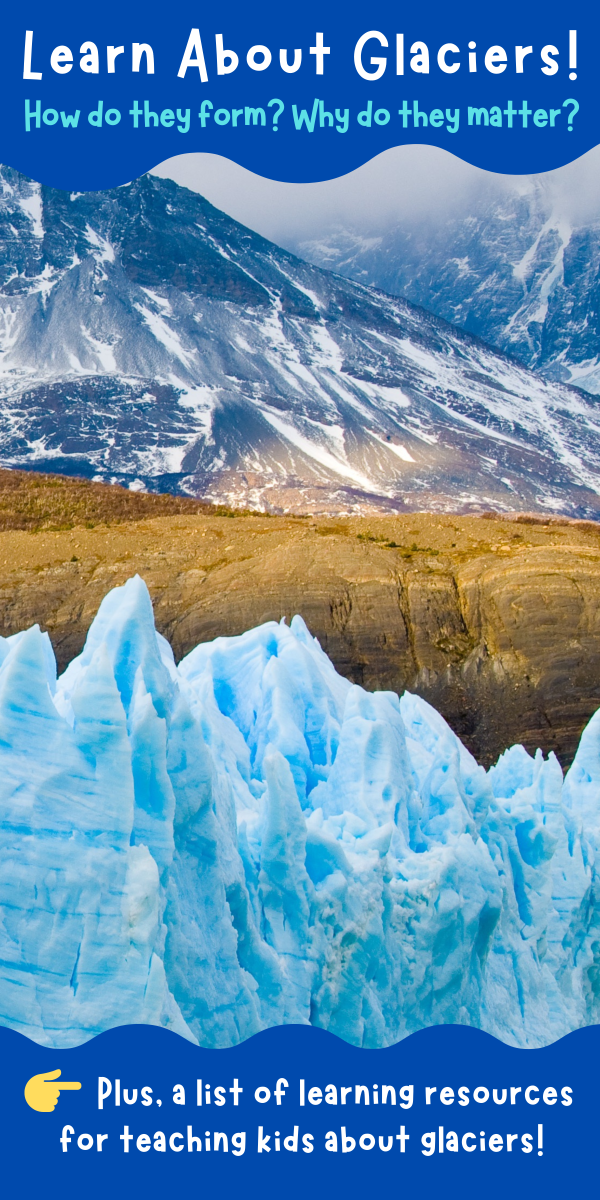
banner advertising a blog post about glaciers: how do the form? why do they matter?

A glacier is a large, dense ice mass made from compacted snow that slowly moves under its own weight over a long period of time. Unlike seasonal snowpack, glacial ice does not fully melt in summer. Although glaciers move slowly, often just centimeters per day, they may cover great distances over many years. There are two types of glaciated landscapes on Earth. Alpine glaciation is found in tall mountains where the high elevation creates cold enough conditions for glaciers to form. Continental glaciation is when glacial ice fully covers a very large area of land โ€“ sometimes an entire continent!

A note for teachers: if you’re teaching glaciology, glacial landscapes, ice ages, or climate change, I think you’ll love the hands-on materials and engaging lessons in my Glaciers Unit. It covers all these topics and more, with activities, research projects, models, and high-quality visuals. Plus, you’ll support this blog with your purchase! ๐Ÿ’™

How does glacial ice form?

Glacial ice begins forming when snowflakes fall and accumulate. Compared to ice, freshly fallen snow has a very low overall water content and is mostly made of air. As snowfall continues, snow compacts under its own weight. The delicate snowflake forms start breaking under the weight of overlying snow. Snowflakes may also recrystallize into more grain-like shapes if they partially thaw and refreeze. These forces reshape the snowflakes into granular snow.

Next, over several winters, additional snowfall buries and compacts the granular snow. Grains become weakly cemented together into firn. There is still air between the individual grains, but less than in granular snow. Over many years, the firn is buried deeper and deeper in snow. The mass of the overlying snow applies great pressure on the firn. This pressure forces more air out and causes the firn to recrystallize into glacial ice.

Glaciers form when the amount of snow that accumulates on the ground in an area is more than the amount of snow that ablates โ€“ or is lost. Glacial ice ablates by melting and calving (breaking off into a body of water and floating away). Year after year, as snow builds up, it compacts and recrystallizes into dense glacial ice. An advancing (growing) glacier accumulates more ice than it ablates. A receding (shrinking) glacier accumulates less ice than it ablates. Glaciers also move downhill due to gravity via basal sliding over bedrock and sediments.

Part of an ice sheet in Antarctica

What are the different types of glaciers?

Valley Glaciers

A valley glacier is a large area of ice confined to a mountain valley. As valley glaciers move down valleys, they carve out many unique landforms. As the ice bends to go around corners or over surfaces with changing slopes crevasses, or cracks, form in the surface of the glacier. Today, you will find valley glaciers in many tall mountain ranges worldwide and even in some high-elevation areas close to the equator! However, many valley glaciers are receding due to our warming climate.

Ice Sheets

Ice sheets are huge areas of ice that cover 50,000 square kilometers or more! Unlike valley glaciers, which move in just one direction, ice sheets spread outward in all directions. Ice sheets cover large parts of continents, or sometimes, entire continents. Today, ice sheets are only found in Antarctica and Greenland. However, during the last glacial maximum, ice sheets also covered large parts of North America and Eurasia. Unlike valley glaciers, ice sheets are not contained within valleys. They may span across and cover entire mountain ranges in a thick layer of ice.

Ice Caps

Ice caps are like miniature ice sheets. They are areas of ice that cover less than 50,000 square kilometers but are not confined to mountain valleys. Ice caps are more common than ice sheets today, and are found in many places, including Iceland, the Andes, and the Himalayas.

Other masses of ice

Ice shelves are parts of glaciers that extend outward over the open ocean or sea. They are still attached to land-based glaciers along an edge. Ice shelves and pieces of ice shelves break off (or โ€œcalveโ€), forming icebergs. Icebergs as well as frozen ocean water form sea ice. Some sea ice melts and reforms each year while some lasts year-round. However, anthropogenic climate change reduces the amount of sea ice that makes it through summers.

Why are glaciers important?

Glacial ice stores almost 70% of the worldโ€™s freshwater! Additionally, rapid anthropogenic (human-caused) climate change causes glaciers to recede at unusually fast rates. This results in sea level rise and harms coastal communities and ecosystems.  Glaciers are also important because they shape the landscape. Furthermore, wildlife live on and around glaciers and sea ice (e.g., glacier finches, penguins) and in landscapes shaped by glaciation (e.g., pikas, Dall sheep).

Scientists who study glaciers are called glaciologists. They measure glacial movement and monitor the recession of many glaciers. Glaciologists study and predict the ways our changing climate affects glaciers. Scientists also learn about past climates by drilling deep into glacial ice and studying ice that formed long ago. The ice deep within some very old glaciers comes from snow that fell hundreds of thousands of years ago! Glacial ice acts as a time capsule, preserving frozen water, gas bubbles, and dust/ash from the time it formed. When scientists study ancient ice, they can learn about past temperatures, atmospheric conditions, volcanic eruptions, and more.

Where can I find glaciers?

Today, you can find alpine glaciation on most continents. However, most glacial ice is found near the poles. In the past, glaciers covered larger areas of land. During the last glacial maximum (the time when the glaciers were largest during the last ice age), ice sheets covered large parts of northern Eurasia and North America.

Teaching a glaciology or glacial landscapes unit?

Check out the Glaciers Unit that I’ve put together! It features tons of my watercolor illustrations of glaciers and the post-glacial landscape! Click below to learn more!


Are you interested in reading more posts like this? Subscribe or follow Wild Earth Lab using the links below!


References and Further Reading

  1. Davies, B. (2022). Ice shelves, icebergs and sea ice. AntarcticGlaciers.org. Available:
  2. NASA (2017). Core questions: An introduction to ice cores. Available: https://www.antarcticglaciers.org/glacier-processes/glacier-types/ice-shelves-sea-ice-icebergs/https://climate.nasa.gov/news/2616/core-questions-an-introduction-to-ice-cores/
  3. National Park Service (2018).Glaciers and Climate Change. Available: https://www.nps.gov/articles/glaciersandclimatechange.htm
  4. National Snow and Ice Data Center (n.d.) Glaciers. University of Colorado Boulder. Available: https://nsidc.org/learn/parts-cryosphere/glaciers
  5. Plummer, C. C., Carlson, D. H., & Hammersley L. (2019). Physical Geology. New York, NY: McGraw-Hill Education. Pg 163-170, 283 – 287

Sharing options and discussion for this post:

Posted on — 3 Comments

12 Pollination Activities for Kids: pollinator lesson ideas to try in your classroom!

photo of a flower anatomy diagram overlaid with the text "10 pollination activities for kids!" and "+ a free flower anatomy worksheet!"

Wild Earth Lab is supported by readers like you. This post includes links to my own products and affiliate products. If you purchase through links on my site, I may earn a small commission at no additional cost to you.

If you’re learning about pollination with your students or kids this school year, try out some of these fun pollination activity ideas in your classroom!

Special note for educators: if you’re planning to teach pollination, you can find all the activity directions, handouts, and printable materials you’ll need in my complete Pollination Unit โ€“ and you will support this blog with your purchase.

1. Insect Vision

A flower that looks fairly plain to the human eye may look completely different through the eyes of an insect! Flower petals sometimes reflect UV and infrared light, which are colors that the human eye cannot see but are visible to some insect pollinators.

Grab a UV marker plus black light set, paper, and regular markers. Start by using a regular marker to draw the outline of a flower and cut it out. Then, create โ€œinvisibleโ€ patterns on the petals with the black light marker. Then shine the black light on your flower to reveal the hidden designs!

A flower that looks fairly plain to the human eye may look completely different through the eyes of an insect!

2. Pollinator Garden

Plant a pollinator garden with native wildflower species to attract pollinators to your yard. Start by researching native wildflower species in your local area. A plant nursery or garden center can be a great place to start, and you can also find seeds online. To further promote pollinator habitat in your yard, you can even build a pollinator hotel!

3. Flower Dissection

Dissect a flower to learn about flower anatomy. Can you find the stamen, carpel, petals, and sepals? Talk about how brightly colored petals can attract pollinators, how stamens spread pollen onto the pollinator’s body or legs, and how carpels have pollen tracked onto them by the pollinators.

Diagram showing the parts of a flower, including the carpel, stamen, pedicel, sepal, petal, and receptacle.
Anatomy of a flower!

4. DIY Flower Anatomy Diagram

Here’s a fun pollination activity idea that’s completely free! I created this free printable flower anatomy coloring activity. You can download and print it from my free resources page. To access the free resources page, simply join my newsletter (you can unsubscribe at any time, but stay subscribed if you’d like my fun science and nature-related activities and more sent to your inbox!)

Freebie found on my free resources page

5. Pollination in Action

Visit a butterfly pavilion or butterfly house to observe pollination up close!

Better yet, raise your own butterflies from caterpillars, then release them into your garden where they can feed on your flowers! You do this using a butterfly grower’s kit or by finding caterpillars in your yard to raise.

close up of a child holding a butterfly on hand
Photo by Vladimir Srajber on Pexels.com

6. Metamorphosis and Migration

Raise and release monarch or painted lady butterflies. You can even find kits to band monarch butterflies and discover if they migrated successfully! For more information on monarch banding and tracking, visit Monarch Watch.

7. Healthy Habitats

Participate in an invasive species removal workday at a local natural area. This will help create room for the native wildflowers to grow and feed pollinators!

8. Honey Fun

Learn about how bees make honey (for example, here’s an article about bees making honey from Southern Cross University). Then cook or bake something with honey!

honeycomb close up detail honey bee
Bees making honey. Photo by Pixabay on Pexels.com

9. Waggle Dance

Read about or watch a video of the โ€œwaggle danceโ€ that bees use to tell hive members the distance and direction to flowers (e.g., here’s a waggle dance video on YouTube from Bienentanz GmbH). Then, try doing your own waggle dance in the same pattern as the bee!

10. Pollination at Night

If you have night-time opening flowers in your area (e.g., evening primrose, moonflower, night phlox), go for a nighttime walk with a flashlight to observe the open flowers. Go back during the day to see them when they are closed.

11. Unusual Pollinators

Learn about some unusual pollinators with this fun ice-breaker game! I’ve created a printable handout with the game directions and free cards. You can download and print it from my free resources page. To access the free resources page, simply join my newsletter.

12. Symbiotic Relationships

Did you know that pollination is a type of symbiotic relationship between a plant and a pollinator? Learn more about symbiotic relationships with my mini study pack:

More Pollination Materials From Wild Earth Lab:

Are you interested in reading posts with ecology and science learning activity ideas? Subscribe or follow Wild Earth Lab using the links below!

Sharing options and discussion for this post:

Posted on — 6 Comments

Snow Hydrology: why and how do scientists study snow?

painting of a frozen river in the snow

What is snow hydrology?

Snow hydrology is the study of snowโ€™s role in the water cycle. Snow hydrologists study snowfall, melting, and everything that happens to snow in between! Many snow hydrologists are interested in the ways snow impacts our water resources. They may use data to make predictions about the water supply.

A note for teachers: if you’re looking for a winter-themed way to teach applied science and math, I’ve created something you will love. My Science in the Snow winter STEM unit includes hands-on activities for learning about the scientific study of snow. It covers the properties of water molecules, phase changes, weather stations, and snow-water equivalent calculations. Plus, every purchase helps support this blog!

Why is snow hydrology important?

Snow plays an important role in the water cycle in many parts of the world. For example, in mountainous regions, snow accumulates (builds up) in the mountains all winter, then rapidly melts in the spring. As a result, the amount of water flowing through streams dramatically increases in the spring and early summer. Water from snow melt is used for drinking, household activities, and growing food crops. Many animals also rely on a yearly cycle of snow accumulation and melt. For example, some fish rely on cold water from snowmelt to keep their habitats cool enough during the hot summer.

One of the most important things snow hydrologists study is the impacts of climate change on snow. They seek to understand and predict the ways the amount of snowfall and the timing of snowmelt are changing in different places. This is an important topic to study because snow helps provide water that humans and many ecosystems rely on.

This diagram, from my Science in the Snow Unit, shows snow’s role and movements within the water cycle, via accumulation, redistribution, and melting.

What do snow hydrologists measure?

Snow hydrologists take lots of measurements. They measure the total amount of snowfall, as well as the density, composition, layering, and temperature of the snowpack. To collect this information, snow hydrologists may perform field research, monitor weather stations, or use remote sensing (e.g., monitoring an area from an aircraft or drone). Many snow hydrologists are interested in how much water snow will provide once it melts. Because of this, they measure or estimate snow water equivalent (SWE). You can think of SWE as the depth of standing water that would be left on the ground if all the snow melted instantaneously. This number can vary a lot. The density of snow has a big impact on the SWE. Estimating SWE accurately is important because it helps us make predictions about our water supply.

A basic method for measuring snow depth

Methods for Snow research:

1.) Field Research

To collect data, snow hydrologists sometimes need to put on skis or snowshoes and go take measurements by hand. Often, snow hydrologists must carry all the equipment they need on their backs or in sleds. They head out to a study area to measure snow depth, dig snow pits to observe layers in the snowpack, collect samples, and more.

2.) Weather Stations

Weather stations are great for taking lots of measurements all winter long. These stations can monitor the total amount of snowfall as well as the density of snow, temperature, wind speed, and more. Weather stations in remote areas are often powered by solar panels. They can repeatedly take measurements throughout the winter without anyone there in-person.

3.) Remote Sensing

Many of the newest methods in snow hydrology fall into the category of remote sensing. Remote sensing is a way of learning about something without making direct contact with it. Remote sensing includes using drones, aircrafts, and satellites to monitor the groundโ€™s surface. Today, snow hydrologists can learn about the location and characteristics of snow with remote sensing. Some scientists are even developing tools for estimating snow water equivalent with remote sensing.

black drone
Drones can be used for remote sensing. Photo by David Bartus on Pexels.com

Are you studying the water cycle or snow?

Check out my collection of Environmental Science educational materials:


Are you interested in reading more posts like this? Subscribe or follow Wild Earth Lab using the links below!


References and Further Reading

  1. The US Geological Survey has a great webpage all about some snow hydrologists and what they do! Get to know the scientists behind snowmelt research!
  2. The European Space Agency released this animated map that shows the locations of water stored as snow across the globe!
  3. Read this article from the University of Washington about how students study to become snow hydrologists.
  4. National Weather Serviceโ€™s webpage with info on snow water equivalent (SWE).
  5. This review article by Anne W. Nolin explains recent advances in remote sensing of snow. The article has sections explaining different parameters related to snow that remote sensing may help measure.
  6. This article from MissoulaAvalanche.org explains SWE and SLR.
  7. This short article from the University of Wyoming gives details about different areas of research within the field of snow hydrology.

Sharing options and discussion for this post:

Posted on — 1 Comment

What is Biomimicry? Definition and examples of designs inspired by nature!

Picture of a whale and a wind turbine with the text "biomimicry: designs inspired by nature: activity ideas!" and "plus tones of real-world examples of biomimicry"

Biomimicry, also called biomimetics, is when people draw inspiration from nature to design items and solve problems. Plant, fungi, and animal species evolved features and behaviors over vast periods of time to overcome challenges they face in their habitats. Engineers may mimic these features and behaviors from nature to improve their own designs.

A note to teachers: Are you teaching your students about biomimicry, design inspired by nature? I think you’ll love my Tree Frogs STEM unit – it discusses biomimicry and helps build STEM skills through hands-on activities. It’s so much more than “just a frog unit,” and every purchase helps support this blog!

Recommended products

Tree frog toes and grippy tire tread

Did you know that tree frog toes are helping to inspire designs for car tires? Tree frog toes have grippy pads. If you could look closely at these pads, you would see a pattern of deep, hexagon-shaped grooves. The grooved pattern helps tree frogs stick to the damp surface of trees. By studying the toes of tree frogs, scientists and engineers are learning to design better tread patterns for car tires to improve traction on damp roads!

Tree frogs and biomimicry: The tiny, grippy patterns on tree frogs’ toes help them stick to vertical surfaces and climb. Similar grippy patterns are seen in tire tread!

Owls/Hummingbird wings and quiet flight

Owls have specialized noise-dampening feathers on the fronts of their wings so they can fly silently and sneak up on prey. Hummingbirds also have similar noise-dampening feathers to keep the sound to a minimum as they beat their wings dozens of times per second! Studying the wings of these birds helped engineers design wings for quieter airplanes.

brown hummingbird selective focus photography
A hummingbird in flight. Photo by Philippe Donn on Pexels.com

Burs and Velcro

Velcroโ€™s hooks mimic the way that burs stick to the fur of passing animals (or the leg of your hiking pants!). The soft side of the Velcro is like the animal fur, and the rigid side is like the hooks on the bur. Burs evolved as a way for plants to disperse their seeds. There is a seed inside of each bur. By attaching seeds to animals, the plants can reach new habitats, rather than all growing next to the parent plant.

Humpback whales and wind turbines

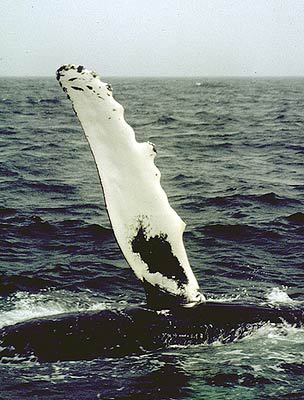
Humpback whale fins helped inspire the design of wind turbine blades. A whaleโ€™s unique fin shape is great for increasing lift and decreasing drag. This shape helps the whale glide through the water, and it helps wind turbines spin to generate renewable energy!

Spider webs and bird safety glass

Spiders build their webs so that small insects will accidentally fly into the webs and become trapped in the sticky threads. But spiders don’t want larger flying animals like birds to run into and destroy the webs they painstakingly build. To avoid this, some spiders make silk with an ultraviolet coating. The ultraviolet colors are highly visible to birds, but not to many other species. This allows birds to see the web before they inadvertently fly into it and destroy it. A window glass company was inspired by these spiders to create glass windows with a UV-reflective pattern throughout. While not visible to humans, the reflective pattern lets birds know there’s something in their path before they collide with the window and injure themselves.

Flying squirrels, sugar gliders, and wingsuits

Wingsuits sometimes used by daredevils in extreme sports like skydiving and base jumping mimic the skin flaps that allow flying squirrels and sugar gliders to sail through the air from tree to tree!

Glaucomys volans (southern flying squirrel)
Flying squirrel.

Biomimicry Activity Ideas For Kids

Here are a few activity ideas for teaching students about biomimicry!

  1. Case Study: Have each student research in-depth one particular case of biomimicry. What animal(s) are being mimicked? What traits are being mimicked? How are humans using these traits? What products or systems did it help create?
  2. DIY Biomimicry: provide each student with blank paper and have them brainstorm their own idea for an item or system they could create using biomimicry. Encourage them to start by listing a few favorite animals, and jotting down some of the characteristics/behaviors of each animal. How could those characteristics/behaviors benefit humans? Once they have their ideas, students can draw or write about their design.
  3. Tree Frogs and Biomimicry: Consider downloading my Tree Frogs STEM Unit for kids! It’s a complete unit designed to build math, engineering, and science skills, with activities themed around tree frogs! It includes some fun origami engineering activities as well as information on tree frog biomimicry!

Recommended products

Are you interested in reading more posts like this? Subscribe or follow Wild Earth Lab using the links below!


References and Further Reading

  1. Vanderbilt, T. (2012). How Biomimicry is Inspiring Human Innovation. Smithsonian Magazine. Available: https://www.smithsonianmag.com/science-nature/how-biomimicry-is-inspiring-human-innovation-17924040/
  2. Phillips, E. (n.d.). BIOMIMICRY IS REAL WORLD INSPIRATION. Carnegie Museum of Natural History. Available: https://carnegiemnh.org/biomimicry-is-real-world-inspiration/
  3. Schwartz, D. (2012). Wing-Suits: Humans Surpassing Animals in Flight. Boston University. Available: https://blogs.bu.edu/bioaerial2012/2012/09/26/wing-suits-humans-surpassing-animals-in-flight/
  4. Green Team Blog (2014). A Better Building: Biomimicry Glass Working with Nature to Reduce Bird-Window Collisions. University of Utah. S.J. Quinney College of Law. Available: https://law.utah.edu/a-better-building-biomimicry-glass-working-with-nature-to-reduce-bird-window-collisions/
  5. University of Akron News (2018). With the help of frogs, graduate student wins award for tire tread research. University of Communications and Marketing. Available: https://www.uakron.edu/im/news/with-the-help-of-frogs-graduate-student-wins-award-for-tire-tread-research

Sharing options and discussion for this post:

Posted on — 2 Comments

Disturbance and succession: examples of ecological disturbances and wildfire ecology

drawing of trees on fire with the text "learn about wildfire and ecological succession!" and "with pictures and diagrams"

In this post, you’ll learn about ecological disturbance and succession, starting with definitions and examples of disturbances. We will cover the differences between primary succession and secondary succession, as well as the steps of the ecological succession process. Finally, you’ll read about why disturbances like wildfire can be important and natural processes in ecosystems!

A note for teachers: before we dive in, I want to direct you to the classroom materials that I created for teaching this topic. I think you’ll love my wildfire ecology mini study, which is also found within my larger Forest Ecology Unit. Plus, you will support this blog with your purchase!

photo of classroom handouts for studying wildfire and forest succession
Explore fire ecology and forest succession with these materials!

What is a disturbance?

What is a disturbance in ecology?

A disturbance is some sort of event that causes a large and rapid change in an ecosystem. Disturbances may abruptly change the ecological community – the plants, animals, fungi, etc. in an ecosystem. Disturbances may also impact non-living features of an ecosystem such as the soil and water. Examples of disturbances in nature include wildfires, parasitic insect outbreaks, landslides, avalanches, volcanic eruptions, and floods.

What is ecological succession?

Succession is the natural and gradual change in an ecosystem over time. Different species may live and thrive in an environment depending on how far along the ecosystem is in the succession process.

What are the types of ecological succession?

There are two main types of ecological succession. Primary succession, and secondary succession. Primary succession occurs when species are colonizing a new habitat that was previously devoid of life. An example of primary succession is the formation of an ecological community atop newly formed igneous rocks after a volcanic eruption. Because the rocks just formed, the community is forming on them for the first time (hence, primary succession). Secondary succession happens after a disturbance that caused a sudden change in an existing ecosystem, such as a wildfire or flood. Such disturbances may (temporarily) wipe out or scare off many of the species living there before the disturbance.

The Steps of Ecological Succession

  1. Disturbance: A disturbance is an event that causes a large and rapid change in an ecosystem. Natural disturbances include wildfires, insect infestations, landslides, avalanches, volcanic eruptions, and floods.
  2. Post-Disturbance: After a disturbance, there are significant changes to the ecological community (plants, animals, fungi, etc.) as well as to non-living features such as the soil and water. Some severe disturbances may leave behind little more than bare rock.
  3. Pioneer Species: Pioneer species are the first to grow in the post-disturbance landscape. These usually include hardy lichen, fungi, and plant species that can survive in rocky soils without many nutrients. Pioneer plant species are often introduced to a disturbed area when wind or water carries in seeds from nearby. As the pioneer species live and die, they help make a nutrient-rich topsoil, which allows for more plants to grow.
  4. Intermediate (shade intolerant) species: Intermediate plant species include grasses, shrubs, and some trees that can survive in thin topsoil. Intermediate species often include shade-intolerant plants which thrive in the relatively open, post-disturbance landscape. As more and more plant species become established, they help create habitats for different animal species to return to.
  5. Climax (shade tolerant) species: Climax species are the last species to return to an area following a disturbance. Climax species require a thicker layer of nutrient-rich topsoil to grow. Climax species often include shade-tolerant tree species, which can grow from seedlings beneath a canopy of shade-intolerant trees, as well as any animals that rely on these tree species.

Why are ecological disturbances important?

Ecosystems naturally experience a cycle of disturbance and succession. We call the natural timing and magnitude of disturbances in an ecosystem a disturbance regime. Maintaining a natural disturbance regime helps keep an ecosystem healthy! For example, regular, small wildfires can clear out diseased trees and overgrown brush, which helps prevent more severe fires and insect outbreaks from happening later on! Additionally, natural disturbances create the conditions for new trees to grow. Interestingly, some tree species even have cones that only open to release their seeds when they are exposed to extreme heat during wildfires!

How do humans impact disturbance and succession?

Humans impact the cycle of disturbance and succession in many ways. People create unnatural disturbances such as clearcutting forests. Humans sometimes introduce invasive species that take the place of native species during the succession process. We also alter the timing of disturbances, causing disturbances to take place more or less often than they should naturally. Humans often try to prevent disturbances like fires, floods, and landslides because they damage our buildings, roads, and homes. However, altering natural disturbance regimes has a history of coming back to haunt us. For example, preventing small, natural fires can lead to a larger, more damaging fire later on. For this reason, forest managers now set and closely supervise controlled burns over small areas, to mimic natural disturbances in a safer way.

More ways to study forests, trees, and ecology:

Recommended products


Are you interested in reading more posts like this? Subscribe or follow Wild Earth Lab using the links below!


References and Further Reading

  1. Free Fire Ecology Curriculum for multiple grade levels, from smokeybearlive.org!
  2. Project Learning Tree’s STEM activities about forest fires!
  3. Forest Ecology Basics from Michigan Tech
  4. Wildlife Ecology Basics from Michigan Tech

Sharing options and discussion for this post:

Posted on — 5 Comments

What is Ecology? Learn why ecology is important + ecology activity ideas for kids

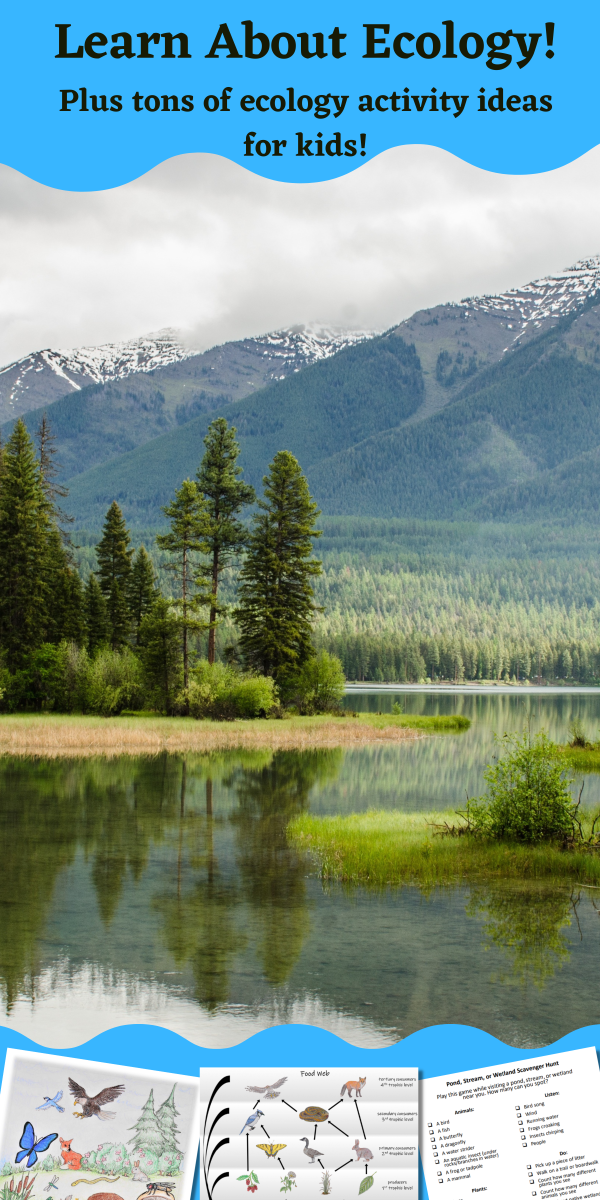
Photo of a mountain pond on a banner stating learn about ecology! plus tons of ecology activity ideas for kids!"

In this article, learn about ecosystems and ecology! Plus, you’ll learn the difference between biotic and abiotic. Also, read about why ecology is important and learn about what ecologists study!

Click here to skip to the the list of Ecology Activity Ideas for Kids!

Or, check out my food webs resources here!

What is an ecosystem?

An ecosystem is a community of living things (or organisms) that interact with one another and the environment where they live. Ecosystems include living (biotic) things such as animals, fungi, and plants. Furthermore, ecosystems also includes non-living (abiotic) parts of the environment, such as rocks, soil, water, and weather. All the living and non-living parts of an ecosystem are interacting and affecting each other over time in many ways.

Food webs educational materials, flashcards, and activities.
Looking for ecology lessons? Try out my food webs unit!

What is ecology?

Ecology is a type of science that looks at the relationships living things have with one another and with their environment. In other words, ecology is all about understanding the connections between organisms and their surroundings.

An ecosystem includes both living and non-living parts of an environment!

Why is ecology important?

We as humans do not live outside of ecosystems. Just like mushrooms, mice, and maple trees, humans are organisms that are a part of ecosystems! The ecosystems around us affect our lives, and often more noticeably, we affect our ecosystems. Itโ€™s important for us to understand the inner workings of ecosystems and how we impact them, so that we can find ways to go about our lives while also promoting healthy ecosystems. The scientists doing this work are called ecologists.

What are some important topics in ecology?

Ecologists study many topics that relate to ecosystems and the species that live in them. Here are some important topics that ecologists study:

  • Food webs
  • Relationships between species, including symbiotic relationships!
  • Impacts of natural disasters on ecosystems (e.g., wildfire, floods, volcanic eruptions)
  • Succession (changes in ecosystems after disturbances like fire)
  • Types of habitats and the ways that species use them
  • The impacts caused by invasive species
  • Assessing ecosystem health and human impacts
An example of a food web!

Ecology Activity Ideas for Kids:

  • Food Chains & Food Webs: Print out some animal, plant, and fungi pictures and build your own food chains and food webs (example here)
  • Biotic & Abiotic: Fill an egg carton or other container with tiny treasures found outdoors (e.g., pebbles, feathers, shells, a clump of dirt, etc.). Sort the items into two piles: biotic things (are living or were once part of a living thing) and abiotic things (never were alive)
  • Clean it Up: Participate in a clean up day at a natural area and help improve your local ecosystems!
  • Invasive Species: Participate in a invasive species removal day at a local natural area!
  • Symbiosis: Learn about symbiotic relationships! Check out this resource.
  • Population Sampling: Learn how to estimate populations with random sampling. Here’s an example of an ecological sampling lesson plan from Northern Arizona University.

Teaching kids about ecology with Wild Earth Lab:

I have tons of both free and paid resources to help you teach your kids or students all about ecology! Please check out the following:

Blog Posts & Articles:

Units (complete curriculum)

Mini Studies

Printable Classroom Posters

Free Worksheets & Posters From Wild Earth Lab

Are you interested in reading more posts about ecology & environmental sciences? Subscribe or follow Wild Earth Lab using the links below!


Sharing options and discussion for this post:

Posted on — 3 Comments

Trigonometry in Action: Tree Height Measurement Step-by-Step Guide

tall tree

I don’t know about you, but I think math is more interesting when we can apply it to real-world situations! If you’re teaching trigonometry, right triangles, or angles in your classroom or homeschool, you and your students will love this tree-height applied math activity! In this simple learning activity, students will learn how to make a homemade inclinometer – a device for measuring the angle of inclination. Then, they will take measurements and calculate the height of a tree.

A note for educators: This tree height activity comes from my Math in the Forest Unit. If youโ€™re an educator planning to try this activity, I recommend checking out the unit. It includes the necessary printable directions, diagrams, and worksheets for this activityโ€”perfect for teachers and homeschoolers looking to bring applied math fun to the classroom! ๐Ÿ’š

The challenges of measuring tree height

Unless you are measuring a short seedling, you probably wonโ€™t be able to measure tree height directly because you can’t reach the top. So how do you measure something so tall? Answer: Use an inclinometer and trigonometry!

View looking up at the rough bark of a tall deciduous tree
How do you measure the height of something taller than you? Answer: use trigonometry!

An inclinometer is a device for measuring an angle of inclination above the horizontal. We can use an inclinometer to help us find the height of tall objects, such as trees! When you’re looking up at the top of a tree, you can use the angle of inclination and your distance from the tree to calculate the tree height. This is possible thanks to trigonometry โ€“ a branch of mathematics dealing with angles and the sides of triangles.

So how do we do this? In this blog post, I’ll walk you through all the steps to calculate tree height with your students. The first step is to make your own inclinometer out of common household objects…

Part 1: Make an inclinometer

Follow these steps to make your own inclinometer from common household items. You’ll use the inclinometer to find an angle of inclination, which you’ll use to calculate tree height.

Materials

All the materials you need to make a homemade inclinometer to measure tree height!

Step-by-Step Directions

  1. Tape the straw across the center of the protractor at 90ฬŠ.
  2. Use the scissors to shorten the straw (as needed).
  3. Cut a short piece of thread or dental floss.
  4. Tie the small weight to the end of the floss.
  5. Tie the other end of the floss to the straw.
  6. Check that the thread hangs over the 0ฬŠ mark when holding the inclinometer with the straw parallel to the ground. Adjust the position of the thread on the straw as needed.
1. Tape the straw across the center of the protractor at 90ฬŠ.
2. Use the scissors to shorten the straw (as needed).
3. Cut a short piece of thread or dental floss.
4. Tie the small weight to the end of the floss.
5. Tie the other end of the floss to the straw.
6. Check that the thread hangs over the 0ฬŠ mark when holding the inclinometer with the straw parallel to the ground. Adjust the position of the thread on the straw as needed.

Part 2: Using your homemade inclinometer

Use your homemade inclinometer to measure the angle of inclination when looking up at the top of the tree. The homemade inclinometer requires two people to operate – one person to look through the inclinometer and one person to read the angle off of the side.

Materials

  • Homemade inclinometer
  • Tape measure
  • A friend

Directions

  1. Stand a short distance away from the tree, far enough away that you can see the top of the tree. This works best if you are on flat ground – not uphill or downhill from the tree. Measure your distance from the tree.
  2. Look through the straw with the curved edge of the protractor facing your eyeball. Do not touch the straw to your eyeball.
  3. As you look through the straw, tip the inclinometer upwards until you can see the top of the tree through the straw.
  4. Hold still and have a friend look at the side of the inclinometer. Have them read the angle where the thread crosses.
  5. Measure the height to your eye level.
Measure your distance from the tree
Look through the straw with the curved edge of the protractor facing your eyeball. Do not touch the straw to your eyeball.
As you look through the straw, tip the inclinometer upwards until you can see the top of the tree through the straw. Have a friend read the angle on the side of the inclinometer where the thread crosses.

Part 3: Calculate tree height

You can use trigonometry to calculate the tree height from the measurements you took with the tape measure and inclinometer. The imaginary horizontal line at eye level, the imaginary line from your eyes to the top of the tree, and the tree itself create a right triangle (see figure below).

There is a relationship between the angles in a right triangle and the lengths of its sides. If you know two angles and the length of one side, you can calculate the length of the other sides of the triangle. Look at the diagram and then check out the example calculation below.

Calculate tree height! (My email subscribers can download this printable diagram on the free resources page of my website!)

Example Calculation

Question: I want to know the height of a tree in my backyard. When I was standing 15 feet away from the tree and looking up at its top, I used my inclinometer to find an angle of 20ฬŠ. The height to my eye level is 5.2 feet.

distance x TAN(angle) = tree height above eye level

15 feet * TAN (20ฬŠ) = 5.5 feet

tree height above eye level + eye level = tree height

5.5 feet + 5.2 feet = 10.7 feet

Answer: The tree is about 10.7 feet tall!
Printable Directions & Worksheets

Trying this activity in your classroom? You can find worksheets and printable directions for measuring tree height in my Math in the Forest Unit:

worksheets and homemade inclinometer

Find your next unit…


Are you interested in more hands-on science activities? Subscribe or follow Wild Earth Lab using the links below!


References and Further Reading

  1. South Carolina Government Website (n.d.). Get Acquainted with Forestry Tools. Available: https://www.state.sc.us/forest/edutools.htm
  2. University of British Colombia (n.d.). Height Measurements. Available: https://bigtrees.forestry.ubc.ca/measuring-trees/height-measurements/
  3. Massachusetts Government Website (n.d.). How to measure trees. Available: https://www.mass.gov/how-to/how-to-measure-trees

Sharing options and discussion for this post:

Posted on — 7 Comments

Aquatic Insects: identification, examples, and use as bioindicators

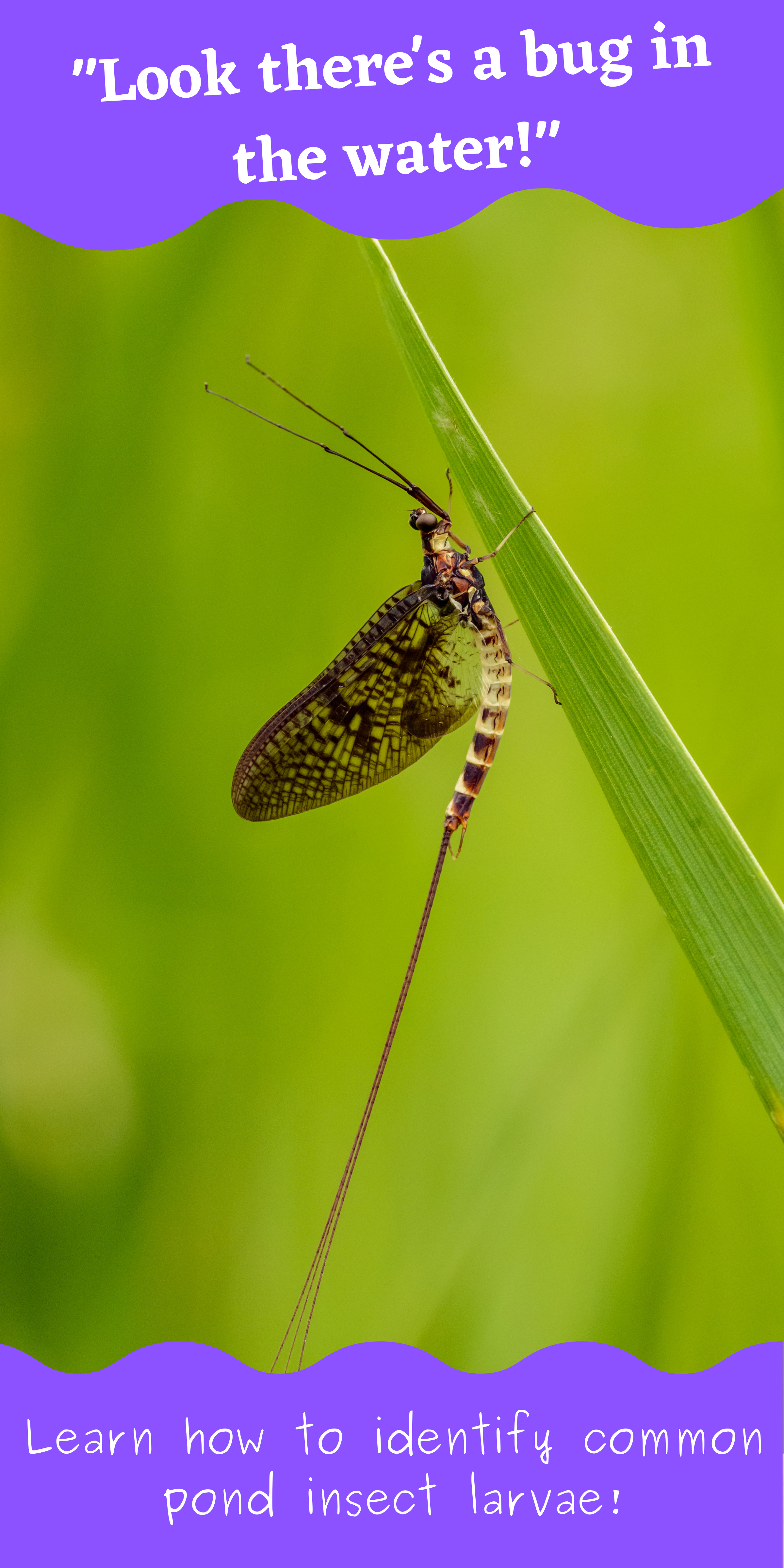
mayfly on grass

In this post, you’ll read about the different types of aquatic insects. You’ll learn how to identify the different types and see example images. This post also discusses aquatic insects’ important use as bioindicators in ecosystems.

A Note For Teachers: If youโ€™re an educator planning to teach aquatic insects, great learning resources are key to deepening understanding! I think you and your students will love my aquatic insects mini study, which you can also find within my huge Macroinvertebrates Unit (plus youโ€™ll support my blog with your purchase! โค๏ธ )

If you flip over a few rocks in the shallow water at any healthy pond or stream, youโ€™re sure to see a few aquatic insects! Many aquatic insects are the larvae or nymphs of well-known flying insects, like dragonflies and mayflies! They begin their lives in the water, then emerge from the surface of the pond or stream as flying adults.

These little creatures play an important role in pond and stream food webs. Aquatic insects help recycle nutrients from the pondโ€™s bottom back into the food web! The juvenile life stages, called either larvae or nymphs, eat algae and waste that settles to the bottom of the water. Many other animals eat aquatic insects. Fish feed on aquatic insect larvae and nymphs living along the pond or stream bed. Some fish will snatch the emerging adult insects from the waterโ€™s surface or leap from the water to eat flying adult insects. Birds and amphibians may eat the aquatic insect adults as well.

Aquatic insects can teach us a lot about ecosystems – in other words, they are bioindicators. Some aquatic insects are very sensitive to water pollution. An unhealthy pond or stream ecosystem cannot support a large and diverse population of aquatic insects. Healthy ecosystems should have lots of different aquatic insect species. Scientists use aquatic insects to check in on pond and stream ecosystem health. They will use nets to scoop up samples of aquatic insects from the water. Then, back in a lab, they use microscopes to figure out the different species of aquatic insects that were living there. If you are a teacher or parent, you can try catching aquatic insects with your students/kids too, by following these directions. Usually, more different species means a healthier ecosystem. Here are some examples of aquatic insects and a few tips on how to identify them!

Mayflies

Order: Ephemeroptera

Nymph Identification: Aquatic mayfly nymphs have bodies with distinct head, thorax, and abdomen. They have three pairs of segmented legs, two antennae on their heads, and either two or three long strand-like tails on the ends of their abdomens. There will appear to be two miniature wings on the thorax – these are non-functional “wing pads”. Mayflies and stoneflies look quite similar. Mayflies, however, have claws on the end of each of their legs with a single hook, while stoneflies have claws with two hooks. Of course, you might need a magnifying glass or even a microscope to count the number of hooks on these insects’ tiny claws!

About: Mayflies thrive in standing (lentic) and flowing (lotic) water habitats. As nymphs, they live underneath rocks along the bottoms of streams, ponds, and lakes. There are many mayfly species, which feed in different ways: gathering debris, scraping algae from rocks, and even hunting smaller aquatic creatures. After incomplete metamorphosis (no pupa stage), the winged adults emerge from the waterโ€™s surface. They molt their exoskeletons once during adulthood. Adulthood lasts, at most, a few days because adults donโ€™t have mouths and cannot feed.

A mayfly nymph, Drunella grandis, or western green drake.

Stoneflies

Order: Plecoptera

Nymph Identification: Aquatic stonefly nymphs look very similar to mayflies (see above), with distinct heads, thoraxes, and abdomens. Like mayflies, they also have wing pads, three pairs of segmented legs, and two antennae. However, stoneflies will always have just two long, thin tails, and they always have two hooks on the end of each claw.

About: Stonefly nymphs live in clean, flowing (lotic) water like streams and rivers. Nymphs live along the streambeds gathering debris and plant matter as food, or in some cases eating smaller aquatic insects. After their incomplete metamorphosis (no pupa stage), the winged adult stoneflies emerge from the water. Most species reach adulthood and emerge between late winter and early summer.

A stonefly nymph, Pteronarcys californica, or giant salmonfly

Caddisflies

Order: Trichoptera

Larvae Identification: Many aquatic caddisfly larvae are easily recognizable by their distinct cases. These larvae construct tiny cases out of little pieces of plant matter or rock, which they live inside of, with only their heads, thoraxes, and legs exposed. Hidden within the case, the abdomen of the caddisfly is relatively soft and ends in two anal claws instead of tails. There are some species of “free-living” caddisfly larvae that do not make cases. In all caddisfly larvae, the classic head, thorax, and abdomen body sections can seem less easily recognizable compared to mayflies and stoneflies. Caddisflies may have a more maggot-like appearance, especially the free-living caseless ones.

About: Caddisflies live in flowing (lotic) water and sometimes in standing (lentic)water. Caddisfly larvae produce silk. The larvae will use the silk to fasten bits of plant matter or sand together into a case (looks like a shell). Some larvae donโ€™t make shells and instead use silk to tether themselves to streambeds or build tiny nets to catch prey (like a spiderโ€™s web). Before adulthood, caddisflies transition through a pupa stage, during a process called complete metamorphosis. Many caddisfly pupae seal themselves in their cases for safety during this stage. The winged adults emerge from the water.

A caddisfly larva in the family Brachyceridae

Dragonflies and Damselflies

Order: Odonata

Nymph Identification: One of the best characteristics for identifying dragonfly and damselfly nymphs is their specialized labium or lower jaw. The labium is designed to extend in front of the body and retract as it grasps prey. Like all insects, members of the family Odonata have a head, thorax, abdomen, and three pairs of segmented legs. You may also notice their wing pads. You can tell damselflies and dragonflies apart by the endings of their abdomens. Damselflies have three long but flat tails on the ends of their abdomens, while dragonflies have no tails, but instead short triangular features, creating a pyramid-like shape on the rear tip of their abdomen.

About: The order Odonata includes dragonflies and damselflies. Nymphs are often found in ponds. Dragonflies are predators of other insects during both the nymph and adult life stages. Dragonflies have a modified labium (lower jaw) that rapidly extends and pulls in prey. After incomplete metamorphosis (no pupa phase), the winged dragonfly adults emerge from the water. Female dragonflies have specialized ovipositors on the tips of their tails, an organ that allows them to dip their tails below the surface of the water to safely lay their eggs in aquatic plants.

A dragonfly nymph, Ophiogomphus severus, or pale snaketail

Fly larvae

Order: Diptera

There are numerous species of aquatic fly larvae. Horseflies, mosquitoes, black flies, and midges are just a few examples. As larvae, flies have an elongated body that looks almost like a segmented worm. They have three pairs of legs, which may be small and hard to see. Aquatic flies undergo complete metamorphosis (i.e., with the pupa stage) before emerging from the water as flying adults.

Water beetles

Order: Coleoptera

There are several families of beetles that live in water during their larval, pupal, and adult stages. Beetle larvae may look somewhat similar to fly larvae, with long and segmented bodies. Adult water beetles will have a rounded, hardened forewing that covers most of their bodies.

Water striders and water scorpions

Order: Hemiptera

Water striders and water scorpions are two common aquatic insects in the order Hemiptera (“true bugs“). Water striders have elongated bodies and thin, widely spread-out legs, which allow them to stay on the surface of the water. Similarly, water scorpions have elongated and sometimes flat bodies. Water scorpions use their front pair of legs to capture prey; the front pair of legs is noticeably bulkier than the other legs.

Scientist sits on the shore of a lake while sorting through a pan containing a lake benthic sample, looking for aquatic insects.
Looking through a lake sample for aquatic insects.

Study Aquatic Insects & Ecology with Wild Earth Lab

Are you interested in teaching your students about aquatic insects? Check out my complete aquatic macroinvertebrates unit:


Are you interested in reading more posts about animals and insects you can spot in your local area? Subscribe or follow Wild Earth Lab using the links below!


References and Further Reading

  1. Merritt, R. W., Cummins, K. W., & Berg, M. B. (2008). Aquatic insects of North America (4th edition). Kendall Hunt, Dubuque.
  2. Neuswanger, J. (n.d.). Mayfly species Drunella grandis (Western Green Drake). Troutnut.com. Retrieved from: http://www.troutnut.com/hatch/446/Mayfly-Drunella-grandis-Western-Green-Drake
  3. Ward, J. V., Kondratieff, B. C., & Zuellig, R. E. (2002). Mountain stream insects of Colorado (2nd edition). University Press of Colorado.

Sharing options and discussion for this post:

Posted on — 3 Comments

Aquatic Ecosystems: How to tell if a pond, stream, or wetland is healthy

a banner with a photo of a stream

This is part 2 of a two-part post on aquatic ecosystems. If you haven’t already, check out part 1!

In a rush? Click here to go straight to the printable scavenger hunt!

In my last post, I shared my experience working as a science technician studying aquatic ecosystems like streams, ponds, and wetlands. These water features are critically important to many ecosystems and the creatures that live there. They also provide us with a lens through which we can glimpse the overall health of an ecosystem. In this post, I’ll teach you some signs to look for to recognize healthy aquatic ecosystems in your area. How do your local ponds, streams, and wetlands measure up?

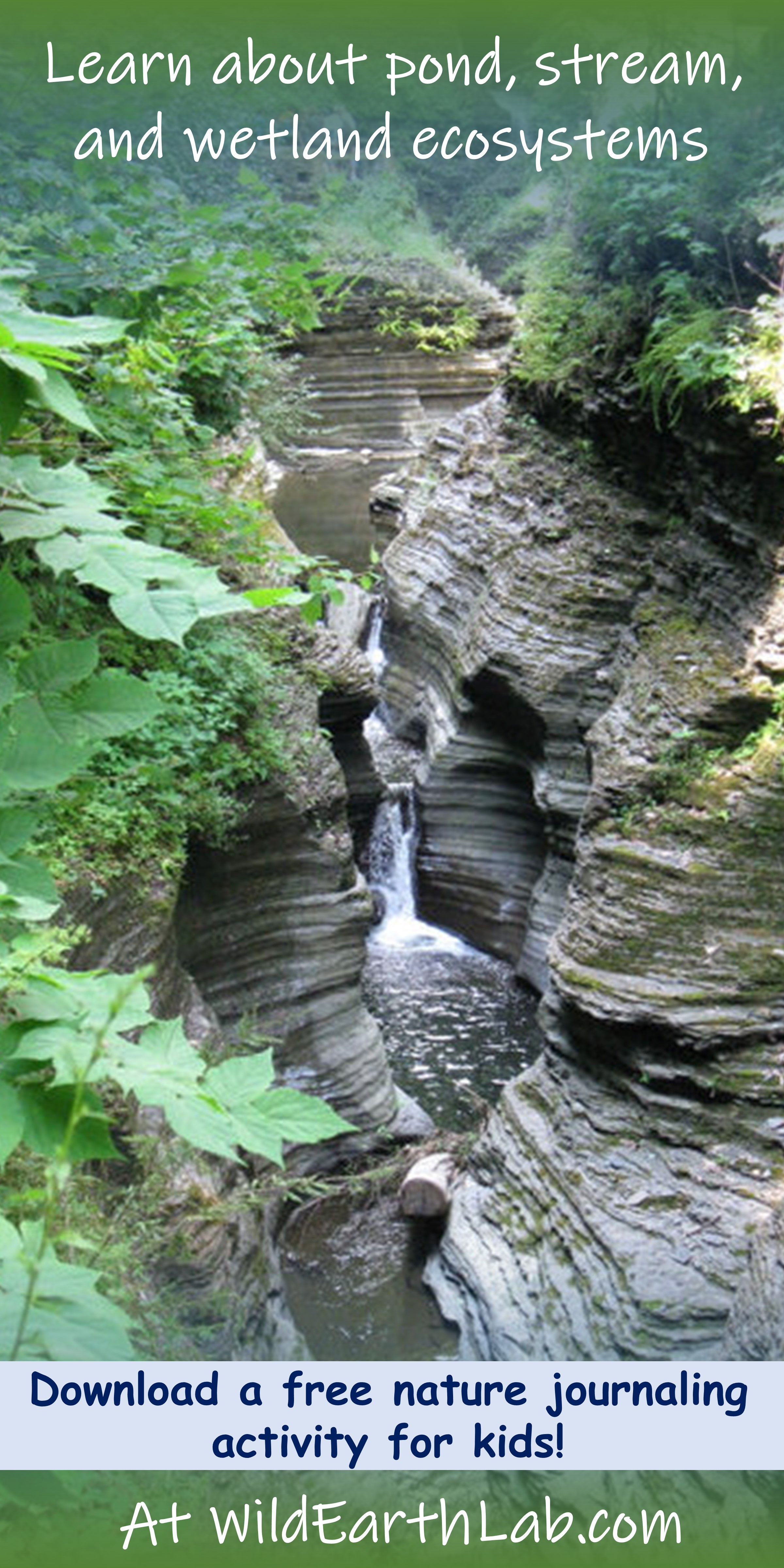
Watkin’s Glen in New York state is home to some incredible water features and lush vegetation

Free of Trash

This one seems obvious, but it is worth including first because of how important it is, and because it is something we can all help prevent and fix. Litter and trash can be harmful to wildlife and plants. Lots of trash floating on the surface of water can impact the amount of light and oxygen in a pond or stream. Below the waterโ€™s surface, aquatic plants need sunlight and oxygen for photosynthesis, the process through which plants make their own food. Furthermore, our trash, especially plastics, contains harmful chemicals that may harm aquatic animals. Animals like fish, birds, and turtles confuse trash for food and eat it, which can be very toxic to them. Healthy aquatic ecosystems should be free of human trash.

Diverse Plant Communities

Any time you see an area dominated by just one plant, that might be a clue that something is wrong. Unhealthy ecosystems are more susceptible to invasive plant species. When an invasive plant species is introduced to an ecosystem, it can outcompete native plant species. Where there were once many diverse plant species, a single invasive plant may take over. This will send ripple effects through the whole local food chain. Examples of invasive plants species in North America include cheat grass, kudzu, garlic mustard, and buckthorn trees.

The Poudre River in Northern Colorado is an example of an ecosystem impacted by an invasive plant. Invasive cheat grass is found along its floodplain in some areas.

Some Algae, but not Too Much

It is natural for stagnant bodies of water (non moving bodies of water like ponds and wetlands), and slower moving streams to have a good bit of algae. Fish, aquatic insects, and other invertebrates need algae as a source of food. But how much is too much? When ponds are near farm fields, the runoff into them may contain too much of the nutrients phosphorous and nitrogen, which is found in many fertilizers. After rain, water flowing off of farm fields and lawns will wash fertilizers containing phosphorous, nitrogen, and other chemicals into low-lying ponds and wetlands. This can cause massive, unnatural plumes of algae to form, which block out sunlight, deplete oxygen, and make it difficult for any other life forms to survive in the pond. When one species takes over, such as a massive plume of algae, it is often a sign that something is out of balance in an ecosystem.

A remote pond below Vestal and Arrow Peaks near Silverton, Colorado, in the San Juan Mountains contains clear water with a small amount of algae.

Abundant and Diverse Aquatic Macroinvertebrates

Have you ever flipped over a rock in a pond or stream? Chances are you saw tons of wriggling little creatures underneath! These creatures are aquatic insect larvae, such as mayflies, dragonflies, and caddisflies (โ€œcase-makersโ€) and other aquatic macroinvertebrates! “Aquatic macroinvertebrates” is a general word for tiny creatures with no backbones that live in water. They include insect larvae, worms, snails, crayfish, and more. Many aquatic macroinvertebrates are herbivores of algae and provide an important food source for many fish species.  A healthy ecosystem should have a variety of different aquatic macroinvertebrates!

Many macroinvertebrate species are sensitive to disturbances and contaminants in an ecosystem, so their populations will reflect an ecosystem’s health. The aquatic macroinvertebrates in a pond or stream are actually such an excellent indicator of ecosystem health that scientists routinely use studies of the aquatic macroinvertebrates in a stream or pond as a holistic measure of aquatic ecosystem health! A healthy aquatic community will have abundant and diverse macroinvertebrates.

This is me, collecting aquatic insects from a lake while I was an undergraduate in college. Using a mesh net and a pan, I found all sorts of benthic macroinvertebrates, including stonefly larvae, caddisfly larvae, and mayfly larvae.

Multiple Trophic Levels

A healthy ecosystem should also contain a variety of different living things including plants, herbivores, predators, and decomposers. These life forms represent different trophic levels, or positions in the food chain, and all play different roles in the ecosystem to maintain balance. A classic example is the relationship between wolves, elk, and riparian plants. When an ecosystem is healthy, all three thrive. However, if wolves (or other top predators) are driven out of an area, the elk population will increase since no one is eating them any more. That will cause the plant populations to suffer, because more elk eat more plants. Additionally, without fear of predation, herbivores like elk will be emboldened to graze out in the open near wetlands and streams, rather than hiding in the woods. This leads to greater stress on the plants around aquatic ecosystems.

Scientists study this effect by building fences around small areas of an ecosystem, to keep out elk, and to see what an area would look like without exaggerated grazing. This same sort of imbalance between plants, herbivores, and predators can happen on a smaller scale too. In some pond ecosystems, the top predators (predators that are not prey to any other animals) might be herons, hawks, or otters, rather than wolves. See if you can identify a top predator in a local pond or stream ecosystem near you. In a healthy ecosystem, look for a variety of insects, fish, birds, amphibians, and other animals.

A bald eagle, a top predator, perches overlooking the Wisconsin river
Many turtles are omnivores that eat a variety of both plant and animal foods

Free of Chemicals

Chemicals can get washed into water from surrounding human settlements and agriculture. Some chemicals might be noticeable, and appear as a white or yellow froth on top of water, an oily sheen floating on the surface, or an unnatural metallic or rusty color. Some chemical pollutants are invisible, but their impact on wildlife is not! For example, road salts, when dissolved in water might be invisible, but it can impact the number of female frogs that are born in a pond – which can impact a frog species’ ability to reproduce.

Another example of a harmful but nearly invisible chemical is a mosquito pesticide called DDT. When DDT gets into pond and stream water, it accumulates in the tissues of plants. These contaminated plants are eaten by macroinvertebrates and small fish, which are in turn eaten by larger fish, which are eaten by raptors like bald eagles. On each step up the food chain, the amount of the DDT chemical would build up in the organisms, in an effect called biomagnification. The bioaccumulated DDT in the eagles caused the shells of the eggs they laid to be too weak, which caused an enormous threat to this species. Luckily a biologist named Rachel Carson figured out the cause of the problem and DDT was later banned in the United States. DDT is still legal in some countries.

Healthy Soils

We love visiting streams and wetlands, but too many human or livestock visitors traveling over fragile surfaces can have a big impact. Human visitors and livestock that are not natural to an area can cause soil compaction by repeatedly walking over the same area, this can make it very difficult for plants to grow. Plants are an important part of a pond or stream ecosystem because their roots help stabilize the banks or shores, preventing erosion. Signs of excessive erosion like undercut banks and over compacted, plant-less soil can be signs that an ecosystem isnโ€™t doing so well. Water also cannot infiltrate into soils as easily when they are too compacted – which may cause floodwaters to pool rather than seep back into the ground. To help prevent impacts to soils, you can stay on designated trails and recreation areas when visiting a local stream, pond, or wetland.

Spring Creek in Fort Collins, Colorado. A corridor of grassy, natural areas along the creek’s floodplain provide an area to accommodate floodwaters and promote water infiltration into the soils.

Ways we can all help promote healthy aquatic ecosystems!

  1. Stay on trails, boardwalks, and already-impacted surfaces when visiting local streams, ponds, and wetlands.
  2. Pack out your trash or dispose of it properly in a trash can or dumpster.
  3. Consider bringing an extra baggie or container on hikes to pick up litter.
  4. Help prevent the spread of invasive plant species by checking your shoes and clothing for burs, seeds, or other plant materials.
  5. Help prevent the spread of invasive animal species by not releasing aquatic pets into local ecosystems.
  6. Consider reducing the amount of chemicals you use in your lawn or garden to prevent chemical run-off into nearby wetlands, ponds, or streams. More about this in my post on improving you backyard wildlife habitat, if you haven’t read it yet!
  7. Consider joining a volunteer group in your area that helps pull up invasive plant species in parks and on public lands.
  8. Teach your family about healthy aquatic ecosystems. I’ve made a free aquatic ecosystem scavenger hunt for you to download, shown at the bottom of this page! Or purchase my Pond Ecology Unit – which includes activities, flashcards, and posters for learning about ecosystems!
Boardwalks provide a route for visitors to cross fragile riparian areas while minimizing impacts to plants and soils

Are you interested in learning more about ecosystems and conservation? Subscribe at the bottom of this page, or follow Wild Earth Lab using the links below!


Can you spot the signs of a healthy aquatic ecosystem at a pond near you? Download this free learning poster!

Want more printable nature learning activities? Visit the free learning resources page and my Etsy Shop!


References and Further Reading

  1. Dennehy, K. (2016). Road salt can change sex ratios in frog populations, study says. Yale News. Available: https://news.yale.edu/2016/11/22/road-salt-can-change-sex-ratios-frog-populations-study-says
  2. Environmental Protection Agency. (2020). Impacts of Mismanaged Trash. Available: https://www.epa.gov/trash-free-waters/impacts-mismanaged-trash
  3. Environmental Protection Agency. (2016). Indicators: Benthic Macroinvertebrates. Available: https://www.epa.gov/trash-free-waters/impacts-mismanaged-trash
  4. Frey, D. (2018). Study shows Yellowstone wolvesโ€™ impact on streams. The Wildlife Society. Available: https://wildlife.org/study-shows-yellowstone-wolves-impact-on-streams/
  5. National Ocean Service. (n.d.). What is nutrient pollution? Available: https://oceanservice.noaa.gov/facts/nutpollution.html
  6. National Park Service. (2017). Elk and moose exclusion fence. Available: https://www.nps.gov/articles/elk-and-moose-exclusion-fence.htm
  7. Natural Resource Defense Council. (2015). The Story of Silent Spring. Available: https://www.nrdc.org/stories/story-silent-spring
  8. U.S. Fish and Wildlife Service. (2019). Midwest Region – Bald and Golden Eagles Fact Sheet. Available: https://www.fws.gov/midwest/eagle/Nhistory/biologue.html

Sharing options and discussion for this post:

Posted on — 4 Comments

The Heart of an Ecosystem: Healthy ponds, streams, and wetlands

a banner with a photo of a glen with a stream

This week, my geoscience students and I took a field trip to a local creek. Getting outside to make observations in nature is one of my favorite hands-on ways to learn about science and the natural world! Ponds, creeks, and wetlands are some of the best places to do this. These aquatic areas are teeming with life and activity – there is so much to watch, listen to, and wonder about. Like most living creatures, we humans are naturally drawn to water sources. Being outside with my students at the creek this week got me thinking more about ponds, streams, and wetlands, and their important role in all kinds of ecosystems...

Perhaps you have noticed that some of the best places in your area to see birds, plants, and other wildlife are near water! Where you find water, you usually find an abundance of life! All plants need water to perform photosynthesis, the process plants use to make their own food. A healthy ecosystem will have a healthy food web! An ecosystem with many different plants will attract herbivores, or animals that eat plants. You might have seen some herbivores around ponds or streams in your area, such as plant-eating species of fish, birds, and insects. A thriving herbivore population will, in turn, attract predators, or animals that hunt and eat other animals. You may notice predators such as larger fish species like pike and walleye, as well as otters, herons, kingfishers, spiders, and dragonflies. Decomposers, like mushrooms and earthworms, also thrive in moist environments. It is no surprise that water features like streams, ponds, and wetlands are the lively, bustling centers of many ecosystems!ย 

Food web shaped like a pyramid with macroinvertebrates at the bottom, followed by small fish, then large fish, then osprey

I became very familiar with aquatic ecosystem health while collecting field samples for an aquatic ecology laboratory several years ago. While going out and collecting samples from streams, ponds, and rivers all over Colorado, I quickly learned that not all aquatic ecosystems are equal. I saw and studied all kinds of aquatic ecosystemsย  – from streams that were little more than stagnant ditches on the sides of roads to roaring mountain rivers overflowing with spring snowmelt. I visited remote beaver meadows miles from the nearest dirt road, and also popular lakes in national parks that host thousands of hikers, fishers, and sight-seers every year. I studied mountain springs that bubbled out of the ground looking as clean and clear as tap water, and also streams where the water flowed bright orange, polluted with runoff from mining sites. It didnโ€™t take long for me to start noticing some other big differences between these contrasting aquatic ecosystems…

As I visited these places, I would listen, touch, smell, and look – and notice the differences. I heard the sounds of many songbirds or the sounds of nearby highways. I felt the squishy, moss-covered river banks between my toes as I waded barefoot in remote streams, or I felt the hardened, plant-less dirt under my wader boots on riverbanks where too many boots from too many visitors had over-compacted the soil. I smelled the earthy scents of decaying leaves and wildflowers, or the stench of manure from a nearby herd of cattle grazing on the sweet riparian vegetation.ย  I counted the number of native plants or the number of invasive species.

Ponds, streams, and wetlands are the heart of many ecosystems. If these water features are unhealthy, the whole ecosystem will decline. Take away a clean and plentiful source of water, and the vegetation will suffer, sending ripple effects through the local populations of herbivores, predators, and decomposers. 

Consequently, these vital water features are also a great indicator of ecosystem health. If something is not right in an ecosystem, you can often observe signs of poor health in the streams, ponds, and wetlands. An unhealthy ecosystem cannot support a diverse community of plants, herbivores, predators, and decomposers. Scientists monitor ponds, streams, and wetlands due to their importance to animals and plants (and humans) in a variety of environments, and also because the symptoms of ecosystem imbalance are often quite visible there.

A variety of animal and plant species that are found around healthy ponds and wetlands

Continue Reading…

A FREE pond field trip worksheet for you

Download my free field trip worksheet for your next class trip to a pond.

Want more free resources? Access my full library of free learning resources when you subscribe to my email newsletters!

Study Aquatic Ecosystems With Wild Earth Lab:

Are you an educator planning to teach your class about ponds, streams, or ecology? I think you and your students will love the learning resources that I created to help you teach these topics…


References and Further Reading

  1. Environmental Protection Agency. (2020). Impacts of Mismanaged Trash. Available: https://www.epa.gov/trash-free-waters/impacts-mismanaged-trash
  2. Environmental Protection Agency. (2016). Indicators: Benthic Macroinvertebrates. Available: https://www.epa.gov/trash-free-waters/impacts-mismanaged-trash
  3. Frey, D. (2018). Study shows Yellowstone wolves’ impact on streams. The Wildlife Society. Available: https://wildlife.org/study-shows-yellowstone-wolves-impact-on-streams/
  4. National Park Service. (2017). Elk and moose exclusion fence. Available: https://www.nps.gov/articles/elk-and-moose-exclusion-fence.htm

Sharing options and discussion for this post: