Have you ever wondered “what’s inside a bird egg?” Or “Why do eggs have a yolk and a white?” This post offers educators and students information on the parts of a bird egg. This post discusses egg anatomy, including the functions of egg parts like the yolk and white, which you can observe when you crack an egg open. Read the definitions of each part of the egg and examine the egg diagrams in this post. At the end of the post, find the directions for a hands-on egg dissection science activity to try in your classroom or homeschool!
For Teachers: If you’re an educator planning to teach kids about eggs or bird life cycles, you may enjoy using my egg, bird life cycle, and nest teaching diagrams, which you can also find within my complete Bird Unit. The information and images in this post come from the Bird Unit. The unit is also packed with all the handouts, worksheets, activities, and science diagrams you will need for teaching kids ornithology, aka “bird science”. I think you and your students will love it (plus you’ll support my blog with your purchase! ❤️)
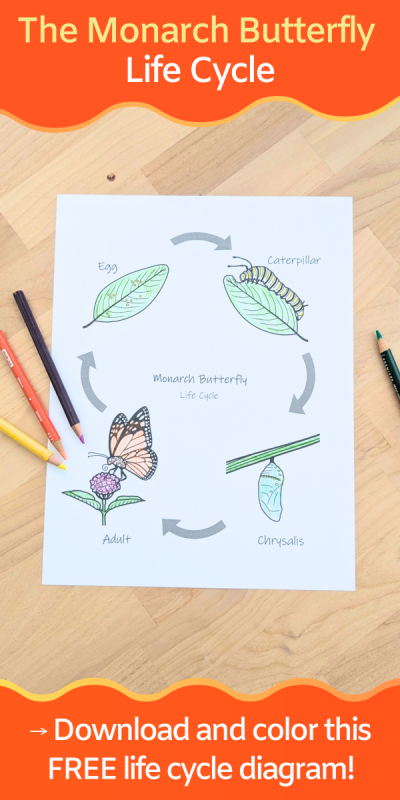
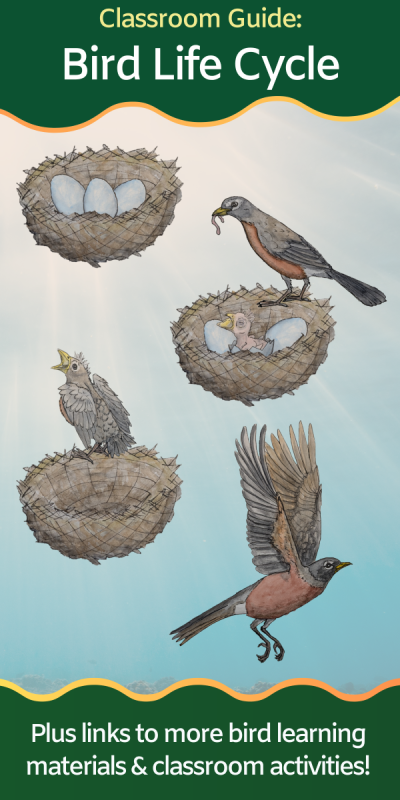
Eggs and the bird life cycle
Baby birds hatch from eggs. Inside an egg, a chick develops while protected by a hard eggshell. The unborn chick is nourished by a yolk, which provides food as it grows.
Most birds lay their eggs in nests, which they build in trees, on the ground, on cliffs, or even on buildings. Nests come in several shapes and sizes, from tiny woven cups made of dried grass to huge platforms constructed from sticks. Parent birds sit on the nest to keep the eggs warm, an act called incubation. When chicks hatch, they use a special bump on their bill called an egg tooth to crack open the hard shell.
If you’d like to read more about the bird life cycle, then check out this blog post.
The Parts of an Egg (Early Stage)
These are the parts you’ll see when you crack open an egg from the grocery store. No embryonic bird has developed yet, but all the parts needed for growing a bird are in place:
Cuticle – a thin coating on the shell that helps keep bacteria from entering the egg
Eggshell – the hard outer layer that protects the egg and lets air pass in and out through tiny pores
Albumen (egg white) – a gel-like substance that cushions the contents of the egg and contains water and protein
Chalaza – twisted strands that anchor the yolk in place in the center of the egg
Yolk – the yellow part of the egg that provides food for a developing embryo
Blastodisc – a small spot on the yolk where development begins if the egg is fertilized
Air cell – a small pocket of air at the wide end of the egg


The Parts of an Egg (Late Stage)
If an egg is fertilized and a bird begins to develop, these parts are also found inside an egg.
Embryo – a developing chick inside a fertilized egg
Amnion – a fluid-filled sac that surrounds and protects the growing embryo
Waste fluids – liquid waste made by the developing chick and stored in the egg until hatching

Science Activity: Egg Dissection
Crack open some chicken eggs and do an egg dissection. See how many of the parts from this article students can identify. Note that some parts might be more difficult than others to spot or may not be present in all eggs.
Materials (per group):
- Chicken egg
- Plastic or styrofoam plate/tray
- Tools for picking apart the insides of the egg (e.g., toothpicks, plastic knives, plastic spoons)
- Paper towels for cleanup
Directions:
- Crack open the eggshell by tapping it on the tabletop and prying it open with your fingers
- Pour the contents of the egg onto the plate. Set the shell aside.
- Use the tools to pick through the soft materials from inside the egg. Can you identify the yolk? Albumen? Chalaza?
- For each part you identify, discuss its function. How does its structure serve this function? (i.e., is it hard? Soft? Nutritious? Where in the egg is it located?)

Read more about birds…
There’s more bird info in the Wild Earth Lab blog. Continue reading one of these blog posts:
The Bird Life Cycle: a classroom guide
In this post, we’ll dive into the stages of the bird life cycle: egg, hatchling, nestling, fledgling, and adult. At…
Keep reading8 Engaging Bird Activities for Homeschool and Classroom Science Lessons
Are you studying birds in your homeschool or classroom? Engaging your students with interactive bird activities can make learning about…
Keep readingBird Beaks Lab: try this hands-on classroom activity to learn about adaptations and natural selection!
This is a hilarious and hands-on way to experience competition between species and learn about natural selection and animal adaptations.…
Keep readingBird of Prey Activities: 7 raptor projects for kids to try in your classroom!
Birds of prey, or raptors, are top predators that can be found in almost any type of habitat, from coastal…
Keep readingSeabirds & Shorebirds: types of birds you can spot at the ocean!
The beach is a fantastic spot for bird watching; you’ll encounter a fascinating array of seabirds and shorebirds—each adapted to…
Keep readingStudy this topic with Wild Earth Lab!
There’s no need to scramble to put together the perfect lessons on eggs and birds – I’ve already created them for you! The Bird Unit includes all the printable materials you need for studying bird life cycles, eggs, bird anatomy, adaptations, and more! You can also find the Bird Unit within my even more comprehensive Bird Bundle – which includes individual units on seabirds and shorebirds, freshwater birds, and birds of prey!
Recommended products
-
Bird Bundle: 4 Complete Units for Ornithology with Kids
Original price was: $44.00.$35.20Current price is: $35.20. -

Birds: an ornithology unit with animal adaptations
$12.00

Find your next topic from Wild Earth Lab:
If you enjoyed this post, I know you will love trying my other science and nature units in your classroom too!
Recommended products
-

Food Webs: an ecology unit with hands-on activities!
$8.00 -

Reptiles: a science unit exploring reptile adaptations, traits, & biodiversity
$12.00 -
Vertebrates Bundle: 5 units on amphibians, birds, fish, mammals, reptiles
Original price was: $54.00.$43.20Current price is: $43.20. -

Forest Ecology: an environmental science unit
$12.00

Are you interested in reading more posts like this? Subscribe or follow Wild Earth Lab using the links below!
References and Further Reading
- Bird Spot (n.d.). Anatomy of an Egg. Available: https://www.birdspot.co.uk/bird-anatomy/anatomy-of-an-egg
- Clark, M., Douglas, M., Choi, J. (2018). Biology 2e. Open Stax. Ch. 29. Available: https://openstax.org/books/biology-2e/pages/29-5-birds
- Reeves, N., et al. (2013). Concepts in Biology. Open Stax. Ch. 15.6. Available: https://openstax.org/books/concepts-biology/pages/15-6-vertebrates
- Worley, K. (2016). Avian Eggs. San Diego Zoo. Available: https://sandiegozoowildlifealliance.org/story-hub/zoonooz/avian-eggs