Posted on — Leave a comment

Understanding Metamorphosis in Animals

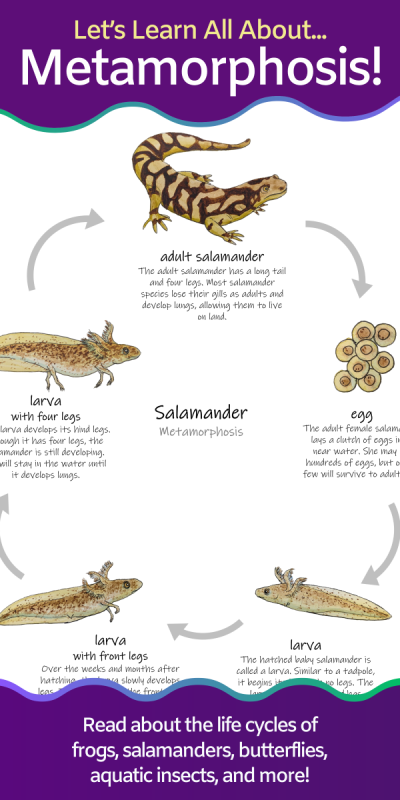
life cycle diagram of a salamander
text that says share this post

From tadpoles turning into frogs to caterpillars transforming into butterflies, metamorphosis is one of natureโ€™s most incredible processes. Understanding metamorphosis helps students see how organisms grow, adapt, and survive in their environments. Whether you’re exploring amphibians, insects, or life cycles in general, this fascinating transformation is a perfect way to bring nature and science to life in your classroom.

๐Ÿ“šA Note for Teachers ๐ŸŽ: If youโ€™re an educator planning to teach metamorphosis and animal life cycles in your classroom, great learning resources are key to deepening understanding! You can find materials for teaching metamorphosis in my Amphibians Unit and Insects Unit, as well as my Aquatic Macroinvertebrates Unit – plus tons of other materials and activities for these fun topics! (And youโ€™ll support this blog with your purchase! โค๏ธ)

What is Metamorphosis?

Metamorphosis is a process where an animalโ€™s body changes form at different stages of its life cycle. Many insects and amphibians go through metamorphosis, developing in two or more distinct stages, like a legless tadpole becoming a frog or a wingless caterpillar transforming into a butterfly.

In contrast, reptiles, birds, and mammals (including humans) do not undergo metamorphosis. Consider human babiesโ€”as we grow, we get bigger and taller, but our basic body shape stays the same. We donโ€™t develop wings, extra limbs, or entirely new body parts like a butterfly or frog.

Amphibians and Metamorphosis

The word โ€œamphibianโ€ means โ€œdouble lifeโ€, referring to how most amphibians begin their lives in water before transitioning to land.  This transformation happens through metamorphosis. Take frogs, for example โ€“ tadpoles swim using their tails and breathe underwater through gills. During metamorphosis, they grow limbs and lungs, allowing them to live on land as adults. Just like tadpoles transform into frogs, most salamanders start as aquatic, legless larvae before developing their adult forms.

Salamander Life Cycle Diagram

Most amphibians go through metamorphosis, but there are a few exceptions. Some species of caecilians, a group of legless amphibians, develop differently and donโ€™t go through metamorphosis the way frogs and salamanders do.

Insects and Metamorphosis

Amphibians are not the only animals that go through metamorphosis. Many (though not all) insects go through metamorphosis too. One of the most classic examples is a butterfly. A butterfly starts life as a wingless larva called a caterpillar, a life stage in which the main goal is to eat and grow! After some time, the caterpillar stops munching and forms a chrysalis. During this stage, called the pupa stage, it doesn’t eat, but continues to develop. Finally, the winged butterfly emerges from its chrysalis – now it is an adult.

However, butterflies are far from the only insect to go through metamorphosis. Caddisflies, ladybugs, beetles, and ants are a few other examples of insects whose lives take place in three stages: larva, pupa, and adult. Insects like these with three distinct life stages go through what scientists call “complete metamorphosis“. In contrast, some other insects, like dragonflies and mayflies, go through “incomplete metamorphosis“. These insects only have two life stages: nymph and adult.

Why Metamorphosis?

Why change forms at all? Metamorphosis helps animals use different habitats and resources at each stage of life. For example, tadpoles live in aquatic habitats like ponds and eat plants, so they have gills, a small mouth, and a tail for swimming. But as they grow into adult frogs that hunt insects on land, they develop lungs, strong legs, and a wide mouth with a sticky tongue for catching prey.

Similarly, caddisflies, mayflies, dragonflies, and other aquatic insects begin their lives in water as larvae or nymphs. This allows them to feed on aquatic plant matter, detritus, or small organisms found in habitats at the bottoms of streams and ponds. As they go through metamorphosis, these insects emerge from the surface of the water as winged adults. After this, they use their wings to take advantage of a new habitat above the surface. For example, adult dragonflies are ferocious aerial predators of other insects. Contrastingly, adult mayflies do not eat at all, but simply use their short adult life stage to fly around and find a mate.

Finally, consider butterflies. Unlike frogs and aquatic insects, a butterfly lives on land for its whole life. However, butterflies use different food sources at different stages. For example, the monarch butterfly is in a close symbiotic relationship with the milkweed plant. As a caterpillar, the monarch eats the milkweed leaves. After metamorphosis, the adult butterfly eats a different part of the milkweed plant – the nectar of the milkweed flowers. As an added benefit, when the adult butterfly drinks flower nectar, it pollinates milkweed plants, which helps the plants reproduce. Thanks to the butterfly’s pollination services, a new generation of milkweed plants will grow, providing leaves for future caterpillars to eat!

A large yellow, black, and white striped caterpillar munches a leafy green milkweed plant.
A monarch butterfly caterpillar munches on milkweed.

Study Metamorphosis with Wild Earth Lab!

Whether you’re teaching your students about the metamorphosis of amphibians or insects, I’ve got the perfect learning resources for you! These sets include all the printable materials you need for studying amphibians and aquatic insects – including life cycle diagrams and much, much more!

Explore more lessons from Wild Earth Lab:

If you enjoyed this post, I know you will love trying my other printable science and nature units in your classroom too!


Are you interested in reading more posts about wildlife and ecology? Subscribe or follow Wild Earth Lab using the links below!


References and Further Reading

  1. Clark, M.A., Douglas, M., and Choi, J. (2018). Biology. Open Stax. Ch 29.3. Available: https://openstax.org/books/biology-2e/pages/29-3-amphibians
  2. Fowler, S., et al. (2013). Concepts in Biology. OpenStax. Ch 15.6. Available: https://openstax.org/books/concepts-biology/pages/15-6-vertebrates
  3. Natural History Museums of Los Angeles County (n.d.). Marvelous Metamorphosis. Available: https://nhmlac.org/marvelous-metamorphosis
  4. San Diego Zoo (n.d.). Salamander and Newt. Available: https://animals.sandiegozoo.org/animals/salamander-and-newt
  5. Wake, DB and Koo, MS. 2018. Primer: Amphibians. Current Biology 28(21): R1237-R1241. https://doi.org/10.1016/j.cub.2018.09.028

Subscribe, share, and comment:

Posted on — Leave a comment

Understanding Amphibians: 5 Key Traits

drawings of multiple amphibians
text that says share this post

Amphibians are some of the most fascinating creatures on Earth, bridging the gap between water and land with unique adaptations. Understanding amphibian traits can help students grasp key biological concepts like life cycles, metamorphosis, and environmental adaptations. Whether you’re teaching about frogs, salamanders, or caecilians, exploring what makes amphibians special is a great way to spark curiosity about the natural world.

๐Ÿ“šA Note for Teachers ๐ŸŽ: If youโ€™re an educator planning to teach amphibians, great learning resources are key to deepening understanding! I think you and your students will love my complete Amphibian Unit (plus youโ€™ll support my blog with your purchase! โค๏ธ)

What Are Amphibians?

Poster of Types of Amphibians

Before we dive into the traits of amphibians, it helps to answer the question “what are amphibians?”. Amphibians are a group of vertebratesโ€”animals with backbonesโ€”that share some key traits. There are seven classes of vertebrates on Earth: amphibians, birds, mammals, reptiles, and three types of fish.

But how do scientists know which animals belong in each class? It all comes down to family trees! Each class of vertebrates shares a common ancestor from long ago. If you traced their lineage back far enough, youโ€™d find that all amphibiansโ€”frogs, salamanders, and moreโ€”descend from the same ancient relative. Thatโ€™s why a salamander is more closely related to a frog than to a reptile like a lizard.

Thanks to their shared lineage, amphibians share some characteristics. In this post, we’ll discover some key amphibian traits…

A Backbone

Like all vertebrates, amphibians must have a backbone. A backbone is actually made of many individual, smaller bones called vertebrae, all stacked up in a flexible column. Amphibiansโ€™ spines help us tell them apart from invertebrate (backbone-less) creatures like insects and mollusks.

Cold-Blooded

Ever wonder why you see a frog sitting out on a lily pad in the sun? Amphibians are cold-blooded or ectothermic animals, which means their body temperature depends on the temperature of the air or water around them. They must rely on external (outside of themselves) heat sources to stay warm rather than making their own body heat.

When amphibians need to warm up, they sun themselves. If they get too hot, they go into cool water, underground, or find shade. Because they rely on external heat sources, their temperature varies a lot.  Amphibians, reptiles, and most fish are cold-blooded animals.

Moist, Permeable Skin

One of their most distinctive features is their moist, scale-free skin. Amphibians, even the ones that look bumpy, like toads, never have scales. This is one of the key differences between amphibians and reptiles.

To stay hydrated, amphibians usually live in damp environments or near water. Their skin contains special mucus glands to keep it moist. Itโ€™s also permeable, allowing water and gases to pass through. This means amphibians can absorb water and even breathe through their skin! However, most species also have lungs or gills for breathing.

Metamorphosis

Salamander Life Cycle Diagram

Another trait of amphibians is metamorphosisโ€”a dramatic transformation during their life cycle. For example, a tadpole with gills and a tail changes into an adult frog with lungs and legs.

Most amphibians go through metamorphosis, but there are a few types of amphibians that are exceptions. Some species of caecilians, a group of legless amphibians, develop differently and donโ€™t go through metamorphosis the way frogs and salamanders do.

Carnivorous

Finally, all adult amphibians are carnivores. Often, they hunt and eat small invertebrates – little animals without a backbone – like insects and worms. However, some large amphibians like bullfrogs will even hunt small vertebrates like smaller amphibians, reptiles, and even mammals like mice.

While adult amphibians are carnivores, larval amphibians often are not. This is because before going through metamorphosis, they are more suited to eating plant matter. For example, a tadpole lives in a pond and eats plant matter before it grows up into a frog that eats insects.

Study Amphibians with Wild Earth Lab!

Thereโ€™s no need to scramble to put together the perfect amphibians lesson โ€“ Iโ€™ve already created it for you! This set includes all the printable materials you need for studying amphibians.

Explore more lessons from Wild Earth Lab:

If you enjoyed learning about amphibian traits in this post, I know you will love trying my other printable science and nature units in your classroom!


Are you interested in reading more posts like this? Subscribe or follow Wild Earth Lab using the links below!


References and Further Reading

  1. Clark, M.A., Douglas, M., and Choi, J. (2018). Biology. Open Stax. Ch 29.3. Available: https://openstax.org/books/biology-2e/pages/29-3-amphibians
  2. Fowler, S., et al. (2013). Concepts in Biology. OpenStax. Ch 15.6. Available: https://openstax.org/books/concepts-biology/pages/15-6-vertebrates
  3. San Diego Zoo (n.d.). Salamander and Newt. Available: https://animals.sandiegozoo.org/animals/salamander-and-newt
  4. Wake, DB and Koo, MS. 2018. Primer: Amphibians. Current Biology 28(21): R1237-R1241. https://doi.org/10.1016/j.cub.2018.09.028

Subscribe, share, and comment:

Posted on — 1 Comment

Stargazing Guide: Plan a Night Sky Field Trip for Kids

three children pointing at the night sky
text that says share this post

There’s nothing quite like stepping outside on a clear night and gazing up at the stars. A night sky field trip is a fantastic way to bring hands-on science and astronomy into your homeschool or learning groupโ€”no expensive equipment is required! With just a little planning, you can explore the wonders of the universe, from identifying constellations to spotting planets, meteor showers, and more. In this guide, you’ll find simple steps to help you prepare, along with tips for making your stargazing adventure a success. Grab a blanket, check the night sky forecast, and get ready for an unforgettable learning experience under the stars!

A Note for Teachers:ย If youโ€™re an educator planning toย teach the night sky, great learning resources are key to deepening understanding! I think you and your students will love myย complete printable Night Sky Unit (plus youโ€™ll support my blog with your purchase! โค๏ธ)

Purpose

The purpose of this field trip is to observe some of the night sky phenomena that your class studied during your space & night sky unit. Students can practice identifying night sky objects, including lunar phases, constellations, planets, and more.

Suggested Materials

  • Constellation information cards – printable cards are included in my night sky unit and also sold as individual printable sets for Zodiac and Northern Hemisphere constellations
  • Compass
  • A star chart
  • Flashlight
  • Warm layers
  • Binoculars (optional)
  • Telescope (optional)
  • Student worksheets – available in my night sky unit

Preparations

  • To find constellations, I recommend finding a star chart for your location and season in advance. For example, you can find online star charts from websites like Stellarium Web or Sky and Telescope (external links).
  • In advance, look up any night sky phenomena you expect to observe. Here are a few helpful web links for staying in the know about what’s happening in the night sky (external links):

Directions

  1. Go to a dark, open area away from city lights and tall trees/buildings that block the view of the sky.
  2. Find the Moon and identify the phase.
  3. Use the compass to orient yourself. This will help you interpret the star chart.
  4. Use the star chart to identify constellations in your area.
  5. Northern Hemisphere only: use the constellation Ursa Minor to locate the North Star (Polaris). The North Star never moves in the sky, while the rest of the stars and constellations rotate around it over time. This makes the North Star useful for navigation.
  6. If itโ€™s dark enough, find the Milky Way. The Milky Way looks like a grayish band across the night sky.
  7. Locate any planets currently visible in the night sky. Once you locate a planet, view it through your binoculars or telescope, if possible. Does it look different from the stars?
  8. Take note of any other night sky phenomena, which may vary depending on your location and the time of year. E.g., meteor showers, satellites, lunar eclipse, polar lights, etc…

Related Activities

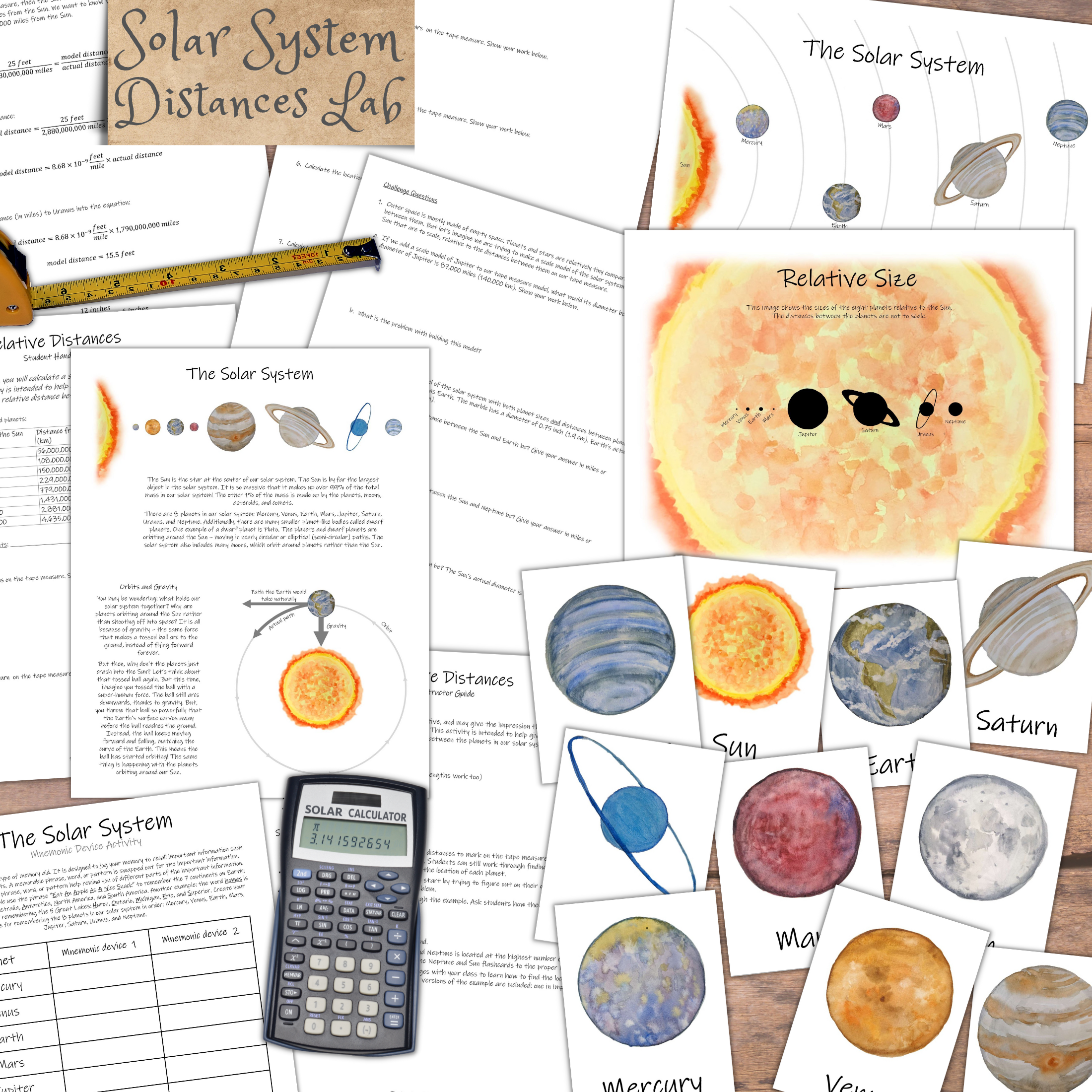
Looking for more ways to explore outer space in your classroom or homeschool? Try this solar system distances lab or this constellations snack activity. You can also check out this list of 11 outer space activity ideas and this guide to 9 sun and star activities!

Everything you need to learn about the night sky:

Trying to plan the perfect Night Sky lesson for your classroom or homeschool to go along with your night sky field trip? Iโ€™ve already created it for you! This set includes all the printable materials you need for studying night sky objects and outer space!

Explore more lessons from Wild Earth Lab:

If you enjoyed this post, I know you will love trying my other printable science and nature units in your classroom too!


Are you interested in reading more posts like this? Subscribe or follow Wild Earth Lab using the links below!


Subscribe, share, and comment:

Posted on — Leave a comment

Types of Amphibians: Frogs, Salamanders, and More!

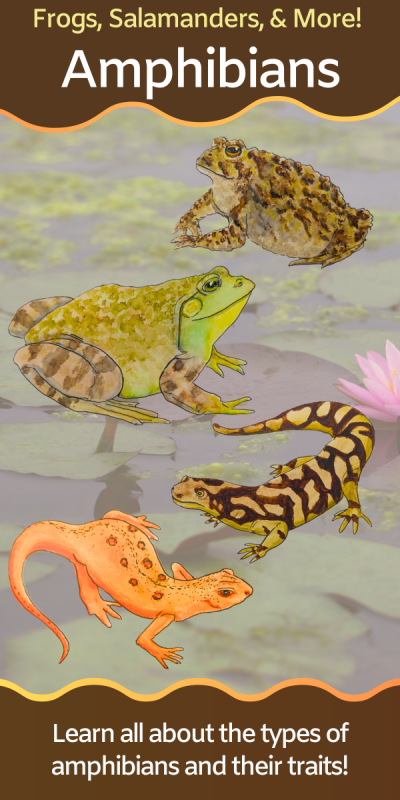
Illustrations of frogs and salamanders
text that says share this post

Amphibians are a diverse group of vertebrate animals. They come in many shapes and sizesโ€”from long-tailed salamanders to tailless frogs and even legless caecilians! Some are huge, like giant salamanders that grow to nearly six feet (two meters) long, while others are so tiny they could sit on your pinky finger. Amphibians also display striking colors, like the brightly patterned fire salamander or the brilliantly huedโ€”but toxicโ€”poison dart frog. In this post, we’ll explore the different types of amphibians – some you’ve probably seen before, and perhaps a few you’ve never heard of!

๐Ÿ“šA Note for Teachers ๐ŸŽ: If youโ€™re an educator planning to teach amphibians, great learning resources are key to deepening understanding! I think you and your students will love my complete Amphibian Unit (plus youโ€™ll support my blog with your purchase! โค๏ธ)

There are 3 main types of amphibians: frogs, salamanders, and caecilians. Each has its own unique characteristics, described below.

Frogs and Toads

green frog
close up shot of a frog
  • Class: Amphibia
  • Order: Anura

Key traits

Frogs and toads are amphibians with four limbs and no tails as adults. They also have powerful hind legs and vocal sacs for croaking. Frogs and toads start their lives in water as aquatic larvae called tadpoles. As tadpoles, they have gills and a tail for swimming. As frogs develop, they grow lungs and most species can come onto land. There are, however, some frogs that are aquatic as adults, such as African clawed frogs.

But even adult frogs like to live in damp habitats to help keep their moist skin from drying out. Frogs, like all amphibians, have moist skin rather than scales – one of the differences between reptiles and amphibians. Their skin is permeable, allowing them to drink water and breathe air through their skin.

Examples of Frogs and Toads

  • Bullfrog
  • Grass frog
  • Tree frog
  • Poison dart frog
  • Common toad
  • African clawed frog

Fun Fact

There are about 5,000 different species of frog worldwide! They are found on 6 of 7 continents (everywhere but Antarctica).

Salamanders

Small red-orange colored newt crawls over fallen leaves and detritus.
purple tropical axolotl
  • Class: Amphibia
  • Order: Urodela

Key traits

Salamanders are amphibians with long, thin tails and usually four limbs. Like all amphibians, they have moist skin that they can breathe through. Most salamanders also have gills, lungs, or even both at different stages of their life cycle. Like frogs, most salamanders go through metamorphosis. The larvae are often aquatic, with no limbs, tails for swimming, and frilly-looking external gills around their necks. Adults may live in water, on land, or both, depending on the species. Like all amphibians, adult salamanders are carnivores – often they eat small invertebrates.

Perhaps you’re wondering, what is the difference between a salamander and a newt? A newt is one type of salamander. So while all newts are salamanders, not all salamanders are newts.

Examples of Salamanders

  • Tiger salamander
  • Giant Salamander
  • Newt
  • Axolotl
  • Amphiuma

Fun Facts

Salamanders struggle to lift their bodies off the ground due to the position of their limbs on the sides of their bodies. To walk on land, they must wiggle from side to side while dragging their bodies across the ground.

The axolotl is a species of salamander that never grows up (sort of)! Even as an adult, it lives in water and has gills like a larva.

Caecilians

  • Class: Amphibia
  • Order: Gymnophiona

Key traits

The third type of amphibian is caecilians. If you’ve never heard of them or seen one, don’t worry! They are only found in the tropics, and they live underground, burrowing in the soil.

Caecilians are different from other amphibians in several ways. They have no legs, and long, worm-like bodies with grooves or rings that look like segments. Furthermore, caecilians don’t go through metamorphosis like frogs and salamanders.

Fun Facts

Though they have no legs, caecilians evolved from a legged ancestor. Over many generations, they lost their legs since they didnโ€™t need them to survive in their habitat.

What’s Next?

Continue reading about the different types of reptiles or the different types of mammals. Or learn about the differences between reptiles and amphibians.

Study this topic with Wild Earth Lab!

Thereโ€™s no need to scramble to put together the perfect lesson for teaching amphibians  โ€“ Iโ€™ve already created it for you! This set includes all the printable materials you need for studying amphibians.

Explore more lessons from Wild Earth Lab:

If you enjoyed this post, I know you will love trying my other printable science and nature units in your classroom too!


Are you interested in reading more posts like this? Subscribe or follow Wild Earth Lab using the links below!


References and Further Reading

  1. Black, R. (2012). Worldโ€™s Smallest Frog Discovered. BBC News. Available: https://www.bbc.com/news/science-environment-16491477
  2. Clark, M.A., Douglas, M., and Choi, J. (2018). Biology. Open Stax. Ch 29.3. Available: https://openstax.org/books/biology-2e/pages/29-3-amphibians
  3. Fowler, S., et al. (2013). Concepts in Biology. OpenStax. Ch 15.6. Available: https://openstax.org/books/concepts-biology/pages/15-6-vertebrates
  4. San Diego Zoo (n.d.). Chinese Giant Salamander. Available: https://animals.sandiegozoo.org/animals/chinese-giant-salamander
  5. San Diego Zoo (n.d.). Goliath Frog. Available: https://animals.sandiegozoo.org/animals/goliath-frog
  6. San Diego Zoo (n.d.). Salamander and Newt. Available: https://animals.sandiegozoo.org/animals/salamander-and-newt
  7. Wake, DB and Koo, MS. 2018. Primer: Amphibians. Current Biology 28(21): R1237-R1241. https://doi.org/10.1016/j.cub.2018.09.028

Subscribe, share, and comment:

Posted on — Leave a comment

Stargazing for Beginners: 9 Incredible Objects to Spot in the Night Sky

illustrations of planets, satellites, and meteors
text that says share this post

The night sky is full of incredible sightsโ€”you just need to know what to look for! Whether you’re gazing up from your backyard or planning a stargazing lesson, there’s so much to discover beyond just stars. From planets and galaxies to satellites and shooting stars, this guide will introduce nine fascinating night sky objects you can spot with the naked eye or a simple pair of binoculars. Grab a cozy blanket, head outside, and get ready to explore the wonders of the night sky!

A Note for Teachers: If youโ€™re an educator planning to teach the night sky, great learning resources are key to deepening understanding! I think you and your students will love my complete printable Night Sky Unit (plus youโ€™ll support my blog with your purchase! โค๏ธ)

The Moon

The Moon is the largest and brightest object in the night sky. It is about one-quarter the diameter of Earth and shines because it reflects light from the Sun. The Moon goes through all its phases once every 29.5 days.

If you are lucky, you might even be able to watch a lunar eclipse! Read about lunar eclipses and find the dates of upcoming eclipses.

photo of moon on a dark sky
A crescent moon in the night sky. Photo by Rok Romih on Pexels.com

Planets

Planets in our solar system can be seen from Earth. To the naked eye, they look like stars, but some appear larger and brighter because they are closer to Earth or reflect more sunlight. Venus and Jupiter are two of the brightest planets in the night sky!

To see the details of a planet, you will need a good telescope. Even though planets are large, they are so far away that they look like dots of light to the naked eye. To grasp the massive scale of our solar system, try out this solar system distance lab activity.

Crescent Jupiter with the Great Red Spot
Jupiter (telescope). Crescent Jupiter with the Great Red Spot by NASA’s Marshall Space Flight Center is licensed under CC-BY-NC 2.0

Stars

Stars are huge balls of hot gases held together by gravity. Our Sun is a star, but there are many others in our galaxy. Stars shine brightly or faintly depending on how much light they produce and how far away they are.

Constellations are patterns that people see in the stars.  With a little imagination, you can see people, animals, mythical beasts, and other images in the skyโ€™s stars! Today, the International Astronomical Union recognizes 88 modern constellations. You can learn more about constellations in this blog: read about the Zodiac Constellations and easy-to-find constellations for beginner stargazers in the Northern Hemisphere.

silhouette of trees and mountain under blue starry sky
The starry night sky. Photo by Sindre Fs on Pexels.com

Comets

Comets are icy chunks of space rock that orbit the Sun. Unlike planets, their orbits are long and stretched out. Comets are visible only when they travel close to the Sun, appearing as a speck of light with a faint, glowing tail.

star flying through the sky
Photo by Scott Lord on Pexels.com

Meteors/Shooting Stars

Shooting stars happen when tiny space rocks burn up while entering Earthโ€™s atmosphere. They appear as quick, bright streaks of light across the night sky.

Lots of meteors can be seen during meteor showers when Earth passes through a cometโ€™s debris trail. Different meteor showers take place at different times. You can look up the dates of meteor showers here (external link).

meteoroid in the sky
A shooting star over a house. Photo by Thirdman on Pexels.com

Galaxies

Galaxies are massive groups of stars, gas, dust, and dark matter held together by gravity. They come in different shapes, like spirals and ellipses. The Andromeda Galaxy, our closest neighboring galaxy, can be seen without a telescope in very dark skies.

gray and black galaxy wallpaper
A spiral-shaped galaxy. Photo by Pixabay on Pexels.com

Our Galaxy: The Milky Way

The Milky Way is our galaxy. When we see it in the night sky, we are viewing it from the inside! From Earth, it looks like a cloudy, gray streak across the sky, but from the outside, it would look like a giant spiral.

night sky
The milky way (and a shooting star). Photo by Neale LaSalle on Pexels.com

Aurora (Polar Lights)

The aurora is seen near the poles in winter. These glowing lights look like swirling ribbons or curtains and happen when charged particles from the Sun meet Earthโ€™s magnetic field.

aurora borealis
The aurora in the night sky. Photo by Visit Greenland on Pexels.com

Human-made Objects

Human-made objects, like satellites, can also be seen in the night sky. Satellites move steadily across the sky and donโ€™t blink like airplanes. They help with communication, navigation, and more.

You can even see the International Space Station pass through the night sky if you know when to look. Track the International Space Station here (external link).

electric lamp over black background
Satellite, photographed from space. Photo by Pixabay on Pexels.com

What’s Next?

Ready to learn more about the night sky or outer space? Read my posts about lunar eclipses and solar eclipses! You can also read more about the life cycle of a star. If you’re an educator, try out these 11 outer space activity ideas for kids or these 9 sun and star classroom activities!

Study this night sky with Wild Earth Lab!

Trying to plan the perfect Night Sky lesson for your classroom or homeschool? Iโ€™ve already created it for you! This set includes all the printable materials you need for studying night sky objects and outer space!

Explore more lessons from Wild Earth Lab:

If you enjoyed this post, I know you will love trying my other printable science and nature units in your classroom too!


Are you interested in reading more posts like this? Subscribe or follow Wild Earth Lab using the links below!


Subscribe, share, and comment:

Posted on — Leave a comment

Learning in Nature: 5 outdoor educational activities to try this summer!

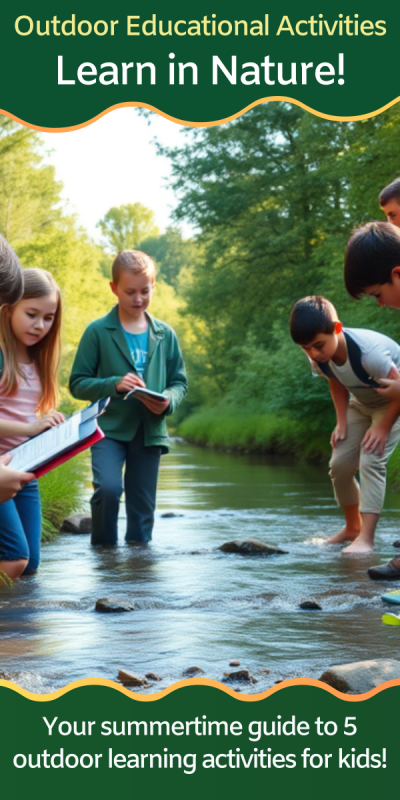
children with clipboards wading in a shallow river
text that says share this post

Are you a parent or educator looking for fun ways to take learning outside this summer? Whether you’re reviewing math and science concepts from the school year or looking for ways to connect with your local ecosystems, I’ve got you covered with these 5 outdoor educational activities!

In this post, you’ll find directions for nature activities for learning outside this summer! From catching aquatic macroinvertebrates to measuring the infiltration rates of soils, your students are sure to enjoy these fun outdoor learning activities!

Before we dive in:ย If youโ€™re an educator or parent looking for fun outdoor educational activities, great learning resources are key to deepening understanding! I think you and your students will love my Earth & environmental science units (plus youโ€™ll support my blog with your purchase! โค๏ธ)

Stream Measurements

painting showing three people taking measurements in a stream
Illustration of students measuring the width and depth of a stream!

For this activity, learn how to measure water flow with your students as a river field trip activity! With a few household items, you can collect river measurements. All you need are some simple measurement tools like a tape measure, yardstick, and stopwatch!

Water resource scientists, called hydrologists, collect stream measurements to ensure we are not using our water resources too quickly or in unsustainable ways. In this hands-on activity, students will not only practice math and measurements, but they’ll also learn about how scientists measure and study our rivers!

Catch Aquatic Macroinvertebrates

types of aquatic macroinvertebrates
A poster of the types of aquatic macroinvertebrates.
A cartoon of two people in a river using a net to catch aquatic insects
A diagram showing two students collecting aquatic macroinvertebrates in a stream using a net.

Catching aquatic macroinvertebrates is a memorable and educational field trip experience your students will love! Aquatic macroinvertebrates are little creatures like insect larvae and crayfish found at the bottoms of most ponds and streams. Just flip over a few river rocks or submerged logs near the shore of a pond and you’re likely to spot a macroinvertebrate underneath!

But here’s the cool part: macroinvertebrates are bioindicators – creatures that teach us a lot about the overall health of their ecosystems! That makes this outdoor activity a great way to review your classroom studies of biodiversity, bioindicators, entomology, or aquatic food webs. It’s also a great way to build connections with local ecosystems – almost any pond or small stream will work for this activity!

Measure the heights of trees using math!

A diagram showing how to find the height of a tree, with equations. Line 1: tree height above eye level equals distance times tan of angle. Second line: tree height equals eye level plus tree height above eye level.
This diagram shows how you can calculate the height of a tree using math!

Unless you are measuring a short seedling, you probably wonโ€™t be able to measure tree height directly because you canโ€™t reach the top. So how do you measure something so tall? Answer: use an inclinometer and trigonometry!

I donโ€™t know about you, but I think math is more interesting when we can apply it to real-world situations! If youโ€™re reviewing trigonometry, right triangles, or angles in your classroom or homeschool, you and your students will love this tree-height appliedย math activity! In this simple learning activity, students will learn how to make a homemade inclinometer โ€“ a device for measuring the angle of inclination. Then, they will take measurements and calculate the height of a tree in this outdoor educational activity.

Outdoor Experiment for Climate Change & Sea Ice

yellow arrows from the sun bouncing off of ice but not water
Sea ice is more reflective than ocean water.
two tubs of water, one covered in foil
Materials for a sea ice experiment.

A sunny summer day is the perfect time for this outdoor activity that’s all about heat, solar radiation, and reflection! For this activity, all you need is a warm sunny day, containers with cold water, foil, and a thermometer!

ย In this outdoor educational activity, students will create a model of sea ice and ocean water albedo using aluminum foil and two tubs of water. Students will track the temperature in a covered and uncovered tub on a sunny day. It’s a great way to learn about albedo and the impacts ofย positive feedback loopsย in climate change.

Measure Soil Infiltration Rates

sketches showing a tube being hammered into the soil then filled with water.
Steps for measuring soil infiltration rate

Summer is the perfect time to study soils! If you have a summer garden, you know the importance of healthy and permeable soil. Measuring soil infiltration rates is an activity that you can easily do in your garden with a few simple household items.

Why study soil infiltration? Infiltration rates of soils are important for many reasons. First, they are important in agriculture – different crops require soils that drain at different rates. Soil infiltration also plays a role in natural disasters like flooding and landslides. Finally, infiltration is an important part of the water cycle – when water seeps into the earth, it becomes part of the groundwater. Humans access groundwater with wells – an important source of water for drinking and growing plants!

Learn in Nature with Wild Earth Lab!

Thereโ€™s no need to scramble to put together the perfect materials for your outdoor educational activitiesโ€“ Iโ€™ve already created them for you! Check out my Earth and environmental science units, complete sets of printable learning materials with activities, posters, handouts, and more!


Are you interested in reading more posts with outdoor educational activities? Subscribe or follow Wild Earth Lab using the links below!


Subscribe, share, and comment:

Posted on — Leave a comment

7 Easy-to-Find Constellations for Beginner Stargazers

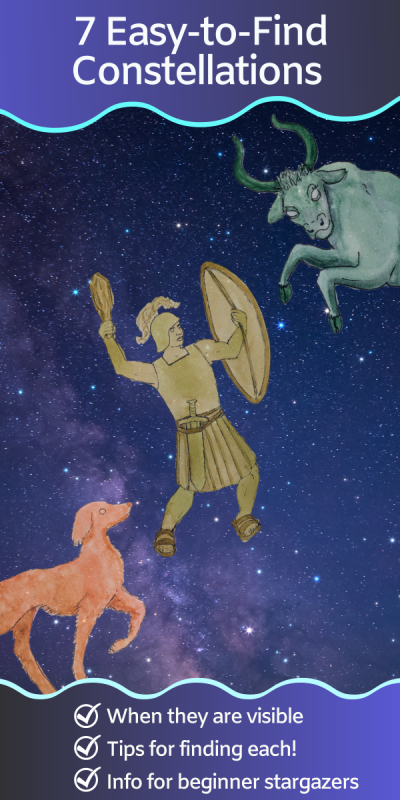
drawings of a dog, hunter, and bull overlaid on the night sky
text that says share this post

Stargazing is a magical way to connect with the cosmos, and learning to recognize constellations is a great place to start! Some star patterns are trickier to find, but others are bright, distinct, and easy to spotโ€”even for beginners. In this guide, we’ll introduce seven easy-to-find constellations to find in the Northern Hemisphere, along with tips for locating them, their mythology, and what makes them special. Whether you’re stargazing from your backyard or planning a field trip to a planetarium, these easy-to-find constellations are the perfect starting point for your journey into astronomy!

A Note For Teachers: If youโ€™re an educator planning to teach the night sky or constellations, great learning resources are key to deepening understanding! I think you and your students will love my Constellations Mini Study, which you can also find within my complete Night Sky Unit (plus youโ€™ll support my blog with your purchase! โค๏ธ)

What are constellations?

Constellations are patterns that people see in the stars.  With a little imagination, you can see people, animals, mythical beasts, and other images in the skyโ€™s stars! Different ancient cultures imagined different pictures in the stars and told unique stories and myths about them. Today, the International Astronomical Union recognizes 88 modern constellations.

Which constellations can I see?

The constellations you see change depending on the time, date, and location. For example, if you were to watch the sky all night, the constellations would appear to move across the sky, spinning around a central point. In reality, itโ€™s the Earth that is moving, not the constellations. Earth rotates fully on its axis every day.

The Earth isnโ€™t just rotating โ€“ it also orbits around the Sun every year.  Because of this, some constellations are on the side of Earth facing the Sun during part of the year, so we can’t see them. Consequently, these constellations appear and disappear with the seasons, for example, the Zodiac constellations.

Depending on where you live, you may find that some constellations do not disappear seasonally. For example, the constellations located directly above and below Earth are never hidden by the Sun, no matter where Earth is in its orbit. These constellations are called circumpolar constellations. However, circumpolar constellations canโ€™t be seen everywhere on Earth. The constellations above Earth are visible only in the Northern Hemisphere, while the constellations below Earth can be seen only in the Southern Hemisphere.

Tips for Viewing Easy-to-Find Constellations

To view constellations, it must be nighttime. For this reason, winter can be a great time for stargazing, because the sun sets earlier. To see constellations, a dark, unobstructed sky is key. First, head out to a dark area away from city lights and tall buildings for the best chances of spotting some constellations.

It may also help to have a star chart for your area and season. As you know, not all constellations are visible at all times. A star chart will help you figure out which constellations are visible and where they are located in the sky. For example, you can find online star charts from websites like Stellarium Web or Sky and Telescope (external links).

Ursa Major

The Great Bear

Hemisphere: Northern (circumpolar)

Best Seen: in spring

Mythology: several ancient cultures interpreted this collection of stars as a bear or other animal. In one Greek myth, the three stars behind the bear represent its tail, which got stretched out when the bear was thrown into the sky.

Distinguishing Features: Ursa Major is the third largest of all constellations. The distinctive big dipper is made of 7 bright stars found in the rear and tail of Ursa Major.

Ursa Minor

The Little Bear

Hemisphere: Northern (circumpolar)

Best Seen: in summer

Mythology: in Greek mythology, Ursa Minor was Zeusโ€™s son, who got turned into a bear along with his mother, Ursa Major.

Distinguishing Features: Ursa Minor is also known as the little dipper. Polaris, the north star, is found at the tip of the bearโ€™s tail. Polaris is used in Northern Hemisphere navigation because it is always located in the same place in the sky.

Ursa Minor can be found using its neighboring constellation. First, find the big dipper (Ursa Major). Draw an imaginary line across the front of the big dipper, then extend that line upwards. The line will point to the north star.

Cassiopeia

The Seated Queen

Hemisphere: Northern (circumpolar)

Best Seen: in fall

Mythology: in Greek mythology, Cassiopeia was a vain queen, obsessed with her own beauty. She was the wife of Cepheus and mother of Andromeda.

Distinguishing Features: Cassiopeia appears as an โ€œMโ€ or โ€œWโ€ in the sky, made of bright stars. The Milky Way runs through Cassiopeia.

Orion

The Hunter

Hemisphere: Northern

Best Seen: in winter

Mythology: many ancient cultures interpreted this collection of stars as human form, often a hunter or warrior. In Greek mythology, Orion was a skilled hunter.

Distinguishing Features: to locate Orion, look for his belt โ€“ three distinct and bright stars arranged in a line.

Canis Major

The Great Dog

Hemisphere: primarily Southern, but it is also sometimes visible in the Northern Hemisphere

Best Seen: in winter in the Northern Hemisphere

Mythology: in Greek mythology, Canis Major is one of Orionโ€™s hunting dogs.

Distinguishing Features: Sirius, the brightest star in the sky, is found in the dogโ€™s chest. A loyal companion, Canis Major appears to follow behind Orion.

Cygnus

The Swan

Hemisphere: Northern

Best Seen: in late summer and early fall

Mythology: in Greek mythology, Cygnus is said to be Zeus in disguise.

Distinguishing Features: due to its shape, Cygnus is also known as the Northern Cross. The Milky Way passes directly through the center of the distinctive cross shape.

The Pleiades and Taurus

Seven Sisters and The Bull

Pleiades Night Stars

Hemisphere: Northern

Best Seen: in winter

Mythology: The pleiades or “seven sisters” are found within the constellation Taurus the bull (a Zodiac constellation). In Greek Mythology, the seven sisters are the daughters of Atlas.

Distinguishing Features: The pleiades isn’t a constellation, but rather a cluster of many stars. To find it, look for a dense group of several stars. Those with excellent eye sight can make out at least seven stars. Once you find the pleiades, you can find Taurus the bull.

You can also find Taurus by drawing an imaginary line through the three stars of Orion’s belt then extending that line. The bull appears to be charging towards Orion.

Explore Constellations with Wild Earth Lab:

If you enjoyed my constellation artwork and info in this post, I think you will love my Constellations Mini Study or my complete Night Sky Unit. They feature my high-quality watercolor images from this post on flashcards, posters, and other kids’ learning materials. Perfect for stargazing with kids!

Explore more lessons from Wild Earth Lab:

If you enjoyed this post, I know you will love trying my other science and nature units for your classroom too!


Are you interested in reading more posts like this? Subscribe or follow Wild Earth Lab using the links below!


References and Further Reading

  1. Constellation Guide (n.d.). Constellations by Month. Available: https://www.constellation-guide.com/constellations-by-month/
  2. Constellations Guide (n.d.). Zodiac Constellations. Available: https://www.constellation-guide.com/constellation-map/zodiac-constellations/
  3. Ford, D. (n.d.). List of the Constellations. In-The-Sky.org. Available: https://in-the-sky.org/data/constellation.php?id=19
  4. Fraknoi, A., Morrison, D., Wolff, S. C., (2016). Astronomy. OpenStax. Available: https://openstax.org/books/astronomy/pages/1-6-a-tour-of-the-universe
  5. GoAstronomy (n.d.). Constellations of the Night Sky. Available: https://www.go-astronomy.com/constellations.htm
  6. Horvatin, S. (n.d.). Constellations. Michigan State University. Abrams Planetarium. Available: https://web.pa.msu.edu/people/horvatin/Astronomy_Facts/constellations.html
  7. International Astronomical Union (n.d.). The Constellations. Available: https://www.iau.org/public/themes/constellations/

Subscribe, share, and comment:

Posted on — 1 Comment

What are the Zodiac constellations and what makes them special?

zodiac constellation art overlaid on the night sky
text that says share this post

The night sky is full of fascinating stories, and the Zodiac constellations are some of the most famous star patterns to explore! These 12 constellations have been used for ages to track the seasons, navigate the skies, and inspire myths from cultures around the world. In this guide, weโ€™ll dive into what makes the Zodiac constellations special, share fun facts about each one, and offer tips for spotting them in the night sky. Whether you’re stargazing at home or planning a field trip to a planetarium, get ready to journey through the constellations that have captivated stargazers for thousands of years!

A Note For Teachers: If youโ€™re an educator planning to teach the night sky or constellations, great learning resources are key to deepening understanding! I think you and your students will love my Constellations Mini Study, which you can also find within my complete Night Sky Unit (plus youโ€™ll support my blog with your purchase! โค๏ธ)

What are constellations?

Constellations are patterns that people see in the stars.  With a little imagination, you can see people, animals, mythical beasts, and other images in the skyโ€™s stars! Different ancient cultures imagined different pictures in the stars and told unique stories and myths about them. Today, the International Astronomical Union recognizes 88 modern constellations, including the Zodiac constellations.

What are the Zodiac constellations?

The Zodiac is a set of constellations seen in the night sky from Earth. They each represent a different animal, person, creature, or other object. Many of them are very old constellations that have been recognized by human cultures for thousands of years. They are: Aries, Taurus, Gemini, Cancer, Leo, Virgo, Libra, Scorpius, Sagittarius, Capricornus, Aquarius, and Pisces. Each of these constellations appears and disappears seasonally from the night sky.

What makes the Zodiac constellations special?

The Zodiac constellations are special because they appear to line up along the ecliptic, the path the Sun seems to follow across the sky over the course of a year. The ecliptic is actually an imaginary plane that represents Earth’s orbit around the Sun. From our perspective on Earth, these constellations seem to trace the Sunโ€™s journey through the sky, making them key markers in astronomy.

Because of their positions along the ecliptic, each Zodiac constellation becomes visible at specific times of the year. This happens because, at certain times, the Sun appears in front of a particular constellation, making it impossible to see in the night sky. Rememberโ€”constellations are only visible at night! As Earth orbits the Sun, different constellations shift to the ‘nighttime side’ of the sky, meaning we can only see the ones that arenโ€™t obscured by daylight during each season.

Aries

The Ram

Hemisphere: Northern

Best Seen: in fall and early winter

Mythology: in Greek mythology, Aries represented a ram with golden fleece. But this collection of stars was interpreted as a ram even earlier, during the Babylonian Empire.

Distinguishing Features: the ram appears like a crooked line of relatively faint stars, fairly close to the Pleiades star cluster.

Taurus

The Bull

Hemisphere: Northern

Best Seen: in winter

Mythology: the bull is one of the oldest known constellations, with mythology dating back to the Bronze Age.

Distinguishing Features: the bullโ€™s head contains the bright star Aldebaran. Taurus appears to be charging toward Orion in the sky.

Gemini

The Twins

Hemisphere: primarily Southern, but it is also sometimes visible from the Northern Hemisphere

Best Seen: in winter in the Northern Hemisphere

Mythology: the Gemini are the mythical twins Castor and Pollux (for whom the two brightest stars in Gemini are named).

Distinguishing Features: Castor and Pollux, the two brightest stars in this constellation,  represent the twinsโ€™ heads.

Cancer

The Crab

Hemisphere: Northern

Best Seen: in late winter and early spring

Mythology: Cancer the crab bit Hercules in Greek Mythology. However, Cancerโ€™s mythology predates ancient Greece, like many Zodiac constellations.

Distinguishing Features: Cancer can be challenging to spot due to its relatively faint stars. Find it by drawing a line between the heads of the Gemini twins and Regulus, Leoโ€™s brightest star.

Leo

The Lion

Hemisphere: Northern

Best Seen: in spring

Mythology: legends of Leo the Lion date back to ancient times. Leo is known as a lion killed by Hercules in Greek mythology.

Distinguishing Features: Leoโ€™s brightest stars are found in the lionโ€™s head and mane, forming a shape like a backward question mark. Its brightest star, Regulus is in the lionโ€™s chest.

Virgo

The Maiden

Hemisphere: primarily Southern, but it is also sometimes visible from the Northern Hemisphere

Best Seen: in spring in the Northern Hemisphere

Mythology: tales of Virgo vary across ancient cultures; she sometimes represents a goddess.

Distinguishing Features: Virgoโ€™s brightest star is Spica, a blue giant. Spica can be located by extending an imaginary arc from the handle of the big dipper across the sky.

Libra

The Scales

Hemisphere: primarily Southern, but it is also sometimes visible from the Northern Hemisphere

Best Seen: in late spring and early summer in the Northern Hemisphere

Mythology: Libra represents scales; however, some ancient cultures considered Libra part of Scorpius, rather than a separate constellation.

Distinguishing Features: Libra, a relatively faint constellation, can be located by first finding its neighbors on either side, Virgo and Scorpius.

Scorpius

The Scorpion

Hemisphere: primarily Southern, but it is also sometimes visible from the Northern Hemisphere

Best Seen: in summer in the Northern Hemisphere

Mythology: in the tale of Orion, Scorpius stung and killed the hunter.

Distinguishing Features: Scorpius has a distinctive J-shape and has a bright, twinkling red supergiant star near its heart.

Sagittarius

The Archer

Hemisphere: primarily Southern, but it is also sometimes visible from the Northern Hemisphere

Best Seen: in summer in the Northern Hemisphere

Mythology: in legends, Sagittarius was a mythical beast called a centaur: half man, half horse.

Distinguishing Features: Sagittarius contains a close grouping of stars forming a teapot shape.

Capricornus

The Sea Goat

Hemisphere: primarily Southern, but it is also sometimes visible from the Northern Hemisphere

Best Seen: in late summer and early fall in the Northern Hemisphere

Mythology: Capricornus is a mythical creature: with the head of a goat and the tail of a fish.

Distinguishing Features: Capricornus is found close to the Milky Way. It is a fairly faint constellation but has a recognizable kite-like shape.

Aquarius

The Water Bearer

Hemisphere: primarily Southern, but it is also sometimes visible from the Northern Hemisphere

Best Seen: in fall in the Northern Hemisphere

Mythology: Aquarius was a waiter who served Zeus and the other Greek gods, filling their cups.

Distinguishing Features: what Aquarius lacks in bright stars it makes up for in size โ€“ this is the 10th largest constellation.

Pisces

The Fish

Hemisphere: Northern

Best Seen: in fall

Mythology: for thousands of years, Pisces has represented two fish connected at the tail, though the details of its story varied across time and cultures.

Distinguishing Features: this constellation is very faint but can be found in dark skies using its proximity to the great square of Pegasus.

Explore Constellations with Wild Earth Lab:

If you enjoyed my Zodiac constellation artwork and info in this post, I think you will love my Zodiac constellation printable flashcards. They feature my high-quality watercolor images and are perfect for amateur stargazers and studying the night sky with kids! These cards are also in my Constellations Mini Study.

OR: you can bundle and save on even more astronomy and space worksheets, activities, and posters with my complete Night Sky Unit!

Explore more lessons from Wild Earth Lab:

If you enjoyed this post, I know you will love trying my other printable science and nature units in your classroom too!


Are you interested in reading more posts like this? Subscribe or follow Wild Earth Lab using the links below!


References and Further Reading

  1. Constellation Guide (n.d.). Constellations by Month. Available:ย https://www.constellation-guide.com/constellations-by-month/
  2. Constellations Guide (n.d.). Zodiac Constellations. Available:ย https://www.constellation-guide.com/constellation-map/zodiac-constellations/
  3. Ford, D. (n.d.). List of the Constellations. In-The-Sky.org. Available:ย https://in-the-sky.org/data/constellation.php?id=19
  4. Fraknoi, A., Morrison, D., Wolff, S. C., (2016). Astronomy. OpenStax. Available:ย https://openstax.org/books/astronomy/pages/1-6-a-tour-of-the-universe
  5. GoAstronomy (n.d.). Constellations of the Night Sky. Available:ย https://www.go-astronomy.com/constellations.htm
  6. Horvatin, S. (n.d.). Constellations. Michigan State University. Abrams Planetarium. Available:ย https://web.pa.msu.edu/people/horvatin/Astronomy_Facts/constellations.html
  7. International Astronomical Union (n.d.). The Constellations. Available:ย https://www.iau.org/public/themes/constellations/
  8. Rao, J (2008). How the Ecliptic and the Zodiac Work. Space.com. Available: https://www.space.com/5417-ecliptic-zodiac-work.html

Subscribe, share, and comment:

Posted on — Leave a comment

5 Reasons to Teach Rivers and Streams in Your Classroom

students with clipboards kneeling next to a shallow stream
text that says share this post

Rivers and streams provide endless opportunities for scientific exploration and discovery – and chances are you can find one right in your community! From their chemistry and physics to their role in ecosystems and human communities, rivers and streams offer excellent opportunities to teach critical concepts in science and math in an applied way. Across many grade levels, incorporating rivers and streams into your curriculum is a fantastic way to spark curiosity and make learning meaningful. Here are five compelling reasons to study rivers and streams in your classroom this year.

Before we dive in:ย If youโ€™re an educator planning toย teach rivers and streams, great learning resources are key to deepening understanding! I think you and your students will love myย complete Science on the River Unit (plus youโ€™ll support my blog with your purchase! โค๏ธ)

1. Rivers and Streams Are an Interdisciplinary Subject

One of the most exciting aspects of studying rivers and streams is their interdisciplinary nature. Studying natural waterways relates to many fields of science, allowing students to apply knowledge across disciplines:

  • Chemistry: Investigate water quality by measuring pH levels, electrical conductivity, or analyzing dissolved oxygen.
  • Physics: Study fluid mechanics, such as how a stream’s velocity varies with depth, width, and around river bends.
  • Ecology: Explore river ecosystems, food webs, and macroinvertebrate populations that indicate water quality and river health.
  • Geology: Discuss rivers’ role in shaping landscapes and carving out canyons over time.
  • Environmental Science: discuss the challenges facing rivers today, including water conservation, changes in flow due to climate change, pollution from urban and agricultural runoff, and flooding.

By approaching rivers and streams as an interdisciplinary subject, you can help students see how different scientific fields work together to solve real-world problems.

2. Opportunities for Hands-On Learning Activities

Rivers and streams offer a wealth of hands-on learning opportunities that engage students in scientific investigation. Measuring stream flow is a simple yet effective activity that brings science concepts to life. By timing how long it takes for an object to travel a set distance downstream, students can calculate the velocity of a stream.

Other hands-on activities include collecting water samples, catching and identifying aquatic insect larvae, and identifying floodplains and high-water lines. Many of these activities can be conducted with minimal equipment, making them accessible even for classrooms with limited resources. Hands-on learning not only reinforces concepts but also encourages students to ask questions, explore their surroundings, and develop critical thinking skills.

painting showing three people taking measurements in a stream

3. A Perfect Example of Applied Math

Studying rivers and streams is an excellent way to integrate applied math into your science curriculum. Hydrologists and engineers rely on mathematics to analyze water flow, predict floods, and manage water resources. By engaging in similar calculations, students can see how math is used to solve real-world problems. Here are a few ways to apply math when studying rivers:

  • Geometry: students can estimate the cross-sectional area of a river using width and depth data.
  • Arithmetic: students can calculate river discharge using the formula Q=Aร—V, where Q is discharge, A is the cross-sectional area of the stream, and V is the velocity of the flowing water.
  • Probability: students can determine the likelihood of floods based on historical data.
  • Calculus: For more advanced learners, you can introduce calculus concepts like rating curves. Hydrologists use rating curves to estimate stream discharge based on water height.

These activities reinforce math skills and show students how math is a valuable tool for understanding the natural world.

A river cross section divided into multiple rectangles for approximating area

4. A Great Excuse to Take Learning Outside

Studying rivers and streams provides an opportunity to step outside the classroom and into nature. Field trips to local rivers, streams, or creeks allow students to apply textbook knowledge and observe concepts they’ve studied first-hand. They can look for signs of ecosystem health, observe different river features like goosenecks or riffles, and identify types of river channels.

Outdoor activities not only make lessons more memorable but also help students connect with their local environment. A river field trip can foster an appreciation for rivers and nature in general. Connecting with their local rivers on a field trip may even inspire your students to become involved in local conservation and habitat restoration efforts. If you visit a river with your class, spend 15 minutes picking up trash to leave it nicer than you found it.

Woman in waiters stands in a stream while using a hammer and level to adjust stream monitoring station equipment in a mountain valley. Grey smoke can be seen in the background, rising off of the mountainside.
Taking stream measurements.

5. Rivers and Streams Are Vital to Our Communities

Rivers and streams play a critical role in human communities, providing drinking water, supporting agriculture, and offering recreational opportunities. By studying these waterways, students can gain a deeper understanding of how rivers impact their daily lives.

Lessons can focus on the challenges of managing rivers sustainably or the impact of pollution and climate change on streams. For example, you can discuss how urban development affects stormwater runoff or how conservation efforts have improved water quality in a local river. Understanding the role of rivers and streams in our communities helps students see the relevance of their studies and fosters a sense of responsibility for protecting these vital resources.

Study this topic with Wild Earth Lab!

Thereโ€™s no need to scramble to put together the perfect rivers lesson ย โ€“ Iโ€™ve already created it for you! This set includes all the worksheets, project guides, and printable materials you need for studying rivers and streams.

Explore more lessons from Wild Earth Lab:

If you enjoyed this post, I know you will love trying my other printable science and nature units!


Are you interested in reading more posts about fascinating science topics? Subscribe or follow Wild Earth Lab using the links below!


Subscribe, share, and comment:

Posted on — Leave a comment

Teaching The Fungi Life Cycle in Your Classroom: learn how mushrooms grow!

a graphic with a picture of the mushroom life cycle

Wild Earth Lab is supported by readers like you. This post includes links to my own products and affiliate products. If you purchase through links on my site, I may earn a small commission at no additional cost to you.

Although mushrooms grow out of the ground like plants, they belong to a completely different kingdomโ€”the fungi kingdom. The life cycle of fungi, like mushrooms, is unique and distinct from the life cycles of plants and animals. Understanding the stages of a mushroom life cycle provides fascinating insights into how fungi grow, reproduce, and contribute to their ecosystems. In this post, we’ll explore the life cycle of a mushroom step-by-step. For homeschool parents and biology teachers looking for engaging ways to introduce the fungi kingdom, be sure to check out my printable mushroom life cycle materials featuring my artwork!

Support my blog with your purchase of my printable mushroom anatomy diagrams!

Before diving into the mushroom life cycle, be sure to review the parts of a mushroom. It helps to be familiar with mushroom anatomy terms including mycelium, hyphae, and spores.

1. Spores Germinate and Hyphae Form

The life cycle of a mushroom begins with spores. A spore is a single cell, but not just any cell โ€“ itโ€™s a special cell for reproduction. When spores land on the soil or another surface, they germinate, which means start growing. The spores develop into hyphae:  long branching filaments made of many cells.

2. Hyphae Meet

In animals, there are two mating types, known as male and female. Fungi also have different mating types (two or more depending on the species). When two hyphae of different but compatible mating types come into contact, they fuse together. This fusion allows new, unique hyphae to grow.

3. Mycelium Expands and Primordia Form

As the hyphae grow and expand, they form a mycelium โ€“ the underground part of a fungus. As the mycelium spreads, clusters of hyphae called hyphal knots start to develop. These hyphal knots are a sign that a mushroom may soon form. The knots grow into small structures called primordia, which are like baby mushrooms.

4. Button Forms

Many hyphal knots and primordia form in the mycelium, but only a few grow into mature mushrooms. A mushroom is the fruiting body of a fungus โ€“ its reproductive structure that makes spores. When a mushroom is young, it is called a button. Buttons have protective veils covering their gills.

Looking for a hands-on mushroom activity to try with your class? You can grow your own edible mushrooms using a kit, and watch buttons form from the mycelium! Try this grow-your-own oyster mushroom kit from ForestOriginsShop on Etsy.

5. Spores Release

Once the mushroom is fully developed, it opens, revealing its gills.  The gills release spores. A single mushroom can produce billions of spores. Spores are very light, allowing them to travel easily through the air. If they land in a good spot, some will germinate and start the life cycle all over again.

Teach Mushroom Life Cycles with Wild Earth Lab!

Do you need classroom materials for teaching fungi life cycles? Iโ€™ve created some for you! This set includes all the printable materials you need for studying how mushrooms form! Your purchase will support this blog.

Or, get these life cycle materials PLUS more mushroom activities in my complete Mushroom Unit:

Explore units from Wild Earth Lab:

If you enjoyed this post, I know you will love trying my other science and nature units in your classroom too!


Are you interested in reading more about biology classroom topics? Subscribe or follow Wild Earth Lab using the links below!


References and Further Reading

  1. Arora, D. (1986). Mushrooms Demystified (Second Edition). Ten Speed Press and Random House, Inc.
  2. Ha, M., Morrow, M., & Algiers, K. (n.d.). Botany. ASCCC Open Educational Resource Initiative. Available Chapter 2.3 Fungi. Available via LibreTexts: https://bio.libretexts.org/Bookshelves/Botany/Botany_(Ha_Morrow_and_Algiers)/
  3. Various Authors (n.d.). Introductory Biology: Evolutionary and Ecological Perspectives. Chapter XVI. Fungi. Available via University of Minnesota PressBooks: https://pressbooks.umn.edu/introbio/
  4. OpenStax (n.d.). Concepts in Biology (OpenStax). Chapter 13.4 Fungi. Available via LibreTexts: https://bio.libretexts.org/Bookshelves/Introductory_and_General_Biology/Concepts_in_Biology_(OpenStax)/

Subscribe, share, and comment: