Posted on Leave a comment

5 Reasons to Teach Rivers and Streams in Your Classroom

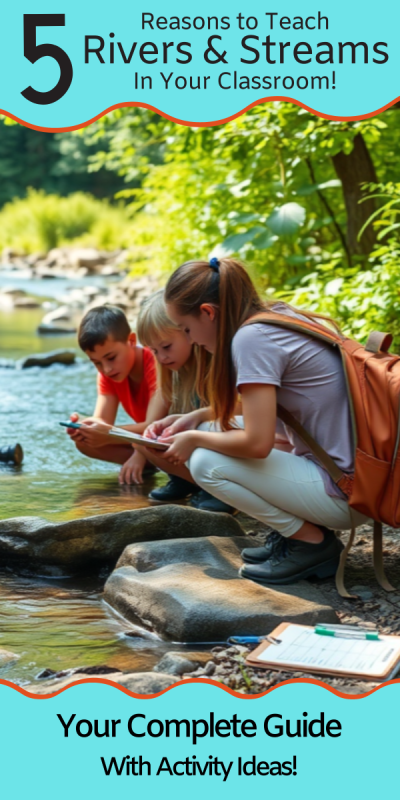
students with clipboards kneeling next to a shallow stream
text that says share this post

Rivers and streams provide endless opportunities for scientific exploration and discovery – and chances are you can find one right in your community! From their chemistry and physics to their role in ecosystems and human communities, rivers and streams offer excellent opportunities to teach critical concepts in science and math in an applied way. Across many grade levels, incorporating rivers and streams into your curriculum is a fantastic way to spark curiosity and make learning meaningful. Here are five compelling reasons to study rivers and streams in your classroom this year.

Before we dive in:ย If youโ€™re an educator planning toย teach rivers and streams, great learning resources are key to deepening understanding! I think you and your students will love myย complete Science on the River Unit (plus youโ€™ll support my blog with your purchase! โค๏ธ)

1. Rivers and Streams Are an Interdisciplinary Subject

One of the most exciting aspects of studying rivers and streams is their interdisciplinary nature. Studying natural waterways relates to many fields of science, allowing students to apply knowledge across disciplines:

  • Chemistry: Investigate water quality by measuring pH levels, electrical conductivity, or analyzing dissolved oxygen.
  • Physics: Study fluid mechanics, such as how a stream’s velocity varies with depth, width, and around river bends.
  • Ecology: Explore river ecosystems, food webs, and macroinvertebrate populations that indicate water quality and river health.
  • Geology: Discuss rivers’ role in shaping landscapes and carving out canyons over time.
  • Environmental Science: discuss the challenges facing rivers today, including water conservation, changes in flow due to climate change, pollution from urban and agricultural runoff, and flooding.

By approaching rivers and streams as an interdisciplinary subject, you can help students see how different scientific fields work together to solve real-world problems.

2. Opportunities for Hands-On Learning Activities

Rivers and streams offer a wealth of hands-on learning opportunities that engage students in scientific investigation. Measuring stream flow is a simple yet effective activity that brings science concepts to life. By timing how long it takes for an object to travel a set distance downstream, students can calculate the velocity of a stream.

Other hands-on activities include collecting water samples, catching and identifying aquatic insect larvae, and identifying floodplains and high-water lines. Many of these activities can be conducted with minimal equipment, making them accessible even for classrooms with limited resources. Hands-on learning not only reinforces concepts but also encourages students to ask questions, explore their surroundings, and develop critical thinking skills.

painting showing three people taking measurements in a stream

3. A Perfect Example of Applied Math

Studying rivers and streams is an excellent way to integrate applied math into your science curriculum. Hydrologists and engineers rely on mathematics to analyze water flow, predict floods, and manage water resources. By engaging in similar calculations, students can see how math is used to solve real-world problems. Here are a few ways to apply math when studying rivers:

  • Geometry: students can estimate the cross-sectional area of a river using width and depth data.
  • Arithmetic: students can calculate river discharge using the formula Q=Aร—V, where Q is discharge, A is the cross-sectional area of the stream, and V is the velocity of the flowing water.
  • Probability: students can determine the likelihood of floods based on historical data.
  • Calculus: For more advanced learners, you can introduce calculus concepts like rating curves. Hydrologists use rating curves to estimate stream discharge based on water height.

These activities reinforce math skills and show students how math is a valuable tool for understanding the natural world.

A river cross section divided into multiple rectangles for approximating area

4. A Great Excuse to Take Learning Outside

Studying rivers and streams provides an opportunity to step outside the classroom and into nature. Field trips to local rivers, streams, or creeks allow students to apply textbook knowledge and observe concepts they’ve studied first-hand. They can look for signs of ecosystem health, observe different river features like goosenecks or riffles, and identify types of river channels.

Outdoor activities not only make lessons more memorable but also help students connect with their local environment. A river field trip can foster an appreciation for rivers and nature in general. Connecting with their local rivers on a field trip may even inspire your students to become involved in local conservation and habitat restoration efforts. If you visit a river with your class, spend 15 minutes picking up trash to leave it nicer than you found it.

Woman in waiters stands in a stream while using a hammer and level to adjust stream monitoring station equipment in a mountain valley. Grey smoke can be seen in the background, rising off of the mountainside.
Taking stream measurements.

5. Rivers and Streams Are Vital to Our Communities

Rivers and streams play a critical role in human communities, providing drinking water, supporting agriculture, and offering recreational opportunities. By studying these waterways, students can gain a deeper understanding of how rivers impact their daily lives.

Lessons can focus on the challenges of managing rivers sustainably or the impact of pollution and climate change on streams. For example, you can discuss how urban development affects stormwater runoff or how conservation efforts have improved water quality in a local river. Understanding the role of rivers and streams in our communities helps students see the relevance of their studies and fosters a sense of responsibility for protecting these vital resources.

Study this topic with Wild Earth Lab!

Thereโ€™s no need to scramble to put together the perfect rivers lesson ย โ€“ Iโ€™ve already created it for you! This set includes all the worksheets, project guides, and printable materials you need for studying rivers and streams.

Explore more lessons from Wild Earth Lab:

If you enjoyed this post, I know you will love trying my other printable science and nature units!


Are you interested in reading more posts about fascinating science topics? Subscribe or follow Wild Earth Lab using the links below!

Subscribe, share, and comment:

Posted on Leave a comment

5 Reasons to Teach Soil Science in Your Classroom

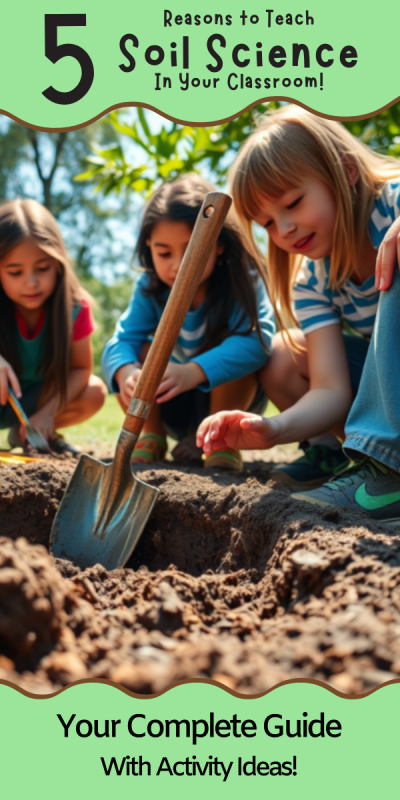
Children gathered around a hole dug in the soil
text that says share this post

Soil is often overlooked as a classroom topic, yet itโ€™s a fascinating and practical area of science to explore with one’s students. Whether youโ€™re introducing elementary schoolers to the basics of earth science or tackling advanced environmental science concepts with high schoolers, soil science offers countless opportunities for hands-on learning with real-world applications. Here are five compelling reasons to incorporate soil science into your classroom curriculum.

But first: if you’re already on the hunt for great soil science teaching materials, I think you and your students will love my complete soil science unit. It includes directions for five soil lab activities, worksheets, readings, and engaging diagrams. Plus you’ll support this blog with your purchase!

1. Soil Science is an Interdisciplinary STEM Subject

One of the most exciting things about teaching soil science is its interdisciplinary nature. It bridges various STEM (Science, Technology, Engineering, and Math) fields, letting your students experience how scientific disciplines interconnect. For example, students will use math to calculate soil porosity and permeability and apply chemistry to analyze pH levels and organic matter content. Biology comes into play when learning about soil microorganisms! And even physics will come up when looking at how water moves through different soils.

Teaching soil science allows you to create lessons that naturally integrate multiple disciplines. For instance, you might try a lab where students add water to sandy and silty soils, calculate porosity, and graph their results. You can read my blog post about how to calculate porosity in your classroom! Activities like this, while simple, reinforce STEM skills!

a lab bench with a clipboard, some soil in dishes, and a bottle of liquid
A soil organic matter lab activity. Find directions online or printable versions.

2. Soils Impact Our Food, Water, Climate, and Ecosystems

Soil is so much more than just dirt! Soil is necessary for food production, water filtration, carbon storage, and ecosystem health. Teaching students about soil helps them understand the connections between soil and global challenges like food security and climate change.

For example, healthy soils are necessary to grow crops that feed Earth’s growing population. Soils also act as natural filters, purifying water as it percolates through its layers. Furthermore, soils tie into ecosystems and the climate, since they store carbon and other nutrients. Studying soil science is a great way to begin a discussion on sustainability and environmental conservation with your students.

3. Soil is Great for Hands-on Activities!

When you teach soil science, you’ll have the chance to try many hands-on learning activities with your students. For example, you could analyze soil textures – for example, by doing the soil textures “jar lab” I wrote previously about in my blog. The basic idea is this: students mix soil samples with water, shake them, and let the particles settle into layers of sand, silt, and clay. The larger, heavier particles settle out first, which lets your students observe the amount of sand, silt, and clay in the soil. This simple experiment visually demonstrates the concept of soil texture and allows students to connect theoretical knowledge with real-world observations.

Another activity is testing soils’ organic matter content. This activity relies on chemistry: when applied to soil, hydrogen peroxide reacts with organic matter, causing bubbling and fizzing. If you’d like to try this activity, you can find step-by-step directions in my blog post about detecting soil organic matter with hydrogen peroxide.

Truly, thereโ€™s no shortage of soil science experiments and activities to try. Additional options could include measuring soil pH levels and growing plants in different soil types to observe how soil composition impacts growth. These hands-on labs make lessons more interactive and also teach science skills like hypothesis testing and data collection.

a jar with soil and water and a stopwatch on a table next to handouts and worksheets
A soil textures jar lab. Find the directions online or printable versions.

4. Soil Knowledge is Useful in Many Career Paths

A little soil science knowledge goes a long way for students who dream of working outdoors or making a difference in the environment. Professions in agriculture, conservation, environmental science, land management, and urban planning all require a deep understanding of soil. Additionally, careers in engineering, hydrology, and ecology often intersect with soil science, offering even more opportunities for students with this foundational knowledge.

Introducing soil science in the classroom helps students see how their lessons could lead to fulfilling careers. You can highlight professionals who work in these fields, invite guest speakers, or assign projects where students explore soil-related careers. These activities provide opportunities to explore a variety of career paths for students who may not yet see how their classroom studies relate to their future goals.

corn plant on field
Soil knowledge is key in many careers, including agriculture. Photo by Flambo on Pexels.com

5. Soil Science Gets Students Outside

Another great reason to teach soil science is the opportunity to take your class outdoors. No matter where you live, thereโ€™s soil to explore! Outdoor activities like digging into a local soil horizon, observing soil erosion, or starting a classroom composting project can help students apply their classroom knowledge to real-world observations.

Fieldwork can be as simple or elaborate as you want it to be. You might organize a short walk around your school grounds to collect soil samples or partner with a local park for a more in-depth study. Outdoor experiences are sure to enrich your soil lessons. Plus, theyโ€™re a great way to encourage physical activity and break up the monotony of a traditional classroom setting.

Teaching Soil Science in Your Classroom

If youโ€™re an educator planning toย teach soil science, great learning resources are key to deepening understanding! I think you and your students will love my complete Soil Science Unit (plus youโ€™ll support my blog with your purchase!)

Explore more lessons from Wild Earth Lab:

If you enjoyed this post, I know you will love trying my other printable science and nature units in your classroom too!


Are you interested in reading more posts like this? Subscribe or follow Wild Earth Lab using the links below!


Subscribe, share, and comment: