Posted on 1 Comment

Stargazing Guide: Plan a Night Sky Field Trip for Kids

three children pointing at the night sky
text that says share this post

There’s nothing quite like stepping outside on a clear night and gazing up at the stars. A night sky field trip is a fantastic way to bring hands-on science and astronomy into your homeschool or learning groupโ€”no expensive equipment is required! With just a little planning, you can explore the wonders of the universe, from identifying constellations to spotting planets, meteor showers, and more. In this guide, you’ll find simple steps to help you prepare, along with tips for making your stargazing adventure a success. Grab a blanket, check the night sky forecast, and get ready for an unforgettable learning experience under the stars!

A Note for Teachers:ย If youโ€™re an educator planning toย teach the night sky, great learning resources are key to deepening understanding! I think you and your students will love myย complete printable Night Sky Unit (plus youโ€™ll support my blog with your purchase! โค๏ธ)

Purpose

The purpose of this field trip is to observe some of the night sky phenomena that your class studied during your space & night sky unit. Students can practice identifying night sky objects, including lunar phases, constellations, planets, and more.

Suggested Materials

  • Constellation information cards – printable cards are included in my night sky unit and also sold as individual printable sets for Zodiac and Northern Hemisphere constellations
  • Compass
  • A star chart
  • Flashlight
  • Warm layers
  • Binoculars (optional)
  • Telescope (optional)
  • Student worksheets – available in my night sky unit

Preparations

  • To find constellations, I recommend finding a star chart for your location and season in advance. For example, you can find online star charts from websites like Stellarium Web or Sky and Telescope (external links).
  • In advance, look up any night sky phenomena you expect to observe. Here are a few helpful web links for staying in the know about what’s happening in the night sky (external links):

Directions

  1. Go to a dark, open area away from city lights and tall trees/buildings that block the view of the sky.
  2. Find the Moon and identify the phase.
  3. Use the compass to orient yourself. This will help you interpret the star chart.
  4. Use the star chart to identify constellations in your area.
  5. Northern Hemisphere only: use the constellation Ursa Minor to locate the North Star (Polaris). The North Star never moves in the sky, while the rest of the stars and constellations rotate around it over time. This makes the North Star useful for navigation.
  6. If itโ€™s dark enough, find the Milky Way. The Milky Way looks like a grayish band across the night sky.
  7. Locate any planets currently visible in the night sky. Once you locate a planet, view it through your binoculars or telescope, if possible. Does it look different from the stars?
  8. Take note of any other night sky phenomena, which may vary depending on your location and the time of year. E.g., meteor showers, satellites, lunar eclipse, polar lights, etc…

Related Activities

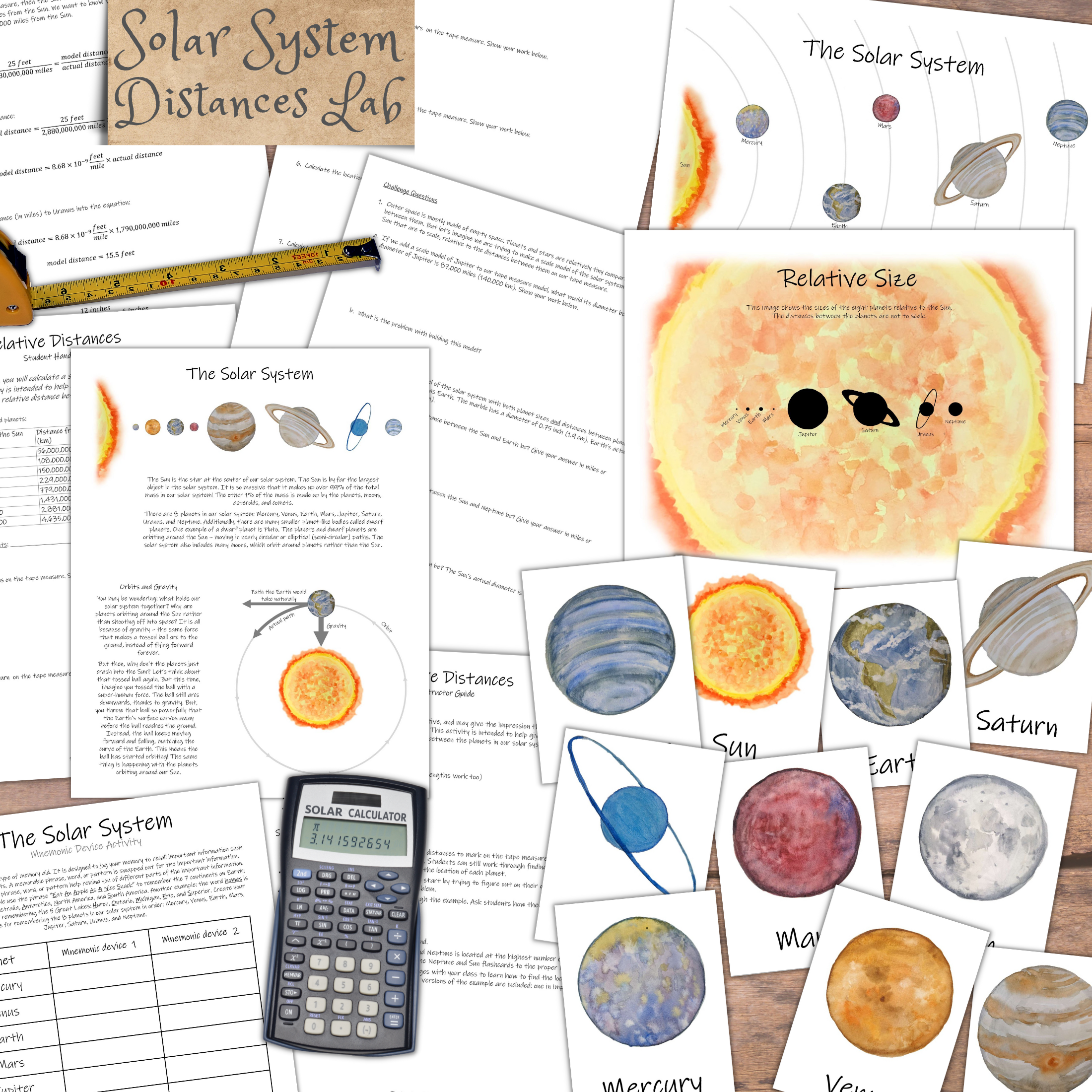
Looking for more ways to explore outer space in your classroom or homeschool? Try this solar system distances lab or this constellations snack activity. You can also check out this list of 11 outer space activity ideas and this guide to 9 sun and star activities!

Everything you need to learn about the night sky:

Trying to plan the perfect Night Sky lesson for your classroom or homeschool to go along with your night sky field trip? Iโ€™ve already created it for you! This set includes all the printable materials you need for studying night sky objects and outer space!

Explore more lessons from Wild Earth Lab:

If you enjoyed this post, I know you will love trying my other printable science and nature units in your classroom too!


Are you interested in reading more posts like this? Subscribe or follow Wild Earth Lab using the links below!


Subscribe, share, and comment:

Posted on Leave a comment

Stargazing for Beginners: 9 Incredible Objects to Spot in the Night Sky

illustrations of planets, satellites, and meteors
text that says share this post

The night sky is full of incredible sightsโ€”you just need to know what to look for! Whether you’re gazing up from your backyard or planning a stargazing lesson, there’s so much to discover beyond just stars. From planets and galaxies to satellites and shooting stars, this guide will introduce nine fascinating night sky objects you can spot with the naked eye or a simple pair of binoculars. Grab a cozy blanket, head outside, and get ready to explore the wonders of the night sky!

A Note for Teachers: If youโ€™re an educator planning to teach the night sky, great learning resources are key to deepening understanding! I think you and your students will love my complete printable Night Sky Unit (plus youโ€™ll support my blog with your purchase! โค๏ธ)

The Moon

The Moon is the largest and brightest object in the night sky. It is about one-quarter the diameter of Earth and shines because it reflects light from the Sun. The Moon goes through all its phases once every 29.5 days.

If you are lucky, you might even be able to watch a lunar eclipse! Read about lunar eclipses and find the dates of upcoming eclipses.

photo of moon on a dark sky
A crescent moon in the night sky. Photo by Rok Romih on Pexels.com

Planets

Planets in our solar system can be seen from Earth. To the naked eye, they look like stars, but some appear larger and brighter because they are closer to Earth or reflect more sunlight. Venus and Jupiter are two of the brightest planets in the night sky!

To see the details of a planet, you will need a good telescope. Even though planets are large, they are so far away that they look like dots of light to the naked eye. To grasp the massive scale of our solar system, try out this solar system distance lab activity.

Crescent Jupiter with the Great Red Spot
Jupiter (telescope). Crescent Jupiter with the Great Red Spot by NASA’s Marshall Space Flight Center is licensed under CC-BY-NC 2.0

Stars

Stars are huge balls of hot gases held together by gravity. Our Sun is a star, but there are many others in our galaxy. Stars shine brightly or faintly depending on how much light they produce and how far away they are.

Constellations are patterns that people see in the stars.  With a little imagination, you can see people, animals, mythical beasts, and other images in the skyโ€™s stars! Today, the International Astronomical Union recognizes 88 modern constellations. You can learn more about constellations in this blog: read about the Zodiac Constellations and easy-to-find constellations for beginner stargazers in the Northern Hemisphere.

silhouette of trees and mountain under blue starry sky
The starry night sky. Photo by Sindre Fs on Pexels.com

Comets

Comets are icy chunks of space rock that orbit the Sun. Unlike planets, their orbits are long and stretched out. Comets are visible only when they travel close to the Sun, appearing as a speck of light with a faint, glowing tail.

star flying through the sky
Photo by Scott Lord on Pexels.com

Meteors/Shooting Stars

Shooting stars happen when tiny space rocks burn up while entering Earthโ€™s atmosphere. They appear as quick, bright streaks of light across the night sky.

Lots of meteors can be seen during meteor showers when Earth passes through a cometโ€™s debris trail. Different meteor showers take place at different times. You can look up the dates of meteor showers here (external link).

meteoroid in the sky
A shooting star over a house. Photo by Thirdman on Pexels.com

Galaxies

Galaxies are massive groups of stars, gas, dust, and dark matter held together by gravity. They come in different shapes, like spirals and ellipses. The Andromeda Galaxy, our closest neighboring galaxy, can be seen without a telescope in very dark skies.

gray and black galaxy wallpaper
A spiral-shaped galaxy. Photo by Pixabay on Pexels.com

Our Galaxy: The Milky Way

The Milky Way is our galaxy. When we see it in the night sky, we are viewing it from the inside! From Earth, it looks like a cloudy, gray streak across the sky, but from the outside, it would look like a giant spiral.

night sky
The milky way (and a shooting star). Photo by Neale LaSalle on Pexels.com

Aurora (Polar Lights)

The aurora is seen near the poles in winter. These glowing lights look like swirling ribbons or curtains and happen when charged particles from the Sun meet Earthโ€™s magnetic field.

aurora borealis
The aurora in the night sky. Photo by Visit Greenland on Pexels.com

Human-made Objects

Human-made objects, like satellites, can also be seen in the night sky. Satellites move steadily across the sky and donโ€™t blink like airplanes. They help with communication, navigation, and more.

You can even see the International Space Station pass through the night sky if you know when to look. Track the International Space Station here (external link).

electric lamp over black background
Satellite, photographed from space. Photo by Pixabay on Pexels.com

What’s Next?

Ready to learn more about the night sky or outer space? Read my posts about lunar eclipses and solar eclipses! You can also read more about the life cycle of a star. If you’re an educator, try out these 11 outer space activity ideas for kids or these 9 sun and star classroom activities!

Study this night sky with Wild Earth Lab!

Trying to plan the perfect Night Sky lesson for your classroom or homeschool? Iโ€™ve already created it for you! This set includes all the printable materials you need for studying night sky objects and outer space!

Explore more lessons from Wild Earth Lab:

If you enjoyed this post, I know you will love trying my other printable science and nature units in your classroom too!


Are you interested in reading more posts like this? Subscribe or follow Wild Earth Lab using the links below!


Subscribe, share, and comment:

Posted on Leave a comment

Teach Astronomy with this Edible Constellations Activity

constellation flashcards and constellations made from pretzel sticks and marshmallows
text that says share this post

Are you teaching your students about the night sky and astronomy? If you’re looking for an activity to make your constellation and star lessons memorable, look no further than this snack activity. For this project, students will learn to recognize well-known constellations by creating edible constellations with pretzel sticks and mini marshmallows! This constellations activity is a delicious way to explore the night sky! In this post, you’ll learn how to set up this fun classroom “snack-tivity” and start creating your own celestial treats!

Before we dive in:ย If youโ€™re an educator planning toย teach this activity, great learning resources are key to deepening understanding! I think you and your students will love using myย constellation flashcards for this activity, which you can also find within my constellation mini study (plus youโ€™ll support my blog with your purchase! โค๏ธ)

An example of the constellation Cassiopeia for this activity! You can find the printable materials pictured here in my Constellations Mini Study!

Purpose

Learn about constellations with a tasty twist! Students will learn about constellations and recognize well-known constellations by creating constellations using marshmallows and pretzel sticks. This activity is perfect for homeschooling or classrooms during a star or astronomy unit. It’s also sure to be a crowd-pleaser among kids who love stargazing, ancient mythology, or outer space.

Materials:

  • Mini marshmallows
  • Pretzel sticks
  • Paper plates
  • Picture cards of the constellations
Constellation flashcards

Directions:

  1. Give each student a plate with ~20 mini marshmallows and ~20 pretzel sticks.
  2. Students should arrange the marshmallows and pretzel sticks into constellations, with the marshmallows representing stars and the pretzel sticks representing the imaginary lines connecting the stars.
  3. Students should use the picture cards as a guide when forming their constellations.
  4. Students can arrange and rearrange their marshmallows and pretzel sticks into as many constellations as they would like.
  5. Once students finish forming their constellations, they may eat their own marshmallows and pretzel sticks.

Study this topic with Wild Earth Lab!

You can support this blog and make lesson prep a breeze by purchasing my printable lesson materials:

  • The flashcards and printable directions for this activity are available in my Constellations Mini Study.
  • You can also purchase my individual flashcard sets separately (Common constellations cards for Northern Hemisphere stargazers).
  • For a larger collection of night sky materials, you can purchase my complete Night Sky Unit.

Explore more lessons from Wild Earth Lab:

If you enjoyed this post, I know you will love trying my other printable science and nature units in your classroom too!


Are you interested in reading more posts like this? Subscribe or follow Wild Earth Lab using the links below!


Subscribe, share, and comment: