Posted on — Leave a comment

What are the main groups of vertebrates?

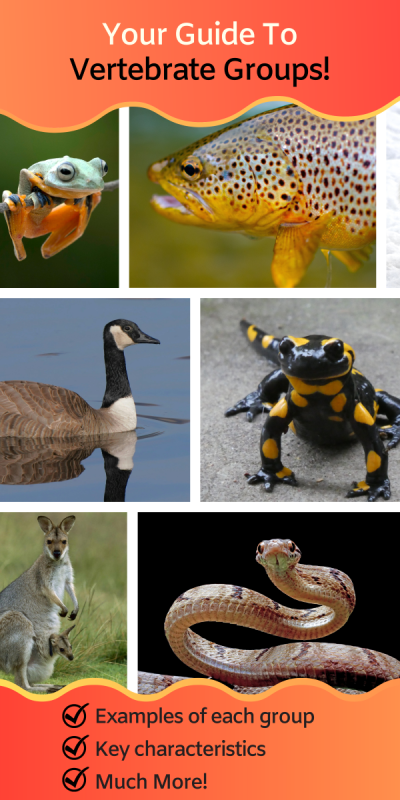
collage animals in the different vertebrate groups
text that says share this post

Vertebrates are a category of animals that share one important trait – they have a backbone. There are seven different groups, or classes, of vertebrates on Earth. These include amphibians, birds, mammals, reptiles, and three kinds of fish. In this post, we’ll explore these groups and find out what makes each one unique.

Before we dive in: If youโ€™re an educator planning to teach vertebrates, great learning resources are key to deepening understanding! I think you and your students will love my 5 units on vertebrate classes, which you can also find within my complete Vertebrates Bundle (plus youโ€™ll support my blog with your purchase! โค๏ธ)

Recommended products

Fish

fishes near coral reefs
Photo by Francesco Ungaro on Pexels.com

Fish are a large and diverse group of vertebrates. Technically, they’re actually three groups of vertebrates. The three main types of fish are jawless fish, cartilaginous fish, and bony fish. Many animals that we might not always think of as fish belong to these groups. For example, sharks, skates, and rays are all types of cartilaginous fish. The bony fish group includes fish that follow the classic body plan, like salmon, tuna, and sturgeons. But this group also includes some unique fish whose bodies look quite different from their relatives – like eels and seahorses.

Fish live almost everywhere there is waterโ€”from icy mountain streams to warm coral reefs and from shallow wetlands to the deepest parts of the ocean. They range in size from tiny guppies to giant sharks and manta rays. Some fish, like tuna, are streamlined for fast swimming across the open ocean. Others, like pufferfish or seahorses, have unusual body shapes and
move slowly among reefs and seaweed.

Their diets and lifestyles vary, too. Some fish, like sharks and tuna, are predators that hunt other animals. Others filter feed tiny plankton from the water or graze on aquatic plants and coral. Some fish, like salmon, migrate long distances between freshwater and the ocean, while others spend their entire lives in one small pond. Regardless of size, shape, or habitat, fish
show an incredible range of adaptations that allow them to survive in aquatic habitats all around the globe!

Fish Traits
  • Spine
  • Typically cold-blooded (some exceptions)
  • Gills
  • Fins
  • Lateral line (sensory organ)
  • Found in water
Examples of Fish
  • Trout
  • Tuna
  • Seahorse
  • Eel
  • Coelacanth
  • Shark
  • Stingray
  • Lamprey

Amphibians

close up shot of a frog
Photo by ะ˜ะณะพั€ัŒ ะšัƒะบัะธะฝัะบะธะน on Pexels.com

Amphibians come in many shapes and sizesโ€”from long-tailed salamanders to tailless frogs and even legless caecilians! Some are huge, like giant salamanders that grow to nearly six feet (two meters) long, while others are so tiny they could sit on your pinky finger. Amphibians also display striking colors, like the brightly patterned fire salamander or the brilliantly huedโ€”but toxicโ€”poison dart frog.

Amphibians all share a few key traits. One of their most distinctive features is their moist, scale-free skin. To stay hydrated, amphibians usually live in damp environments or near water. Their skin contains special mucus glands to keep it moist. Itโ€™s also permeable, allowing water and gases to pass through. This means amphibians can absorb water and even breathe through their skin! However, most species also have lungs or gills for breathing.

Another trait of amphibians is metamorphosisโ€”a dramatic transformation during their life cycle. For example, a tadpole with gills and a tail changes into an adult frog with lungs and legs. Finally, adult amphibians are carnivores, feeding on insects and other small animals.

Amphibian Traits
  • Spine
  • Cold-blooded
  • Moist skin with no scales
  • Skin surface breathing (may also have lungs and/or gills)
  • 0-4 legs
  • Carnivorous predators as adults
  • Metamorphosis (in many species)
Examples of Amphibians
  • Frog
  • Toad
  • Salamander
  • Caecilian

Reptiles

big snake
Photo by Pixabay on Pexels.com

While reptiles and amphibians may look similar, they each represent a distinct vertebrate group. Reptiles can’t breathe through their skin like amphibians. Instead, reptiles always breathe through 1 or 2 lungs, and their skin is dry and scaly. Reptiles also never go through metamorphosis the way many amphibians do.

Reptiles are not the easiest group to define. There is a lot of diversity within this group. From legless snakes to shelled turtles and armored crocodiles, the reptile group has some incredible creatures. Unlike other classes of
vertebrates, scientists now know that the group we call reptiles is not an isolated evolutionary lineage. This means that despite their many similarities, some members of the reptile group are not quite as closely related as people once thought they were. Additionally, we now know that birds descended from a reptile ancestor โ€“ so in a way, birds and reptiles are relatives!

Turtles, tortoises, crocodilians, lizards, snakes, and tuataras are all types of reptiles. They live in freshwater, oceans, and on land. They come in all sizes: from the tiny Brookesia nana chameleon at less than an inch (~2 cm) in length, to giants like Komodo dragons and crocodiles.

The saltwater crocodile is the largest reptile on earth today, measuring over 20 feet (6 meters) long! In the past, even larger reptiles roamed the Earth (dinosaurs) but today they are extinct. All in all, there are over 10,000 amazing species of reptiles alive on Earth today.

Reptile Traits
  • Spine
  • Cold-blooded
  • Scales or scutes
  • 0-4 legs
  • Breathe air with 1 or 2 lungs
Examples of Reptiles
  • Lizard
  • Snake
  • Turtle
  • Crocodile
  • Alligator
  • Tuatara

Birds

goose
Photo by Ellie Burgin on Pexels.com

Birds are a group of egg-laying, warm-blooded vertebrates with feathers, wings, and beaks. If you traced that family tree back far enough, youโ€™d discover that birds evolved from theropod dinosaurs. Because of this shared ancestry, a sparrow is actually more closely related to a dinosaur than to a mammal, amphibian, or any other living vertebrate class. Scientists use these evolutionary relationships to decide which animals belong in the bird group.

Birds live on every continent, including Antarctica, and can be found in nearly every habitatโ€”from forests and deserts to wetlands and open oceans. There are over 10,000 species of birds, and they range in size from tiny hummingbirds to towering ostriches. Birds also show remarkable diversity in behavior. Some migrate thousands of miles each year, while others stay in the same place their entire lives. Their colors, calls, and nesting styles vary just as much as their sizes and shapes.

Bird Traits
  • Spine
  • Warm-blooded
  • Breathe air with lungs
  • Lay eggs
  • Feathers
  • Scutes on legs
  • Beak
  • Wings (many fly, but not all)
Examples of Birds
  • Turkey
  • Sparrow
  • Ostrich
  • Penguin
  • Woodpecker
  • Goose
  • Heron
  • Owl

Mammals

kangaroo
Photo by Aliaksei Semirski on Pexels.com

Like birds, mammals are warm-blooded vertebrates. Mammals are unique because they have hair/fur and nurse their babies with milk. There are over 5,000 different species of mammals alive today. They live in freshwater, oceans, on land, and even take to the skies! They come in all sizes, from tiny creatures like the bumblebee bat to giants like whales. The blue whale is not only the largest mammal, but also the largest animal on earth!

Mammal Traits
  • Spine
  • Warm-blooded
  • Breathe air with lungs
  • Fur, hair, or whiskers (on all or part of the body, for at least part of its life)
  • Produce milk (in females)
  • Single lower jawbone
  • 3 tiny earbones
Examples of Mammals
  • Mouse
  • Deer
  • Tiger
  • Whale
  • Otter
  • Bat
  • Armadillo
  • Kangaroo
  • Human

Study this topic with Wild Earth Lab!

Thereโ€™s no need to scramble to put together the perfect lessons on vertebrates โ€“ Iโ€™ve already created them for you! These sets include all the printable materials you need for studying vertebrate groups.

Explore more lessons from Wild Earth Lab:

If you enjoyed this post, I know you will love trying my other printable science and nature units in your classroom too!


Are you interested in reading more posts like this? Subscribe or follow Wild Earth Lab using the links below!

Subscribe, share, and comment:

Posted on — Leave a comment

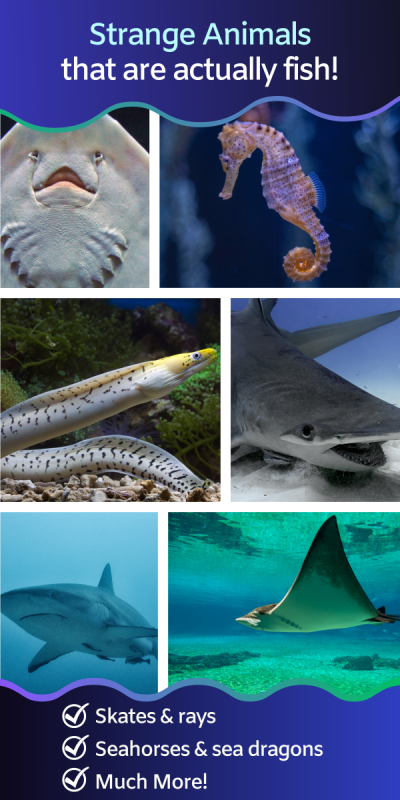
7 Strange Animals That Are Actually Fish

collage of strange and surprising fish species - sharks, rays, seahorses, eels
text that says share this post

Fish come in all shapes, sizes, and surprising formsโ€”and some of them donโ€™t look โ€œfish-likeโ€ at all. Whether you’re exploring ocean habitats or animal adaptations, these wonderfully weird species deviate from the typical body form and appearance of other fish. Here are seven animals you might not realize are actually fish!

Before we dive in: If youโ€™re an educator planning to teach fish life cycles, ocean ecology, or vertebrate groups, great learning resources are key to deepening understanding! I think you and your students will love my complete Fish Unit. It’s full of fun activities, printable handouts, worksheets, and more (plus youโ€™ll support my blog with your purchase! โค๏ธ)

Eels

With their long, ribbon-like bodies and reduced fins, eels can look more like snakes than fish. But eels are actually bony fish, members of the group Osteichthyes. That means an eel is more closely related to salmon, tuna, or even your pet goldfish than to any reptile!

Eels swim using wavelike movements along their bodies and use small pectoral fins to help them steer. Some species, like the electric eel, can even generate electric currents to stun preyโ€”an adaptation very different from what we see in most fish.

big fish on coral reef under water
Eel. Photo by Rachel Claire on Pexels.com

Seahorses and sea dragons

Most fish swim horizontally, powered by the caudal (tail) fin. Seahorses and sea dragons break that rule completely. These unusual fish swim upright, using a small dorsal fin along their back for propulsion. Their long, flexible tails act like anchors, gripping seagrass or seaweed so they donโ€™t drift away in the current.

These animals are wonderful examples of how the โ€œbasic fish body planโ€ can be reshaped for a very different lifestyle.

close up shot of a seahorse
Seahorse. Photo by Sergiu Iacob on Pexels.com

Mudskippers

When we picture fish, we imagine animals that must stay in the water to survive. Mudskippers challenge that idea! These remarkable fish live in tidal areas and regularly climb out onto mudflats.

Mudskippers can breathe air through their moist skinโ€”similar to how amphibians like frogs breathe. And when theyโ€™re on land, they โ€œwalkโ€ using their powerful pectoral fins. In most fish, these fins are only strong enough for steering in water, but mudskippers can support their weight on land. This unique ability gives scientists clues about how ancient fish may have taken the first steps toward life on land millions of years ago.

group of mudskippers on sandy beach shore
Mudskippers. Photo by ะ–ะฐะฝะฝะฐ ะะปะธะผะบัƒะปะพะฒะฐ on Pexels.com

Sharks

Many students are surprised to learn that sharks are fish! Modern fish fall into three main groups: jawless fish, cartilaginous fish, and bony fish. Sharks belong to the cartilaginous fish group, meaning their skeletons are made of flexible cartilage instead of bone. Rays and skates are part of this group, too.

Sharks come in an incredible range of shapes and sizesโ€”from 40-foot whale sharks to tiny lanternsharks. Some have unusual adaptations, like the hammerheadโ€™s wide head that gives it nearly 360ยฐ vision, or the goblin sharkโ€™s extendable jaw. Diets vary widely as well: great whites hunt large prey, while whale sharks filter plankton from the water. Sharks live throughout the ocean, from deep-sea habitats to shallow coastlines.

hammerhead shark swimming near corals
Hammerhead shark. Photo by Ben Phillips on Pexels.com

Skates & Rays

Skates and rays look nothing like the โ€œtypical fishโ€ silhouette. Their flattened bodies are perfectly suited for life along the seafloor, where they glide by flapping their broad, wing-like pectoral fins.

Although they look similar, skates and rays are not the same. Stingrays have a venomous barb on their tailโ€”skates do not. In addition, skates tend to have thicker tails with small fins along them. Both are cartilaginous fish and excellent examples of body shapes adapted to a specialized habitat.

a stingray on the bottom of the sea
Stingray. Photo by Krystal Basas on Pexels.com

Lampreys

Fish were among the earliest vertebrates to evolve, and some ancient fish lived long before jaws existed. Today, the descendants of those early jawless vertebrates survive as lampreys and hagfish.

Lampreys lack jaws entirely. Instead of biting, they use a round, suction-like mouth with rasping teeth. Some species, like the sea lamprey, are parasites that attach to other fish and feed on their blood and body fluids. Their unusual anatomy makes them an important group for studying early vertebrate evolution.

Migrating Pacific lampreyPacific lamprey attach
Lamprey mouths.

Hagfish

Like lampreys, hagfish belong to the jawless fish group. Theyโ€™re among the least โ€œfish-likeโ€ fish, with long, slender bodies, soft pinkish skin, and no true eyes. At first glance, you might mistake a hagfish for a wormโ€”until you learn that they have gills and other features that firmly place them within the fish lineage.

Hagfish are famous for one wild adaptation: they produce enormous amounts of sticky slime when threatened. This slime can clog the gills of predators, giving hagfish a unique way to escape danger.

Illustration of a hagfish.

Study fish with Wild Earth Lab!

Thereโ€™s no need to scramble to put together the perfect lesson for teaching fish โ€“ Iโ€™ve already created it for you! This set includes all the printable materials you need for studying fish in your classroom:

Explore more lessons from Wild Earth Lab:

If you enjoyed this post, I know you will love trying my other printable science and nature units in your classroom too!


Are you interested in reading more posts like this? Subscribe or follow Wild Earth Lab using the links below!

References and Further Reading

  1. Alaska Department of Fish and Wildlife (n.d.). Hagfish (Eptatretus deani) Species Profile. Available: https://www.adfg.alaska.gov/index.cfm?adfg=hagfish.main
  2. Clark, M., Douglas, M., Choi, J. (2018). Biology 2e. Open Stax. Ch. 29. Available: https://openstax.org/books/biology-2e/pages/29-2-fishes
  3. The Florida Aquarium (n.d.). Animal Spotlight: Mudskipper. Available: https://www.flaquarium.org/explore/habitats/morphd/mudskipper/
  4. MarineBio (n.d.). Great White Sharks, Carcharodon carcharias. Available: https://www.marinebio.org/species/great-white-sharks/carcharodon-carcharias/
  5. McGrouther, M. (2022). Goblin Shark. Australian Museum. Available: https://australian.museum/learn/animals/fishes/goblin-shark-mitsukurina-owstoni/
  6. National Geographic (n.d.). Hammerhead Sharks. Available: https://www.nationalgeographic.com/animals/fish/facts/hammerhead-sharks
  7. Reeves, N., et al. (2013). Concepts in Biology. Open Stax. Ch. 15.6. Available: https://openstax.org/books/concepts-biology/pages/15-6-vertebrates
  8. San Diego Zoo Wildlife Alliance (n.d.). Leopard Shark. Available: https://animals.sandiegozoo.org/animals/leopard-shark
  9. Spencer, P. (2019). Whatโ€™s the Difference Between Stingrays and Skates? Ocean Conservancy. Available: https://oceanconservancy.org/blog/2019/12/12/whats-difference-stingrays-skates/
  10. U.S. Fish and Wildlife Service (n.d.). Sea Lamprey. Available: https://www.fws.gov/species/sea-lamprey-petromyzon-marinus

Subscribe, share, and comment:

Posted on — 1 Comment

Jawless, Cartilaginous, and Bony Fish: A Classroom Guide

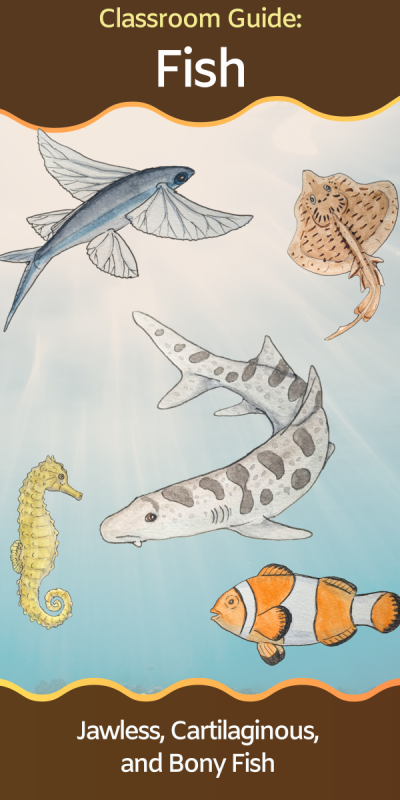
flying fish, skate, seahorse, shark, and clownfish illustrations
text that says share this post

Fish are one of the most diverse groups of vertebrates on Earth, but not all fish are built the same way. In fact, every speciesโ€”whether itโ€™s a tiny goby or a massive whale sharkโ€”belongs to one of three major groups: jawless fish, cartilaginous fish, or bony fish. Understanding these groups can help students make sense of fish anatomy, evolution, and the incredible variety they see in todayโ€™s oceans. Hereโ€™s a quick, classroom-friendly guide to what makes each group unique.

Before we dive in: If youโ€™re an educator planning to teach vertebrate groups, fish life cycles, or ocean biomes, great learning resources are key to deepening understanding! I think you and your students will love my complete Fish Unit. It’s full of fun activities, printable handouts, worksheets, and more (plus youโ€™ll support my blog with your purchase! โค๏ธ)

Recommended Products for Educators:

Jawless Fish (Agnatha)

Migrating Pacific lampreyPacific lamprey attach
The sucker-like mouths of lampreys, a jawless fish.

Fish were among the earliest vertebrates to evolve, and some ancient fish lived long before jaws existed. Today, the descendants of those early jawless vertebrates survive as lampreys and hagfish.

Jawless fish share the following traits:

  • Gills
  • Live in water
  • Fins (various shapes, sizes, and numbers)
  • Skeletons made of cartilage, not bone
  • No jaws
  • A spine

Since they have no jaws, lampreys and hagfish must feed in some creative ways. For example, lampreys use a round, suction-like mouth with rasping teeth. Some species, like the sea lamprey, are parasites that attach to other fish and feed on their blood and body fluids. Their unusual anatomy makes them an important group for studying early vertebrate evolution.

Cartilaginous Fish (Chondrichthyes)

hammerhead shark swimming near corals
Like all cartilaginous fish, a hammerhead shark has a skeleton made of soft cartilage. Photo by Ben Phillips on Pexels.com

Unlike jawless fish, cartilaginous fish have a jaw. Jaws allow some fish to hunt and eat larger prey animals. For example, sharks are among the most fearsome predators of the ocean and hunt other fish with their jawed mouth filled with sharp, pointy teeth. Cartilaginous fish are named for their skeletons, which are made of soft cartilage – the material in your nose and ears – instead of hard bone.

Cartilaginous fish share the following traits:

  • Gills
  • Live in water
  • Fins (various shapes, sizes, and numbers)
  • Skeletons made of cartilage, not bone
  • Jaws
  • A spine

There are three main types of cartilaginous fish: sharks, skates, and rays. Though skates and rays don’t look much like other fish, they share a common ancestry and have traits that all fish share, like gills and fins.

Here are some examples of cartilaginous fish:

  • Great white shark
  • Leopard shark
  • Whale shark
  • Goblin shark
  • Manta ray
  • Common stingray
  • Common skate

Bony Fish (Osteichthyes)

fishes near coral reefs
Bony fish are found in many different habitats: from coral reefs in the ocean to flowing freshwater rivers. Photo by Francesco Ungaro on Pexels.com

What do salmon, seahorses, eels, and even your pet beta all have in common? They are all bony fish! This is a vast and diverse group of fish, with many deviations from the classic fish body plan that allow different fish to adapt to their unique habitats.

Bony fish share the following traits:

  • Gills
  • Live in water
  • Fins (various shapes, sizes, and numbers)
  • Skeletons made of bone, not cartilage
  • Jaws
  • A spine

There are two main subgroups within the bony fish group. They are lobe-finned fish and ray-finned fish. Lobe-finned fish have fins with internal bones that move more similarly to the limbs of tetrapods. Meanwhile, ray-finned fish have fins supported by many thin, bony filaments called rays.

There are tons of examples of bony fish. Here are a few:

  • Lobe-finned fish:
    • African lungfish
    • Australian lungfish
    • African coelacanth
  • Ray-finned fish:
    • Gar
    • Sturgeon
    • Salmon
    • Tuna
    • Clownfish
    • Seahorse
    • Pufferfish
    • Eel

Study vertebrates with Wild Earth Lab!

Thereโ€™s no need to scramble to put together the perfect lessons for teaching fish and other vertebrate groups โ€“ Iโ€™ve already created them for you! These sets include all the printable materials you need for studying fish and other vertebrate groups in your classroom:

Explore more lessons from Wild Earth Lab:

If you enjoyed this post, I know you will love trying my other printable science and nature units in your classroom too!


Are you interested in reading more posts like this? Subscribe or follow Wild Earth Lab using the links below!


References and Further Reading

  1. Clark, M., Douglas, M., Choi, J. (2018). Biology 2e. Open Stax. Ch. 29. Available: https://openstax.org/books/biology-2e/pages/29-2-fishes
  2. MarineBio (n.d.). Great White Sharks, Carcharodon carcharias. Available: https://www.marinebio.org/species/great-white-sharks/carcharodon-carcharias/
  3. Reeves, N., et al. (2013). Concepts in Biology. Open Stax. Ch. 15.6. Available: https://openstax.org/books/concepts-biology/pages/15-6-vertebrates
  4. South Carolina Dept. of Natural Resources (n.d.). Fish โ€“ Anatomy. Available: https://www.dnr.sc.gov/fish/anatomy.html
  5. U.S. Fish and Wildlife Service (n.d.). Sea Lamprey. Available: https://www.fws.gov/species/sea-lamprey-petromyzon-marinus

Subscribe, share, and comment:

Posted on — Leave a comment

Understanding Amphibians: 5 Key Traits

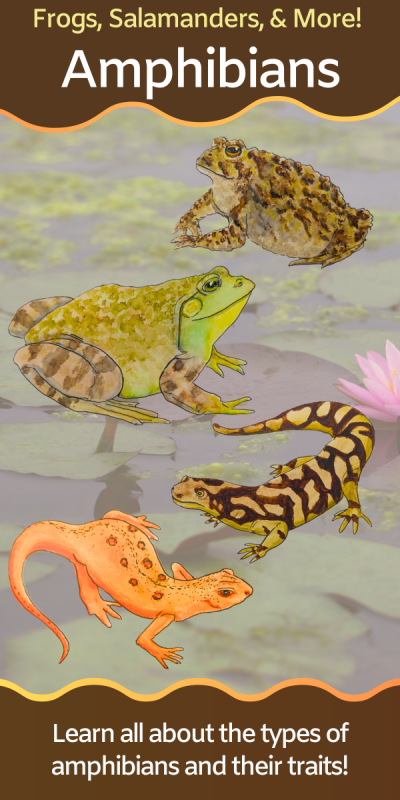
drawings of multiple amphibians
text that says share this post

Amphibians are some of the most fascinating creatures on Earth, bridging the gap between water and land with unique adaptations. Understanding amphibian traits can help students grasp key biological concepts like life cycles, metamorphosis, and environmental adaptations. Whether you’re teaching about frogs, salamanders, or caecilians, exploring what makes amphibians special is a great way to spark curiosity about the natural world.

๐Ÿ“šA Note for Teachers ๐ŸŽ: If youโ€™re an educator planning to teach amphibians, great learning resources are key to deepening understanding! I think you and your students will love my complete Amphibian Unit (plus youโ€™ll support my blog with your purchase! โค๏ธ)

What Are Amphibians?

Poster of Types of Amphibians

Before we dive into the traits of amphibians, it helps to answer the question “what are amphibians?”. Amphibians are a group of vertebratesโ€”animals with backbonesโ€”that share some key traits. There are seven classes of vertebrates on Earth: amphibians, birds, mammals, reptiles, and three types of fish.

But how do scientists know which animals belong in each class? It all comes down to family trees! Each class of vertebrates shares a common ancestor from long ago. If you traced their lineage back far enough, youโ€™d find that all amphibiansโ€”frogs, salamanders, and moreโ€”descend from the same ancient relative. Thatโ€™s why a salamander is more closely related to a frog than to a reptile like a lizard.

Thanks to their shared lineage, amphibians share some characteristics. In this post, we’ll discover some key amphibian traits…

A Backbone

Like all vertebrates, amphibians must have a backbone. A backbone is actually made of many individual, smaller bones called vertebrae, all stacked up in a flexible column. Amphibiansโ€™ spines help us tell them apart from invertebrate (backbone-less) creatures like insects and mollusks.

Cold-Blooded

Ever wonder why you see a frog sitting out on a lily pad in the sun? Amphibians are cold-blooded or ectothermic animals, which means their body temperature depends on the temperature of the air or water around them. They must rely on external (outside of themselves) heat sources to stay warm rather than making their own body heat.

When amphibians need to warm up, they sun themselves. If they get too hot, they go into cool water, underground, or find shade. Because they rely on external heat sources, their temperature varies a lot.  Amphibians, reptiles, and most fish are cold-blooded animals.

Moist, Permeable Skin

One of their most distinctive features is their moist, scale-free skin. Amphibians, even the ones that look bumpy, like toads, never have scales. This is one of the key differences between amphibians and reptiles.

To stay hydrated, amphibians usually live in damp environments or near water. Their skin contains special mucus glands to keep it moist. Itโ€™s also permeable, allowing water and gases to pass through. This means amphibians can absorb water and even breathe through their skin! However, most species also have lungs or gills for breathing.

Metamorphosis

Salamander Life Cycle Diagram

Another trait of amphibians is metamorphosisโ€”a dramatic transformation during their life cycle. For example, a tadpole with gills and a tail changes into an adult frog with lungs and legs.

Most amphibians go through metamorphosis, but there are a few types of amphibians that are exceptions. Some species of caecilians, a group of legless amphibians, develop differently and donโ€™t go through metamorphosis the way frogs and salamanders do.

Carnivorous

Finally, all adult amphibians are carnivores. Often, they hunt and eat small invertebrates – little animals without a backbone – like insects and worms. However, some large amphibians like bullfrogs will even hunt small vertebrates like smaller amphibians, reptiles, and even mammals like mice.

While adult amphibians are carnivores, larval amphibians often are not. This is because before going through metamorphosis, they are more suited to eating plant matter. For example, a tadpole lives in a pond and eats plant matter before it grows up into a frog that eats insects.

Study Amphibians with Wild Earth Lab!

Thereโ€™s no need to scramble to put together the perfect amphibians lesson โ€“ Iโ€™ve already created it for you! This set includes all the printable materials you need for studying amphibians.

Explore more lessons from Wild Earth Lab:

If you enjoyed learning about amphibian traits in this post, I know you will love trying my other printable science and nature units in your classroom!


Are you interested in reading more posts like this? Subscribe or follow Wild Earth Lab using the links below!


References and Further Reading

  1. Clark, M.A., Douglas, M., and Choi, J. (2018). Biology. Open Stax. Ch 29.3. Available: https://openstax.org/books/biology-2e/pages/29-3-amphibians
  2. Fowler, S., et al. (2013). Concepts in Biology. OpenStax. Ch 15.6. Available: https://openstax.org/books/concepts-biology/pages/15-6-vertebrates
  3. San Diego Zoo (n.d.). Salamander and Newt. Available: https://animals.sandiegozoo.org/animals/salamander-and-newt
  4. Wake, DB and Koo, MS. 2018. Primer: Amphibians. Current Biology 28(21): R1237-R1241. https://doi.org/10.1016/j.cub.2018.09.028

Subscribe, share, and comment:

Posted on — Leave a comment

Types of Amphibians: Frogs, Salamanders, and More!

Illustrations of frogs and salamanders
text that says share this post

Amphibians are a diverse group of vertebrate animals. They come in many shapes and sizesโ€”from long-tailed salamanders to tailless frogs and even legless caecilians! Some are huge, like giant salamanders that grow to nearly six feet (two meters) long, while others are so tiny they could sit on your pinky finger. Amphibians also display striking colors, like the brightly patterned fire salamander or the brilliantly huedโ€”but toxicโ€”poison dart frog. In this post, we’ll explore the different types of amphibians – some you’ve probably seen before, and perhaps a few you’ve never heard of!

๐Ÿ“šA Note for Teachers ๐ŸŽ: If youโ€™re an educator planning to teach amphibians, great learning resources are key to deepening understanding! I think you and your students will love my complete Amphibian Unit (plus youโ€™ll support my blog with your purchase! โค๏ธ)

There are 3 main types of amphibians: frogs, salamanders, and caecilians. Each has its own unique characteristics, described below.

Frogs and Toads

green frog
close up shot of a frog
  • Class: Amphibia
  • Order: Anura

Key traits

Frogs and toads are amphibians with four limbs and no tails as adults. They also have powerful hind legs and vocal sacs for croaking. Frogs and toads start their lives in water as aquatic larvae called tadpoles. As tadpoles, they have gills and a tail for swimming. As frogs develop, they grow lungs and most species can come onto land. There are, however, some frogs that are aquatic as adults, such as African clawed frogs.

But even adult frogs like to live in damp habitats to help keep their moist skin from drying out. Frogs, like all amphibians, have moist skin rather than scales – one of the differences between reptiles and amphibians. Their skin is permeable, allowing them to drink water and breathe air through their skin.

Examples of Frogs and Toads

  • Bullfrog
  • Grass frog
  • Tree frog
  • Poison dart frog
  • Common toad
  • African clawed frog

Fun Fact

There are about 5,000 different species of frog worldwide! They are found on 6 of 7 continents (everywhere but Antarctica).

Salamanders

Small red-orange colored newt crawls over fallen leaves and detritus.
purple tropical axolotl
  • Class: Amphibia
  • Order: Urodela

Key traits

Salamanders are amphibians with long, thin tails and usually four limbs. Like all amphibians, they have moist skin that they can breathe through. Most salamanders also have gills, lungs, or even both at different stages of their life cycle. Like frogs, most salamanders go through metamorphosis. The larvae are often aquatic, with no limbs, tails for swimming, and frilly-looking external gills around their necks. Adults may live in water, on land, or both, depending on the species. Like all amphibians, adult salamanders are carnivores – often they eat small invertebrates.

Perhaps you’re wondering, what is the difference between a salamander and a newt? A newt is one type of salamander. So while all newts are salamanders, not all salamanders are newts.

Examples of Salamanders

  • Tiger salamander
  • Giant Salamander
  • Newt
  • Axolotl
  • Amphiuma

Fun Facts

Salamanders struggle to lift their bodies off the ground due to the position of their limbs on the sides of their bodies. To walk on land, they must wiggle from side to side while dragging their bodies across the ground.

The axolotl is a species of salamander that never grows up (sort of)! Even as an adult, it lives in water and has gills like a larva.

Caecilians

  • Class: Amphibia
  • Order: Gymnophiona

Key traits

The third type of amphibian is caecilians. If you’ve never heard of them or seen one, don’t worry! They are only found in the tropics, and they live underground, burrowing in the soil.

Caecilians are different from other amphibians in several ways. They have no legs, and long, worm-like bodies with grooves or rings that look like segments. Furthermore, caecilians don’t go through metamorphosis like frogs and salamanders.

Fun Facts

Though they have no legs, caecilians evolved from a legged ancestor. Over many generations, they lost their legs since they didnโ€™t need them to survive in their habitat.

What’s Next?

Continue reading about the different types of reptiles or the different types of mammals. Or learn about the differences between reptiles and amphibians.

Study this topic with Wild Earth Lab!

Thereโ€™s no need to scramble to put together the perfect lesson for teaching amphibians  โ€“ Iโ€™ve already created it for you! This set includes all the printable materials you need for studying amphibians.

Explore more lessons from Wild Earth Lab:

If you enjoyed this post, I know you will love trying my other printable science and nature units in your classroom too!


Are you interested in reading more posts like this? Subscribe or follow Wild Earth Lab using the links below!


References and Further Reading

  1. Black, R. (2012). Worldโ€™s Smallest Frog Discovered. BBC News. Available: https://www.bbc.com/news/science-environment-16491477
  2. Clark, M.A., Douglas, M., and Choi, J. (2018). Biology. Open Stax. Ch 29.3. Available: https://openstax.org/books/biology-2e/pages/29-3-amphibians
  3. Fowler, S., et al. (2013). Concepts in Biology. OpenStax. Ch 15.6. Available: https://openstax.org/books/concepts-biology/pages/15-6-vertebrates
  4. San Diego Zoo (n.d.). Chinese Giant Salamander. Available: https://animals.sandiegozoo.org/animals/chinese-giant-salamander
  5. San Diego Zoo (n.d.). Goliath Frog. Available: https://animals.sandiegozoo.org/animals/goliath-frog
  6. San Diego Zoo (n.d.). Salamander and Newt. Available: https://animals.sandiegozoo.org/animals/salamander-and-newt
  7. Wake, DB and Koo, MS. 2018. Primer: Amphibians. Current Biology 28(21): R1237-R1241. https://doi.org/10.1016/j.cub.2018.09.028

Subscribe, share, and comment:

Posted on — Leave a comment

Teaching Vertebrates: Key Traits of Mammals

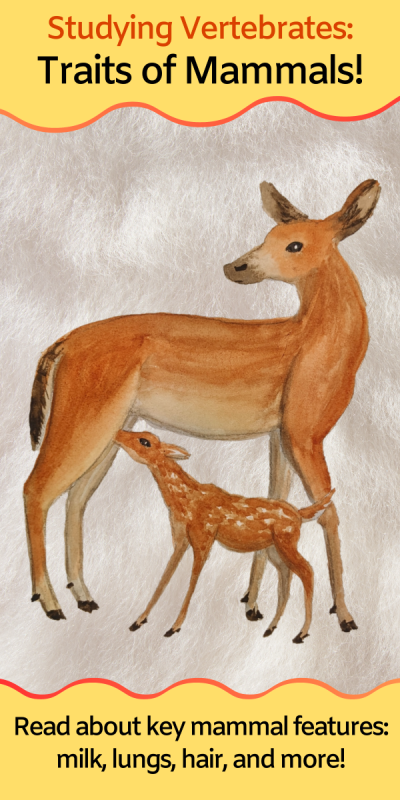
Illustration of a deer fawn nursing from its mother
text that says share this post

Mammals are a special group of creatures with some unique features. Mammals are a huge and diverse group of animals. They live on land, in freshwater, in oceans, and even take to the skies! They come in all sizes, from tiny creatures like the bumblebee bat to giants like whales. Mammals might seem very different from one another, but they share some special traits that help us distinguish them from other animals.

Mammals are part of a bigger category of animals called vertebrates, which means they all have a backbone. There are seven different groups, or classes, of vertebrates on Earth. These include amphibians, birds, mammals, reptiles, and three kinds of fish. In this post, we’ll learn more about the traits that make mammals unique from their other vertebrate relatives.

Before we dive in:ย If youโ€™re an educator planning toย teach mammals in your classroom, great visuals and activities are key to deepening understanding! I think you and your students will love my complete Mammals Unit (plus youโ€™ll support my blog with your purchase! โค๏ธ)

Produce Milk

First, female mammals produce milk to feed their young. This trait is unique to mammals: none of the other vertebrate groups make milk. Milk comes from special mammary glands in female mammals only.

Since mammals nurse their young, the mother must stick around after a baby mammal is born. For this reason, mammal mothers are very involved parents. Parental care is taken to the extreme in a sub-group of mammals called marsupials (e.g., kangaroos and opossums). Not only do they nurse their babies, but they also carry them around in a special pouch or on their backs or bellies.

Other types of mammals called placentals and monotremes don’t carry their babies around. Instead, some hunker down in a den or burrow with their newborn babies. For example, foxes and bears give birth to their babies in dens. Other mammal babies, like horses and elk, are born ready to start walking and even running. Though mammal babies vary in their abilities and needs, they all require milk from their mothers.

Breathe Air With Lungs

Third, all mammals breathe air through their lungs โ€“ even the mammals that live in water must come to the surface to breathe. Despite their excellent swimming skills, whales, otters, seals, manatees, dolphins, and walruses are all mammals and come to the surface to breathe air.

However, these animals can all hold their breath for much longer than you or me. While a human might be able to hold their breath for about a minute, some marine mammals can hold their breath for an hour or more! For example, an elephant seal can hold its breath for up to two hours! However, if they cannot get to the surface to breathe for some reason, a seal (or any mammal) can drown. They do not have gills like fish and sharks.

Hair or Fur

Mammals must have hair or fur on some part of their body for at least part of their lives. You might be saying “Now wait a minute… what about marine mammals like whales?” Even marine mammals that appear hairless, like whales, are born with sensory hairs (whiskers) on their faces. Some species of whales lose these whiskers as they grow older.

From the sensory whiskers of a whale to the thick fur of a polar bear, there’s a huge variety of hairstyles among mammals. Hair and fur may serve several different purposes. Often hair and fur are for staying warm, especially among animals that live in temperate and polar climates. In warmer places, hair and fur help protect a mammal’s skin from intense sun. Hair and fur may also have patterns that help an animal camouflage.

Warm-blooded

Mammals are warm-blooded (also known as endothermic), which means they make their own body heat and maintain a constant temperature. Mammals are not the only vertebrates that are warm-blooded. Birds and even some fish are warm-blooded too.

You may be wondering: what does it mean to be warm-blooded? Warm-blooded animals make enough body heat to keep a relatively constant body temperature. For example, most humans maintain a constant body temperature of around 98ยฐF (37ยฐC). This takes a lot of energy, which comes from eating food.

Many warm-blooded animals have thick fur or feathers to help insulate their body โ€“ the same way a thick sweater keeps you warm by trapping your body heat.ย  If a warm-blooded animal gets too warm, it may sweat or pant to cool off. Can you think of any mammals that sweat or pant?

Skeletal Features

Finally, mammal skeletons have some key characteristics. You already know that mammals are vertebrates, which means they have a backbone. Additionally, mammals always have hinged jaws with a single lower jawbone. All mammals also have three tiny ear bones, sometimes called the hammer, anvil, and stirrup.

Study Mammals with Wild Earth Lab!

Thereโ€™s no need to scramble to put together the perfect lesson for teaching mammalsย โ€“ Iโ€™ve already created it for you! This set includes all the printable materials you need for studying mammals.

Explore more lessons from Wild Earth Lab:

If you enjoyed this post, I know you will love trying my other printable science and nature units in your classroom too!


Are you interested in reading more posts like this? Subscribe or follow Wild Earth Lab using the links below!


References and Further Reading

  1. ElephantSeal.org (n.d.). An Elephant Seal’s Deep Dive. Available: https://elephantseal.org/an-elephant-seal-deep-dive/
  2. Thomas, L. (2017). Monotremes, Marsupials, and Placentals. UC Santa Cruz. Available:ย https://norriscenter.ucsc.edu/collections/mammals/monotremes-marsupials-placentals.html
  3. University of Hawaiโ€™i at Manoa (n.d.). What is a Mammal. Exploring our Fluid Earth. Available:ย https://manoa.hawaii.edu/exploringourfluidearth/biological/mammals/what-mammal

Subscribe, share, and comment:

Posted on — Leave a comment

Reptile Traits: Key Characteristics You Should Know

digital art of green iguana
text that says share this post

What is a Reptile?

Reptiles are a cool group of critters โ€“ and not just because they are cold-blooded! They are part of a bigger category of animals called vertebrates, which means they all have a backbone. There are seven different groups, or classes, of vertebrates on Earth. These include amphibians, birds, mammals, reptiles, and three kinds of fish.

Reptiles are not the easiest group to define. There are many types of reptiles with diverse characteristics and behaviors. From legless snakes to shelled turtles and armored crocodiles, the reptile group has some incredible creatures. Unlike other classes of vertebrates, scientists now know that the group we call reptiles is not an isolated evolutionary lineage. This means that despite their many similarities, some members of the reptile group are not quite as closely related as people once thought they were. Additionally, we now know that birds descended from a reptile ancestor โ€“ so in a way, birds and reptiles are relatives!

Don’t fret if all this seems confusing. Luckily, all reptiles share a few unique traits that can help us distinguish them from other animals. In this post, you’ll read about four traits that all reptiles have!

Before We Dive In: A Quick Resource for Teachers ๐ŸŽ

If youโ€™re teaching reptiles, visuals and hands-on activities are key to keeping your students engaged and excited. My Complete Reptiles Unit is packed with colorful illustrations and fun lessons to bring this topic to life. Plus, every purchase helps support this blog! โค๏ธ

Skeletal Features

Like all vertebrates, reptiles must have a backbone. A backbone is actually made of many individual smaller bones called vertebrae all stacked up in a flexible column. Reptiles’ spines help us tell them apart from invertebrate (backbone-less) creatures like insects and mollusks.

Apart from their spines, reptiles’ skeletons don’t share much in common with each other. While all reptiles have jaws, some have a single jawbone, while others have flexible jaws made of multiple bones. Not all reptiles even have the same number of limbs. While turtles, crocodiles, and most lizards have four limbs, snakes have no limbs at all.

Breathe Air With Lung(s)

All reptiles breathe. However, not all reptiles have two lungs. Interestingly, many snakes only have one working lung. Even the reptiles that live in water have lungs. Despite their excellent swimming skills, sea turtles, water snakes, and marine iguanas all come to the surface to breathe air.

However, some of these animals can all hold their breath for much longer than you or me. While a human might be able to hold their breath for about a minute, a sea turtle might hold its breath for as long as 2 hours when resting. However, if they cannot get to the surface to breathe for some reason, sea turtles (like any reptile) can drown. They do not have gills like fish and sharks.

Scales or Scutes

Reptile scales (left) and scutes (right)

A reptile has scales or scutes covering its body. You may already be familiar with scales. Scales are overlapping, shingle-like surfaces that make up a snake or lizard’s skin. Scales are part of the epidermis or outer skin. They are made of keratin, like your fingernails. A reptile will shed and regrow its scaly skin multiple times throughout its life. Reptiles are not the only animals with scales. Fish have scales too.

You might be wondering: what is a scute? A scute is a thick, armored plate found in turtle shells and the skin of crocodiles and alligators. Reptiles are not the only animals with scutes. Scutes also make up the rough-textured surface of birds’ legs.

While scales and scutes are not unique to reptiles, they are helpful traits that can help us tell the difference between a reptile and an amphibian. Amphibians never have scales or scutes – instead, they have distinct moist, smooth skin.

Some reptiles have scales that help them blend in or camouflage, like a chameleon. Learn more about camouflage by reading this post about the types of camouflage or trying this fun camouflage lab activity.

Cold-blooded

Ever wonder why you see snakes and lizards sitting out in the sun? Reptiles are cold-blooded or ectothermic animals, which means their body temperature depends on the temperature of the air or water around them. They must rely on external (outside of themselves) heat sources to stay warm rather than making their own body heat.

When reptiles need to warm up, they sun themselves. If they get too hot, they go underground, into cool water, or find shade. Because they rely on external heat sources, their temperature varies a lot.  Reptiles, amphibians, and most fish are cold-blooded animals.

Teaching Reptiles in Your Classroom

Thereโ€™s no need to scramble to put together the perfect lesson for teaching reptiles โ€“ Iโ€™ve already created it for you! This set includes all the printable materials you need for studying reptile traits and more.

Explore more lessons from Wild Earth Lab:

If you enjoyed this post on reptile traits, I know you will love trying my other printable science and nature units in your classroom too!


Are you interested in reading more posts about cool science topics like reptile traits? Subscribe or follow Wild Earth Lab using the links below!


References and Further Reading

  1. Greater Cleveland Aquarium (2019). EXPLORING SIMILARITIES, CELEBRATING DIFFERENCES: AMPHIBIANS AND REPTILES. Available: https://www.greaterclevelandaquarium.com/exploring-similarities-celebrating-differences-amphibians-and-reptiles/
  2. NOAA Fisheries (2022). Fun Facts About Terrific Sea Turtles. Available: https://www.fisheries.noaa.gov/national/outreach-and-education/fun-facts-about-terrific-sea-turtles
  3. Sanker, E.A. (2024). What is a scute? All Things Nature. Available: https://www.allthingsnature.org/what-is-a-scute.htm
  4. Schick, M. (2015). Amphibian or Reptile? Hereโ€™s the Difference. Shedd Aquarium. Available: https://www.sheddaquarium.org/stories/amphibian-or-reptile-here-s-the-difference
  5. Uetz, P. (1996). General Information (and โ€œFAQโ€). The Reptile Database. Available: http://www.reptile-database.org/db-info/introduction.html

Subscribe, share, and comment: