Posted on Leave a comment

Understanding Metamorphosis in Animals

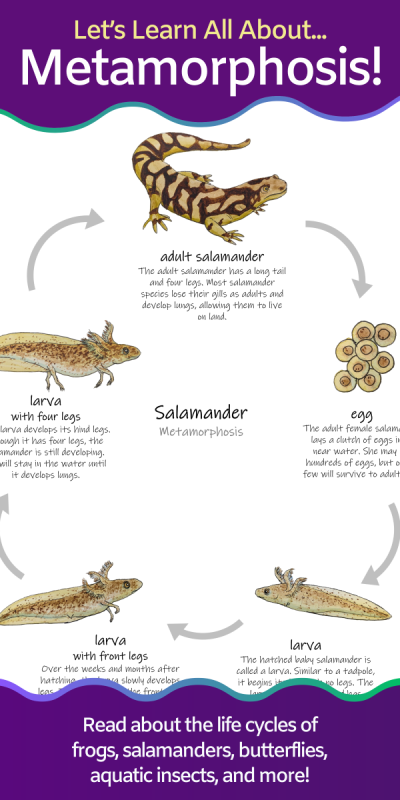
life cycle diagram of a salamander
text that says share this post

From tadpoles turning into frogs to caterpillars transforming into butterflies, metamorphosis is one of natureโ€™s most incredible processes. Understanding metamorphosis helps students see how organisms grow, adapt, and survive in their environments. Whether you’re exploring amphibians, insects, or life cycles in general, this fascinating transformation is a perfect way to bring nature and science to life in your classroom.

๐Ÿ“šA Note for Teachers ๐ŸŽ: If youโ€™re an educator planning to teach metamorphosis and animal life cycles in your classroom, great learning resources are key to deepening understanding! You can find materials for teaching metamorphosis in my Amphibians Unit and Insects Unit, as well as my Aquatic Macroinvertebrates Unit – plus tons of other materials and activities for these fun topics! (And youโ€™ll support this blog with your purchase! โค๏ธ)

What is Metamorphosis?

Metamorphosis is a process where an animalโ€™s body changes form at different stages of its life cycle. Many insects and amphibians go through metamorphosis, developing in two or more distinct stages, like a legless tadpole becoming a frog or a wingless caterpillar transforming into a butterfly.

In contrast, reptiles, birds, and mammals (including humans) do not undergo metamorphosis. Consider human babiesโ€”as we grow, we get bigger and taller, but our basic body shape stays the same. We donโ€™t develop wings, extra limbs, or entirely new body parts like a butterfly or frog.

Amphibians and Metamorphosis

The word โ€œamphibianโ€ means โ€œdouble lifeโ€, referring to how most amphibians begin their lives in water before transitioning to land.  This transformation happens through metamorphosis. Take frogs, for example โ€“ tadpoles swim using their tails and breathe underwater through gills. During metamorphosis, they grow limbs and lungs, allowing them to live on land as adults. Just like tadpoles transform into frogs, most salamanders start as aquatic, legless larvae before developing their adult forms.

Salamander Life Cycle Diagram

Most amphibians go through metamorphosis, but there are a few exceptions. Some species of caecilians, a group of legless amphibians, develop differently and donโ€™t go through metamorphosis the way frogs and salamanders do.

Insects and Metamorphosis

Amphibians are not the only animals that go through metamorphosis. Many (though not all) insects go through metamorphosis too. One of the most classic examples is a butterfly. A butterfly starts life as a wingless larva called a caterpillar, a life stage in which the main goal is to eat and grow! After some time, the caterpillar stops munching and forms a chrysalis. During this stage, called the pupa stage, it doesn’t eat, but continues to develop. Finally, the winged butterfly emerges from its chrysalis – now it is an adult.

However, butterflies are far from the only insect to go through metamorphosis. Caddisflies, ladybugs, beetles, and ants are a few other examples of insects whose lives take place in three stages: larva, pupa, and adult. Insects like these with three distinct life stages go through what scientists call “complete metamorphosis“. In contrast, some other insects, like dragonflies and mayflies, go through “incomplete metamorphosis“. These insects only have two life stages: nymph and adult.

Why Metamorphosis?

Why change forms at all? Metamorphosis helps animals use different habitats and resources at each stage of life. For example, tadpoles live in aquatic habitats like ponds and eat plants, so they have gills, a small mouth, and a tail for swimming. But as they grow into adult frogs that hunt insects on land, they develop lungs, strong legs, and a wide mouth with a sticky tongue for catching prey.

Similarly, caddisflies, mayflies, dragonflies, and other aquatic insects begin their lives in water as larvae or nymphs. This allows them to feed on aquatic plant matter, detritus, or small organisms found in habitats at the bottoms of streams and ponds. As they go through metamorphosis, these insects emerge from the surface of the water as winged adults. After this, they use their wings to take advantage of a new habitat above the surface. For example, adult dragonflies are ferocious aerial predators of other insects. Contrastingly, adult mayflies do not eat at all, but simply use their short adult life stage to fly around and find a mate.

Finally, consider butterflies. Unlike frogs and aquatic insects, a butterfly lives on land for its whole life. However, butterflies use different food sources at different stages. For example, the monarch butterfly is in a close symbiotic relationship with the milkweed plant. As a caterpillar, the monarch eats the milkweed leaves. After metamorphosis, the adult butterfly eats a different part of the milkweed plant – the nectar of the milkweed flowers. As an added benefit, when the adult butterfly drinks flower nectar, it pollinates milkweed plants, which helps the plants reproduce. Thanks to the butterfly’s pollination services, a new generation of milkweed plants will grow, providing leaves for future caterpillars to eat!

A large yellow, black, and white striped caterpillar munches a leafy green milkweed plant.
A monarch butterfly caterpillar munches on milkweed.

Study Metamorphosis with Wild Earth Lab!

Whether you’re teaching your students about the metamorphosis of amphibians or insects, I’ve got the perfect learning resources for you! These sets include all the printable materials you need for studying amphibians and aquatic insects – including life cycle diagrams and much, much more!

Explore more lessons from Wild Earth Lab:

If you enjoyed this post, I know you will love trying my other printable science and nature units in your classroom too!


Are you interested in reading more posts about wildlife and ecology? Subscribe or follow Wild Earth Lab using the links below!


References and Further Reading

  1. Clark, M.A., Douglas, M., and Choi, J. (2018). Biology. Open Stax. Ch 29.3. Available: https://openstax.org/books/biology-2e/pages/29-3-amphibians
  2. Fowler, S., et al. (2013). Concepts in Biology. OpenStax. Ch 15.6. Available: https://openstax.org/books/concepts-biology/pages/15-6-vertebrates
  3. Natural History Museums of Los Angeles County (n.d.). Marvelous Metamorphosis. Available: https://nhmlac.org/marvelous-metamorphosis
  4. San Diego Zoo (n.d.). Salamander and Newt. Available: https://animals.sandiegozoo.org/animals/salamander-and-newt
  5. Wake, DB and Koo, MS. 2018. Primer: Amphibians. Current Biology 28(21): R1237-R1241. https://doi.org/10.1016/j.cub.2018.09.028

Subscribe, share, and comment:

Posted on Leave a comment

Understanding Amphibians: 5 Key Traits

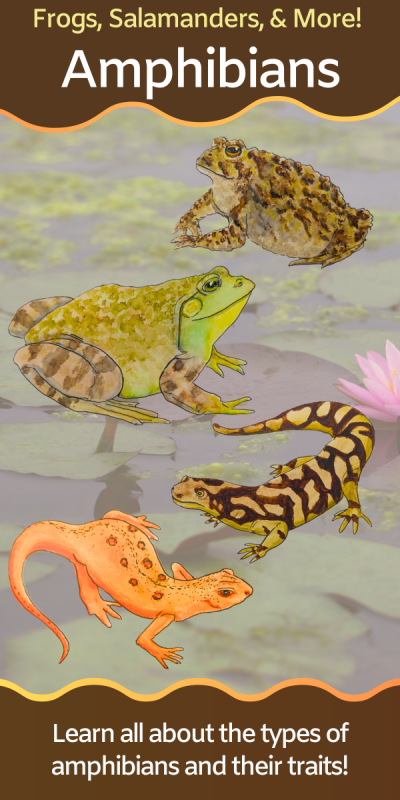
drawings of multiple amphibians
text that says share this post

Amphibians are some of the most fascinating creatures on Earth, bridging the gap between water and land with unique adaptations. Understanding amphibian traits can help students grasp key biological concepts like life cycles, metamorphosis, and environmental adaptations. Whether you’re teaching about frogs, salamanders, or caecilians, exploring what makes amphibians special is a great way to spark curiosity about the natural world.

๐Ÿ“šA Note for Teachers ๐ŸŽ: If youโ€™re an educator planning to teach amphibians, great learning resources are key to deepening understanding! I think you and your students will love my complete Amphibian Unit (plus youโ€™ll support my blog with your purchase! โค๏ธ)

What Are Amphibians?

Poster of Types of Amphibians

Before we dive into the traits of amphibians, it helps to answer the question “what are amphibians?”. Amphibians are a group of vertebratesโ€”animals with backbonesโ€”that share some key traits. There are seven classes of vertebrates on Earth: amphibians, birds, mammals, reptiles, and three types of fish.

But how do scientists know which animals belong in each class? It all comes down to family trees! Each class of vertebrates shares a common ancestor from long ago. If you traced their lineage back far enough, youโ€™d find that all amphibiansโ€”frogs, salamanders, and moreโ€”descend from the same ancient relative. Thatโ€™s why a salamander is more closely related to a frog than to a reptile like a lizard.

Thanks to their shared lineage, amphibians share some characteristics. In this post, we’ll discover some key amphibian traits…

A Backbone

Like all vertebrates, amphibians must have a backbone. A backbone is actually made of many individual, smaller bones called vertebrae, all stacked up in a flexible column. Amphibiansโ€™ spines help us tell them apart from invertebrate (backbone-less) creatures like insects and mollusks.

Cold-Blooded

Ever wonder why you see a frog sitting out on a lily pad in the sun? Amphibians are cold-blooded or ectothermic animals, which means their body temperature depends on the temperature of the air or water around them. They must rely on external (outside of themselves) heat sources to stay warm rather than making their own body heat.

When amphibians need to warm up, they sun themselves. If they get too hot, they go into cool water, underground, or find shade. Because they rely on external heat sources, their temperature varies a lot.  Amphibians, reptiles, and most fish are cold-blooded animals.

Moist, Permeable Skin

One of their most distinctive features is their moist, scale-free skin. Amphibians, even the ones that look bumpy, like toads, never have scales. This is one of the key differences between amphibians and reptiles.

To stay hydrated, amphibians usually live in damp environments or near water. Their skin contains special mucus glands to keep it moist. Itโ€™s also permeable, allowing water and gases to pass through. This means amphibians can absorb water and even breathe through their skin! However, most species also have lungs or gills for breathing.

Metamorphosis

Salamander Life Cycle Diagram

Another trait of amphibians is metamorphosisโ€”a dramatic transformation during their life cycle. For example, a tadpole with gills and a tail changes into an adult frog with lungs and legs.

Most amphibians go through metamorphosis, but there are a few types of amphibians that are exceptions. Some species of caecilians, a group of legless amphibians, develop differently and donโ€™t go through metamorphosis the way frogs and salamanders do.

Carnivorous

Finally, all adult amphibians are carnivores. Often, they hunt and eat small invertebrates – little animals without a backbone – like insects and worms. However, some large amphibians like bullfrogs will even hunt small vertebrates like smaller amphibians, reptiles, and even mammals like mice.

While adult amphibians are carnivores, larval amphibians often are not. This is because before going through metamorphosis, they are more suited to eating plant matter. For example, a tadpole lives in a pond and eats plant matter before it grows up into a frog that eats insects.

Study Amphibians with Wild Earth Lab!

Thereโ€™s no need to scramble to put together the perfect amphibians lesson โ€“ Iโ€™ve already created it for you! This set includes all the printable materials you need for studying amphibians.

Explore more lessons from Wild Earth Lab:

If you enjoyed learning about amphibian traits in this post, I know you will love trying my other printable science and nature units in your classroom!


Are you interested in reading more posts like this? Subscribe or follow Wild Earth Lab using the links below!


References and Further Reading

  1. Clark, M.A., Douglas, M., and Choi, J. (2018). Biology. Open Stax. Ch 29.3. Available: https://openstax.org/books/biology-2e/pages/29-3-amphibians
  2. Fowler, S., et al. (2013). Concepts in Biology. OpenStax. Ch 15.6. Available: https://openstax.org/books/concepts-biology/pages/15-6-vertebrates
  3. San Diego Zoo (n.d.). Salamander and Newt. Available: https://animals.sandiegozoo.org/animals/salamander-and-newt
  4. Wake, DB and Koo, MS. 2018. Primer: Amphibians. Current Biology 28(21): R1237-R1241. https://doi.org/10.1016/j.cub.2018.09.028

Subscribe, share, and comment:

Posted on Leave a comment

Types of Amphibians: Frogs, Salamanders, and More!

Illustrations of frogs and salamanders
text that says share this post

Amphibians are a diverse group of vertebrate animals. They come in many shapes and sizesโ€”from long-tailed salamanders to tailless frogs and even legless caecilians! Some are huge, like giant salamanders that grow to nearly six feet (two meters) long, while others are so tiny they could sit on your pinky finger. Amphibians also display striking colors, like the brightly patterned fire salamander or the brilliantly huedโ€”but toxicโ€”poison dart frog. In this post, we’ll explore the different types of amphibians – some you’ve probably seen before, and perhaps a few you’ve never heard of!

๐Ÿ“šA Note for Teachers ๐ŸŽ: If youโ€™re an educator planning to teach amphibians, great learning resources are key to deepening understanding! I think you and your students will love my complete Amphibian Unit (plus youโ€™ll support my blog with your purchase! โค๏ธ)

There are 3 main types of amphibians: frogs, salamanders, and caecilians. Each has its own unique characteristics, described below.

Frogs and Toads

green frog
close up shot of a frog
  • Class: Amphibia
  • Order: Anura

Key traits

Frogs and toads are amphibians with four limbs and no tails as adults. They also have powerful hind legs and vocal sacs for croaking. Frogs and toads start their lives in water as aquatic larvae called tadpoles. As tadpoles, they have gills and a tail for swimming. As frogs develop, they grow lungs and most species can come onto land. There are, however, some frogs that are aquatic as adults, such as African clawed frogs.

But even adult frogs like to live in damp habitats to help keep their moist skin from drying out. Frogs, like all amphibians, have moist skin rather than scales – one of the differences between reptiles and amphibians. Their skin is permeable, allowing them to drink water and breathe air through their skin.

Examples of Frogs and Toads

  • Bullfrog
  • Grass frog
  • Tree frog
  • Poison dart frog
  • Common toad
  • African clawed frog

Fun Fact

There are about 5,000 different species of frog worldwide! They are found on 6 of 7 continents (everywhere but Antarctica).

Salamanders

Small red-orange colored newt crawls over fallen leaves and detritus.
purple tropical axolotl
  • Class: Amphibia
  • Order: Urodela

Key traits

Salamanders are amphibians with long, thin tails and usually four limbs. Like all amphibians, they have moist skin that they can breathe through. Most salamanders also have gills, lungs, or even both at different stages of their life cycle. Like frogs, most salamanders go through metamorphosis. The larvae are often aquatic, with no limbs, tails for swimming, and frilly-looking external gills around their necks. Adults may live in water, on land, or both, depending on the species. Like all amphibians, adult salamanders are carnivores – often they eat small invertebrates.

Perhaps you’re wondering, what is the difference between a salamander and a newt? A newt is one type of salamander. So while all newts are salamanders, not all salamanders are newts.

Examples of Salamanders

  • Tiger salamander
  • Giant Salamander
  • Newt
  • Axolotl
  • Amphiuma

Fun Facts

Salamanders struggle to lift their bodies off the ground due to the position of their limbs on the sides of their bodies. To walk on land, they must wiggle from side to side while dragging their bodies across the ground.

The axolotl is a species of salamander that never grows up (sort of)! Even as an adult, it lives in water and has gills like a larva.

Caecilians

  • Class: Amphibia
  • Order: Gymnophiona

Key traits

The third type of amphibian is caecilians. If you’ve never heard of them or seen one, don’t worry! They are only found in the tropics, and they live underground, burrowing in the soil.

Caecilians are different from other amphibians in several ways. They have no legs, and long, worm-like bodies with grooves or rings that look like segments. Furthermore, caecilians don’t go through metamorphosis like frogs and salamanders.

Fun Facts

Though they have no legs, caecilians evolved from a legged ancestor. Over many generations, they lost their legs since they didnโ€™t need them to survive in their habitat.

What’s Next?

Continue reading about the different types of reptiles or the different types of mammals. Or learn about the differences between reptiles and amphibians.

Study this topic with Wild Earth Lab!

Thereโ€™s no need to scramble to put together the perfect lesson for teaching amphibians  โ€“ Iโ€™ve already created it for you! This set includes all the printable materials you need for studying amphibians.

Explore more lessons from Wild Earth Lab:

If you enjoyed this post, I know you will love trying my other printable science and nature units in your classroom too!


Are you interested in reading more posts like this? Subscribe or follow Wild Earth Lab using the links below!


References and Further Reading

  1. Black, R. (2012). Worldโ€™s Smallest Frog Discovered. BBC News. Available: https://www.bbc.com/news/science-environment-16491477
  2. Clark, M.A., Douglas, M., and Choi, J. (2018). Biology. Open Stax. Ch 29.3. Available: https://openstax.org/books/biology-2e/pages/29-3-amphibians
  3. Fowler, S., et al. (2013). Concepts in Biology. OpenStax. Ch 15.6. Available: https://openstax.org/books/concepts-biology/pages/15-6-vertebrates
  4. San Diego Zoo (n.d.). Chinese Giant Salamander. Available: https://animals.sandiegozoo.org/animals/chinese-giant-salamander
  5. San Diego Zoo (n.d.). Goliath Frog. Available: https://animals.sandiegozoo.org/animals/goliath-frog
  6. San Diego Zoo (n.d.). Salamander and Newt. Available: https://animals.sandiegozoo.org/animals/salamander-and-newt
  7. Wake, DB and Koo, MS. 2018. Primer: Amphibians. Current Biology 28(21): R1237-R1241. https://doi.org/10.1016/j.cub.2018.09.028

Subscribe, share, and comment:

Posted on Leave a comment

Reptiles vs Amphibians: learn the key differences + classroom activity!

Banner with pictures of reptiles and amphibians and the text "differences between reptiles and amphibians"

Can you tell the difference between a reptile and an amphibian? It can be challenging. After all, they are both ectothermic vertebrate animals. But there are a few key differences between reptiles and amphibians that you can use to tell them apart.

A note for educators: are you planning to teach reptiles and amphibians in your classroom? If so, I know you will love my complete Reptiles Unit and Amphibians Unit. They’re both packed with all the printable handouts, worksheets, and activity directions you’ll need โ€“ plus you’ll support this blog with your purchase! ๐Ÿ’š(You can also find both of these units in my Vertebrates Bundle!)

Lungs & Gills

First, reptiles always breathe air through lungs. Even aquatic reptiles never have gills and must go to the surface to breathe. But some amphibians have gills. Most amphibians live underwater for at least part of their lives. Many young amphibians live underwater and have gills. Some adult amphibians have gills too, but others develop lungs and live on land.

Life Cycles

Young amphibians look very different from adult amphibians. This is because they go through metamorphosis. An example of metamorphosis is a tadpole becoming a frog. Reptiles do not go through metamorphosis.

Download my my printable frog life cycle study materials.

Skin

Amphibians and reptiles have different skin. Reptiles have dry, scaly skin, like snakes and lizards, or scutes like crocodiles. Instead, amphibians have moist skin that often looks smooth. Amphibians can also breathe through their skin!

Habitats

Reptiles and amphibians are both found on land and in freshwater. A few reptiles, like sea turtles, live in the ocean. But there are no amphibians living in the ocean.

Eggs

Reptile and amphibian eggs look very different. Amphibians lay soft, jelly-like eggs into water. Reptiles lay hard-shelled or leathery eggs on land. Some reptiles do not lay eggs at all and give birth to live young instead.

Examples

 Amphibians include:
  • frogs
  • newts
  • salamanders
Reptiles include:
  • lizards
  • snakes
  • turtles
  • tuataras
  • crocodilians

Reptiles vs Amphibians: Classroom Activity

After students finish reading about reptiles and amphibians, they can review what they have learned with this Venn Diagram activity.

  • Make a Venn diagram with reptiles on one side and amphibians on the other.
  • Write the characteristics specific to amphibians on the amphibian side.
  • Write the characteristics specific to reptiles on the reptiles side.
  • Write the characteristics that reptiles and amphibians share in the middle section.

Are you an educator? I’ve created worksheets and materials for this Venn diagram activity that you can download.

Download these worksheets for studying reptiles and amphibians.

Explore units from Wild Earth Lab:

If you enjoyed this post, I know you will love using my environmental science materials in your classroom!


Are you interested in reading more posts like this? Subscribe or follow Wild Earth Lab using the links below!


References and Further Reading

  1. Greater Cleveland Aquarium (2019). EXPLORING SIMILARITIES, CELEBRATING DIFFERENCES: AMPHIBIANS AND REPTILES. Available: https://www.greaterclevelandaquarium.com/exploring-similarities-celebrating-differences-amphibians-and-reptiles/
  2. Nuwer, R. (2013). Ancient Reptiles Kept Switching Between Laying Eggs And Giving Birth to Live Babies. Smithsonian Magazine. Available: https://www.smithsonianmag.com/smart-news/ancient-reptiles-kept-switching-between-laying-eggs-and-giving-birth-to-live-babies-180948172/
  3. Schick, M. (2015). Amphibian or Reptile? Hereโ€™s the Difference. Shedd Aquarium. Available: https://www.sheddaquarium.org/stories/amphibian-or-reptile-here-s-the-difference
  4. Uetz, P. (1996). General Information (and โ€œFAQโ€). The Reptile Database. Available: http://www.reptile-database.org/db-info/introduction.html

Sharing options and discussion for this post: