Antarctica and the Arctic are the coldest places on Earth, yet many animals not only survive but thrive in these icy environments. How do they do it? Polar animals have incredible adaptations that help them cope with extreme cold and scarce food in winter. Let’s explore five fascinating polar animal adaptations that make life in the Arctic and Antarctica possible.
Before we dive in: If you’re an educator planning a study of the polar regions, check out my Polar Bundle! It combines my full Arctic and Antarctic learning units at a discount—perfect for busy teachers and homeschoolers looking to bring polar science to life in their classrooms.
1. Hibernation
Some polar animals survive the winter by hibernating. Hibernation is more than just sleeping: the animal’s breathing rate, body temperature, and heart rate become much lower than normal. This helps the animal conserve energy when food is scarce in winter. During hibernation, animals usually stay in a safe, protected space like a den or burrow.
Even if an animal doesn’t hibernate, it may still find a cozy hiding place to escape the cold. A den, borrow, or even a tunnel under the snow will keep an animal sheltered from the wind and cold. Inside, the animal will rest and reduce its activity to conserve energy, but they don’t enter full hibernation.
Examples of animals that shelter in burrows/dens:
Arctic lemmings
Polar bears (females while birthing cubs overwinter)
Why face the brutal cold when you can avoid it? Some polar animals migrate to warmer regions during the winter, returning to the Arctic or Antarctic for the breeding season. This is a great option for animals that can cover long distances by flying, swimming, or walking. Migration helps these animals find food and better conditions to raise their young.
Examples of animals that migrate:
Arctic terns (famous for traveling from pole to pole!)
Humpback whales
Humpback whale. Photo by Elianne Dipp on Pexels.com
4. Insulation
Thick fur, feathers, or layers of blubber act as natural insulation, helping polar animals retain body heat. This polar animal adaptation works like a winter jacket, trapping heat and keeping cold air out. Insulation is important for warm-blooded animals that need to maintain a steady body temperature.
Examples of animals with insulation:
Whales (blubber)
Seals (blubber and fur)
Arctic foxes (thick fur)
Penguins (dense feathers)
An Arctic fox with thick fur. Photo by Lena Heckendorn on Pexels.com
5. Huddling
What’s warmer than a group hug? Many polar animals huddle together to share body heat and stay warm. By forming a tight group, they reduce heat loss and create a barrier against cold winds. Emperor penguins, for example, are experts at huddling—taking turns on the outer edges to keep everyone warm on the inside of the huddle!
Examples of animals that huddle:
Penguins
Arctic hares
A penguin chick huddles close to its parent for warmth.
Polar animals have evolved some incredible strategies to survive in some of the harshest conditions on Earth. From huddling through the winter to migrating thousands of miles, these polar animal adaptations are a testament to the resilience of life on Earth!
What’s your favorite polar animal adaptation? Share it in the comments below!
Study Polar Animal Adaptations and Ecosystems with Wild Earth Lab!
There’s no need to scramble to put together the perfect lesson on polar regions – I’ve already created it for you! Grab my Polar Bundle, which includes my Antarctica Unit and Arctic Unit at a discount!
Are you interested in reading more about animal adaptations and other cool environmental science topics? Subscribe or follow Wild Earth Lab using the links below!
Wild Earth Lab is supported by readers like you. This post includes links to my own products and affiliate products. If you purchase through links on my site, I may earn a small commission at no additional cost to you.
Are you studying birds in your homeschool or classroom? Engaging your students with interactive bird activities can make learning about these unique animals memorable. Birds provide a great opportunity to explore animal biology concepts, from understanding bird adaptations and behaviors to investigating their diets and life cycles.
To support your bird study, I’ve curated eight fun and educational bird activity ideas that are perfect for homeschool parents and classroom teachers alike. Whether you’re teaching elementary science or simply looking for creative ways to bring nature into your lessons, these hands-on bird activities are sure to inspire!
Download this FREE bird anatomy worksheet that I created just for you! It features a heron and is perfect for learning about the different feathers and body parts of a bird. The set includes a labeled diagram and an unlabeled diagram for practice!
My newsletter subscribers can access my free resources page, where you’ll find this diagram and many other freebies.
It’s easy to observe wild birds in action when you set up a bird feeder. You can do this outside your classroom window or in another outdoor area. Bird feeders are a great way to observe the feeding habits of birds up close.
Before you set up your bird feeder, have students research the diets of common birds in your area, with a wildlife research project (free worksheets!). Birds eat a wide range of food – seeds, berries, insects, flower nectar, small animals, and more! Furthermore, they feed in different ways. Some crack nuts with strong beaks, while others drill into wood or catch flying insects from the air!
Since different birds have different diets and feeding habits, there are many different types of bird feeders to choose from. After researching the local birds and their feeding habits, students can help select the best type of bird feeder for your classroom. A few different bird feeder options include:
Tray feeders
Hummingbird feeders (e.g., these hand-made glass feeders)
Hopper feeders (e.g., this feeder made from recycled plastic!)
Nyjer feeders
Window feeder – great for seeing birds up close! (example)
DIY bird feeders – gather your own materials or get a kit (example)
3. Try a fun bird beaks lab
A bird beaks lab is a hilarious and hands-on way to experience competition between species and learn about natural selection and animal adaptations. Students will experience first-hand how specialized beaks can help birds quickly gather the most food and outcompete other types of birds.
In my blog, I’ve created a guide for completing your own bird beaks lab! Check out my directions for setting up your own bird beaks lab in this post!
Raptors, or birds of prey, are top predators that can be found in almost any type of habitat, from coastal areas to mountains, wetlands to deserts, grasslands to forests. Some of these incredible birds can even adapt to live alongside humans in urban areas!
Raptor centers provide homes for injured birds of prey that can no longer survive in the wild, as well as raptor outreach and education for their local communities. You can learn all about raptors from the experts at your local raptor center or wildlife sanctuary while seeing these amazing birds up close! Many Raptor centers offer tours to school groups and homeschoolers, and some have outreach programs that will come to your school.
You can also find more raptor activity ideas and raptor information in my blog posts:
Building or decorating a birdhouse is a wonderful activity to go along with studying bird life cycles. Learn about the nesting habits of birds and create a little bird home where you can watch the bird life cycle take place!
There are many birdhouse options to choose from. You can get a birdhouse kit where you assemble the parts yourself (example) or pre-made birdhouses ready for kids to decorate (example)!
Birds have lots of special adaptations, and the most obvious ones are their wings! However, bird wings are not one size fits all – bird wings come in many specialized forms that are serve different functions and fit different lifestyles. Read my blog post about bird wings to take a look at a few different types of wings and what they do!
Nothing beats seeing birds in their natural habitat! Birds can be found in all sorts of different environments, from forests to grasslands, wetlands to deserts, coasts to mountains! They can even be found adapting to live in urban areas alongside humans, in some cases!
Don’t forget to bring all the right equipment when you go bird watching. You’ll need:
There’s no need to scramble to put together the perfect bird lesson plan – I’ve already done the work for you! Choose from seabirds & shorebirds, waterfowl & waterbirds, and birds of prey! You’ll find even more activities, printable learning materials, worksheets, and more in my bird units!
Birds are a diverse group of animals. Despite their vast differences, hummingbirds, penguins, and eagles all share a common ancestry! Through the process of natural selection, birds adapted to thrive in unique ecological niches. One of their most fascinating adaptations is their wings. But wings are not one size fits all – bird wings come in many specialized forms that serve different functions and fit different lifestyles. Let’s take a look at a few different types of bird wings and what they do!
Active soaring wings have an extremely long, slender shape. They are ideal for catching horizontal air currents like sea breezes. They help minimize flapping to conserve energy, making them great for staying in the air for long periods while hunting or migrating. You will find many examples of active soaring wings among seabirds.
Examples: albatross, gannet
Passive Soaring Bird Wings
Passive soaring wings appear broad and slotted. They are best for catching updrafts and flying for long periods. They help minimize flapping to conserve energy while circling to look for food on the ground or in the water below. You will find raptors and seabirds with this wing type.
Example: pelican, eagle
High-Speed Bird Wings
High-speed bird wings are not as long as active or passive soaring wings. They may appear pointed at the ends. As the name implies, high-speed wings are great for rapid movement. However, the bird must spend lots of energy flapping to reach high speeds. This makes these wings ideal for short bursts of speed, such as chasing down a flying prey animal or insect.
Examples: falcon, tern
Elliptical Bird Wings
Elliptical bird wings have a more rounded appearance. They are great for quick maneuvers and turns, which is why they are often seen on birds that live in dense forests. They are also good for quick take-offs, which can help a bird escape from a predator. Elliptical wings require lots of flapping to stay in flight.
Examples: dove, turkey
Swimming Bird Wings
Some wings have a fin-like shape. These wings are great for swimming, which can be very useful for a penguin that hunts by pursuit diving for fish underwater. Swimming wings allow a bird to “fly” underwater! These fin-like wings lack true flight feathers and are not suitable for flight (in the air, at least).
Example: penguin
Hovering Bird Wings
Hovering wings are great for – you guessed it – hovering. This type of wing allows a bird to stay in one place, suspended in the air. Hovering wings are small and move very, very quickly. Furthermore, when a bird flaps its hovering wings, the motion comes mostly from the shoulder joint rather than joints further down the wing. Hovering lets a hummingbird drink nectar from flowers while in flight. However, a huge amount of energy is used to keep the wings flapping so quickly.
Example: hummingbird
Study Bird Adaptations with Wild Earth Lab:
I’ve created these learning material sets to help you study bird adaptations:
Heisman, R. (2022). Extraordinary Appendages: An Introduction to Bird Wings. American Bird Conservancy. Available: https://abcbirds.org/blog/bird-wings/
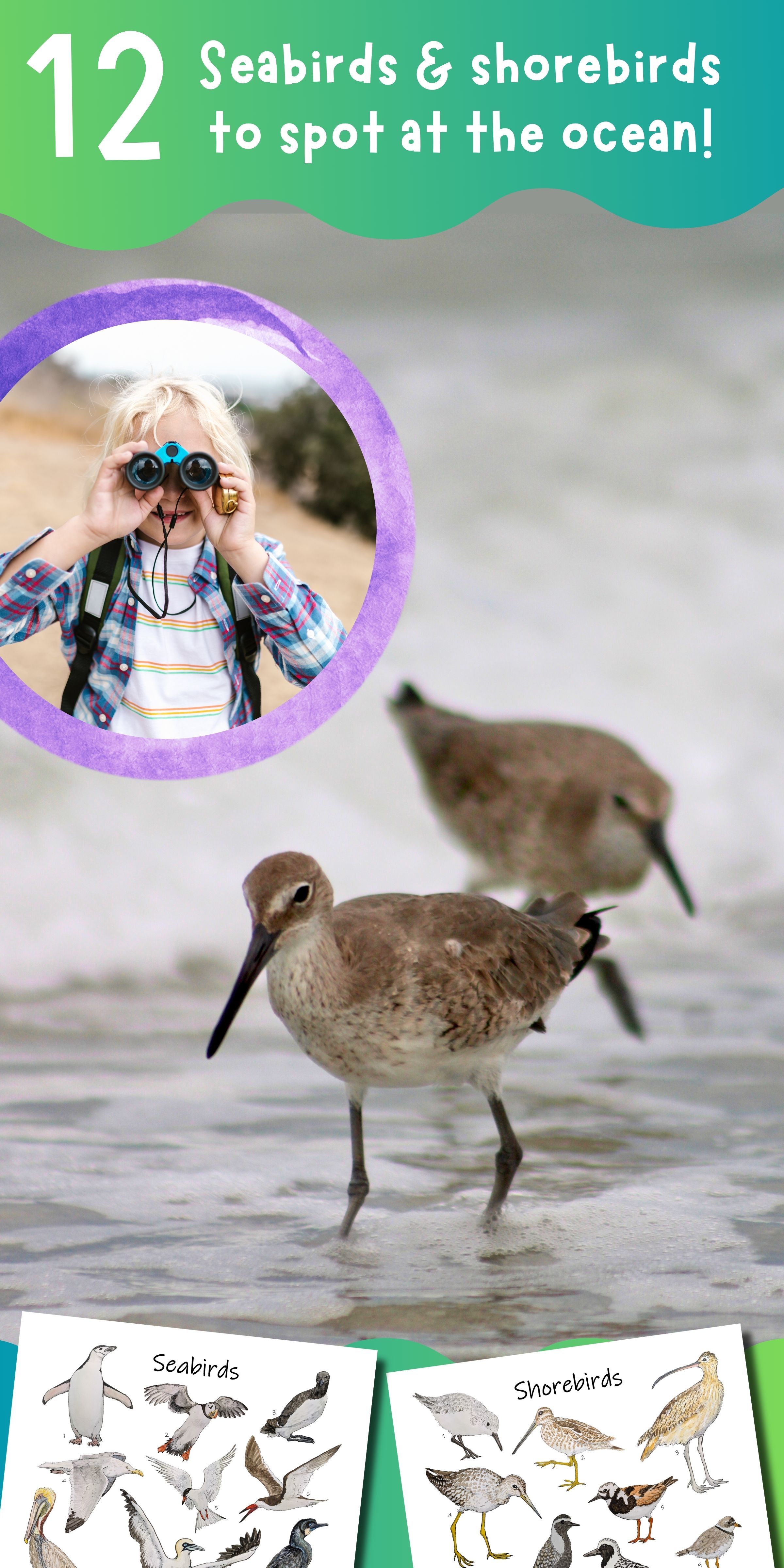
The beach is a wonderful place for bird watching, especially if you’re visiting from far away and used to a landlocked setting. A trip to the ocean opens up a world of unique bird species thriving in their natural habitat. Here, you’ll encounter a fascinating array of seabirds and shorebirds—each adapted to life in a saltwater environment.
Despite the common habitat that they share, the birds of the ocean are very diverse – you’ll see a huge array of beaks, wing shapes, and foot types. Through adaptation, these species have each carved out their own place in the coastal ecosystem, making the ocean an exciting destination for any bird enthusiast.
For teachers and parents: If you are learning about seabirds and shorebirds with kids, whether you’re a parent or an educator, I highly recommend checking out my sea & shorebirds unit (coastal birds) and my waterbirds unit (freshwater birds). These printable sets include everything you need to learn about bird life cycles, adaptations, and bird ID. These two units are also found in my Bird Bundle. Plus, the materials feature my watercolor bird artwork, as seen in this post.
Seabirds and shorebirds are both seen at the beach, but there are some differences between them. Shorebirds, also called “waders” in some regions, are birds found along the coast. Shorebirds all fall within the biological order Charadriiformes. This order includes sandpipers and plovers, among others. Many shorebirds have long legs perfect for wading through shallow water, walking, or running. Many feed along the water’s edge or by probing their bills in shallow water or sand. Unlike seabirds, not all shorebirds can swim particularly well.
On the other hand, “Seabird” is a blanket term for the many bird species that are adapted to living in a marine environment. Seabirds are excellent swimmers. They use their webbed feet to paddle while floating atop the water. Some even dive beneath the surface and swim to great depths to hunt food. While graceful in water, many seabirds move with considerably more difficulty while on land. Some spend months at a time in the open ocean and only come to land to nest along coasts, lay eggs, and raise their young, often in large groups called colonies.
Shorebirds in the surf. Photo by Blair Damson on Pexels.com
Types of Shorebirds
Here are some shorebirds you might spot at the beach or coast:
Sandpipers
These birds get their name for the unusual way they feed – probing their bills in the sand for buried goodies like crustaceans and insect larvae. Sandpipers are quite diverse. Within this group, there are many shapes and lengths of bills. This variety allows different species to probe for food at different depths.
For example, the long-billed curlew can extract food from deep in the mud, with its impressively long downward-curved bill! Other examples of sandpipers include yellowlegs, turnstones, and sanderlings. A widespread and diverse group, sandpipers are one bird family you’re likely to spot on your next trip to the beach!
A long-billed curlew probing in the sand
Plovers
If you see a small bird running along the water’s edge, there’s a good chance it’s a plover! Plovers are a diverse group of small shorebirds with long, thin legs. They are quick on their feet, which helps them scamper along the beach as they forage for food on the ground. Any time I see one of these tiny birds at the beach, I find myself worrying that the next wave might just sweep it away – but they always seem to run to safety just in time!
You can tell plovers apart from other shorebirds because they have relatively short necks and bills. Plumage varies between plover species. Examples of plovers include killdeer, golden plovers, and semipalmated plovers.
Semipalmated plover
Stilts and Avocets
You may see these leggy birds probing and scything for food in shallow waters of coastal wetlands with their long, thin bills. To tell the difference between a stilt and an avocet, just look at the bill. Stilts have straight bills while avocets’ bills curve upwards. Both have long necks and long, thin legs.
American avocet
Oystercatchers
These unique shorebirds are most easily recognized by their large, bright-red bills. Their bills are special tools for opening shells to get to the food inside. They also have long, pinkish legs and black and white plumage.
American oystercatcher
Types of Seabirds
Here are some seabirds you might spot at the beach, coast, or in boats on the open ocean.
Gulls & Terns
Gulls and terns are likely some of the most common birds you’ll see at the beach. They come in a variety of sizes and colors, and are opportunistic feeders. They can catch (or find) food in a variety of different ways. Unfortunately, these adaptable birds often end up feeding on human garbage, which can make them (and other wildlife) ill. For this reason, it’s important to always pick up your trash while visiting the shore!
Terns look quite similar to gulls, but usually are smaller with a more streamlined body. Terns are fast fliers, and some make incredible migrations, such as the Arctic tern, which journeys from the Arctic to the Antarctic and back each year. Talk about a long flight!
Herring gull
Skimmers
These distinctive birds are related to gulls and terns, but are of special interest because of the unusual way they catch their food. Skimmers feed by “skimming” the water’s surface with their distinctive bills. They fly low to the water with an open beak, letting the lower beak drag through the water. When the beak touches a fish, it snaps shut like a mousetrap. Pretty cool!
A black skimmer skimming the surface of the water for food
Pelicans
Pelicans are another common bird at the beach. They are most easily identified by their large size and a pouch for holding prey spanning from the lower part of the bill to the throat. If you are lucky, you can watch pelicans hunt while you sit on the beach. They put on a spectacular show, diving from the air into the water to catch fish.
Brown pelican
Cormorants
Cormorants are some of the strangest-looking seabirds, in my opinion. With a long hooked bill, long neck, and fully webbed feet, a cormorant is well-equipped to swim underwater hunting fish like some sort of bizarre sea creature.
While graceful in water, these oddities appear awkward on land, standing with a nearly upright posture since their flippered feet are attached near the rear of their body. Furthermore, cormorants often stand around gawkily holding their wings partially open to dry in the sun since they do not make water-resistant oils for their feathers. If you are lucky enough to spot one of these majestic misfits, feel free to stare!
Double-crested cormorant
Puffins & Auks
If you visit a coast in far-northern regions at the right time of year, you may see puffins! Puffins, and their relatives like murres and guillemots, are sometimes collectively called “auks”. While they may remind us of penguins with their round bodies and black and white plumage, auks are actually more closely related to seagulls. Similar to penguins, auks are excellent divers that pursue fish by using their wings to “fly” underwater. However, auks like puffins can also fly in the air too!
Atlantic puffin
Gannets & Boobies
These birds are absolute diving machines! They are amazingly adapted for one thing – plummeting headfirst from the air into the water! Gannets and boobies have sturdy, pointed bills and streamlined bodies that help them hit the water at high speeds without hurting themselves. They use the momentum of the dive to swim underwater and catch a meal. This special form of hunting is known as “plunge diving”. If you wish to see gannets and boobies hunting, you may want to get on a boat, as these seabirds thrive in an open-ocean environment.
A northern gannet plunge diving for fish
Albatrosses & Tubenoses
Albatrosses and their relatives (petrels, shearwaters, and storm-petrels) make up the bird order known as Procellariiformes, also sometimes called “tube-nosed seabirds” or “tubenoses”. Your best bet at seeing one of these stunning seabirds might be on a boat, as they spend significant portions of the year hunting in the open ocean.
Albatrosses’ claim to fame is their impressive wingspan. Albatrosses have what is known as active soaring wings – which are extra-long and slender wings that act like a glider plane. These wings help them harness sea breezes to fly and migrate without using up too much energy flapping. The wandering albatross has the largest wingspan of any bird – nearly 12 feet!
Black-footed albatross
Penguins
While you are unlikely to see one at the beach (unless you live in Antarctica or other select locations in the Southern Hemisphere), penguins are technically a type of seabird. Like other seabirds, they spend significant time living and hunting in the open ocean. Many penguins are uniquely adapted for life in extremely cold and icy places.
Chinstrap penguin
Other Waterbirds at the Beach
Ducks, swans, and egrets are all waterbirds. Photo by Robert So on Pexels.com
Sea and shorebirds are not the only birds that live in water. “Waterbird” is a general term for any bird that spends significant time swimming or wading in water. This can be in saltwater or freshwater. All seabirds and shorebirds are also waterbirds, but not all waterbirds are sea or shorebirds. Other waterbirds include geese, ducks, herons, coots, grebes, and many more.
Furthermore, sea and shorebirds are not the only birds found at the seaside. Waterbirds like herons and loons live in freshwater and saltwater habitats, but are not specifically considered seabirds or shorebirds.
Study Seabirds and Shorebirds with Wild Earth Lab:
Are you an educator or parent? If you enjoyed this post, I know you and your students will love using my Seabirds & Shorebirds science materials in your classroom or with your kids!
Can you tell the difference between a reptile and an amphibian? It can be challenging. After all, they are both ectothermic vertebrate animals. But there are a few key differences between reptiles and amphibians that you can use to tell them apart.
A note for educators: are you planning to teach reptiles and amphibians in your classroom? If so, I know you will love my complete Reptiles Unit and Amphibians Unit. They’re both packed with all the printable handouts, worksheets, and activity directions you’ll need – plus you’ll support this blog with your purchase! 💚(You can also find both of these units in my Vertebrates Bundle!)
First, reptiles always breathe air through lungs. Even aquatic reptiles never have gills and must go to the surface to breathe. But some amphibians have gills. Most amphibians live underwater for at least part of their lives. Many young amphibians live underwater and have gills. Some adult amphibians have gills too, but others develop lungs and live on land.
Life Cycles
Young amphibians look very different from adult amphibians. This is because they go through metamorphosis. An example of metamorphosis is a tadpole becoming a frog. Reptiles do not go through metamorphosis.
Amphibians and reptiles have different skin. Reptiles have dry, scaly skin, like snakes and lizards, or scutes like crocodiles. Instead, amphibians have moist skin that often looks smooth. Amphibians can also breathe through their skin!
Habitats
Reptiles and amphibians are both found on land and in freshwater. A few reptiles, like sea turtles, live in the ocean. But there are no amphibians living in the ocean.
Eggs
Reptile and amphibian eggs look very different. Amphibians lay soft, jelly-like eggs into water. Reptiles lay hard-shelled or leathery eggs on land. Some reptiles do not lay eggs at all and give birth to live young instead.
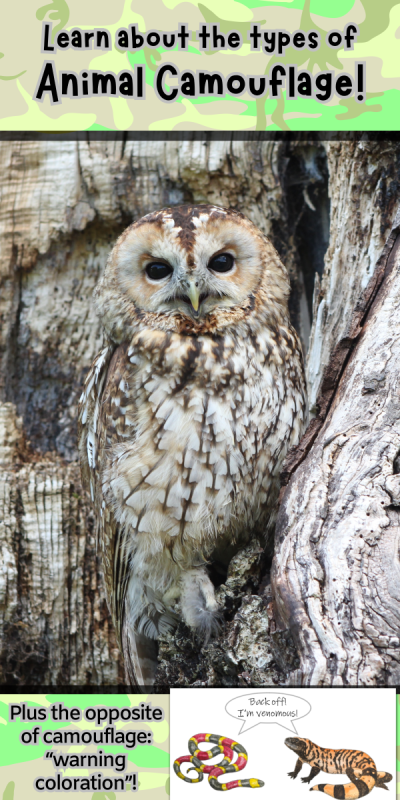
Camouflage is an adaptation that helps an animal disguise its appearance. There are many types of camouflage. Camouflage may help an animal blend into its background or look like something inedible or toxic.
Many prey animals use camouflage to protect themselves from predators. Also, some predators use certain forms of camouflage to help them hide and sneak up on prey.
Are you an educator planning to teach camouflage in your classroom? You may enjoy trying out this simple camouflage lab activity – read about the lab activity and download my printable worksheets and directions for it:
Types of camouflage include concealing coloration, disruptive coloration, countershading, disguise, and mimicry. Here are a few forms of camouflage:
1. Concealing Coloration
Concealing coloration is when an animal’s colors match its background to help it blend in. Often, animals with concealing coloration are shades of green, gray, and brown so that they do not stand out against leaves, twigs, rocks, and soils. In the polar regions, animals may have white fur so that they blend in with snow.
Examples: A huge number of insects, lizards, turtles, snakes, rodents, and other prey animals have concealing coloration. Some animals, like chameleons, can even change the color of their skin to match their background more closely. Arctic animals with concealing coloration to blend in with snow include some arctic foxes, polar bears, ptarmigans, snowy owls, and arctic hares.
2. Disruptive Coloration
Disruptive coloration includes patterns like spots and stripes that make it difficult to see the outline of an animal. These patterns of contrasting colors can visually break up an animal into pieces. It is difficult to hunt an animal if you cannot tell where its body begins and ends!
Examples: zebra, leopard
3. Countershading
Countershading is a common type of camouflage for aquatic animals. Their bellies are light-colored, like the surface of the water when viewed from below. Their backs are dark, like the water’s depths when seen from above.
Examples: sea turtles, dolphins, sharks
4. Disguise
Disguise is when an animal looks like something inedible. For example, it disguises itself as a rock or stick. Predators do not realize that the animal is something good to eat.
Animals use mimicry to trick predators into thinking they are something yucky, dangerous, or inedible. The mimic may be a relatively harmless animal that looks similar to a dangerous animal. This clever disguise fools predators into thinking the harmless animal is far more dangerous than it is.
Examples: milk snakes look like venomous coral snakes. Viceroy butterflies look like poisonous monarch butterflies.
A non-toxic viceroy butterfly (left)mimics a poisonous monarch butterfly (right).
A Different Strategy: aposematism, aka warning coloration
Aposematism is not camouflage – in fact, it is the opposite of camouflage! Aposematism means warning coloration. Venomous, poisonous, and otherwise dangerous animals often have bold patterns and colors. Contrasting patterns or stripes of red, orange, yellow, black, and white let predators know to back off! Gila monsters and coral snakes are two venomous reptiles with warning coloration. A skunk’s black and white stripes are another example of warning coloration.
A coral snake and a Gila monster are two venomous reptiles with the striking warning coloration known as aposematism.
You will also find the camouflage lab materials in my complete Reptile Unit! From Gila monsters to chameleons, the world of reptiles is full of some crazy patterns and disguises! If you enjoyed learning about the types of camouflage in this post, I know you will love learning more about the camouflage and coloration of reptiles in my complete Reptiles Unit!
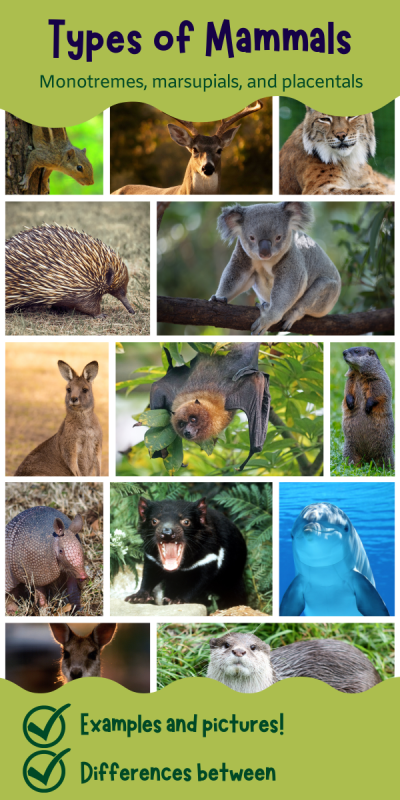
Life’s beginning varies a lot among mammals. We can group mammals into three main categories based on how their babies come into the world. The main types of mammals are called monotremes, marsupials, and placentals.
A Note For Teachers: If you’re an educator planning to teach types of mammals, great learning resources are key to deepening understanding! I think you and your students will love my complete Mammals Unit, which you can also find within my huge Vertebrates Bundle (plus you’ll support my blog with your purchase! ❤️ )
The echidna (left) and platypus (right) are monotremes.
Most mammals give birth to live babies instead of laying eggs. However, there are a couple of exceptions: platypuses and echidnas. They belong to a special group called monotremes. Even though they are unusual, monotremes, like the platypus, still provide milk for their young after they hatch. Monotremes are found in Australia and surrounding islands.
Marsupials
Kangaroo (left), koala (middle), and the extinct thylacine (right) are all marsupials.
Marsupials are another interesting type of mammal. They have a very short gestation period – that is the amount of time they are inside their mom’s belly. When they are born, they are very tiny and need a lot of care. They crawl into a pouch or open area on their mother’s belly, where they stay warm, safe, and can drink milk while they grow. A famous example of this is a kangaroo with a joey in its pouch. The kangaroo, like most marsupials, lives in Australia. South America is also home to many marsupials, and there is even one marsupial in North America: the opossum.
Placentals
Placental mammals are a large group, including deer (left), bats (middle), and prairie dogs (right), as well as many others.
The largest group of mammals is called placentals. They give birth to live babies after a longer gestation period. A special organ called the placenta helps give these mammals the nutrients they need while still in the womb. Placental mammals are born more developed than marsupial babies. Some, like baby deer (called fawns), can even stand up and start walking the same day they are born. Placentals are found in many habitats all around the world.
Learn about mammals with Wild Earth Lab
Check out my Mammals Unit! Learn about monotremes, marsupials, placental mammals, and much more!
If you enjoyed learning about the types of mammals in this post, I know you will love using my other earth and environmental science materials in your classroom!
Ferner, K., Schultz, J. A., & Zeller, U. (2017). Comparative anatomy of neonates of the three major mammalian groups (monotremes, marsupials, placentals) and implications for the ancestral mammalian neonate morphotype. Journal of anatomy, 231(6), 798-822. Available via Wiley Online Library: https://onlinelibrary.wiley.com/doi/10.1111/joa.12689
A keystone species is an organism that plays an exceptionally large role in its ecosystem. It provides materials or services that enrich the lives of other organisms in the ecosystem. Without the keystone species, the ecosystem would look very different and other organisms that rely on the keystone species would suffer. Now, let’s look at a few examples of keystone species!
Beavers in Wetlands
A common example of a keystone species is a beaver in a wetland. Beavers build dams on streams, causing water to back up and form ponds and wetlands. The result is a much more complex ecosystem with a greater variety of habitats.
A beaver wetland can support a very diverse plant and animal community. Beaver ponds provide a place for other animals to live and forage. A beaver wetland is a great habitat for wetland plants that like to grow in standing water. Without the beaver, the wetland ecosystem slowly degrades.
Saguaro Cactus in the Sonoran Desert
Like the beaver, the saguaro cactus is a keystone species. In the Sonoran Desert ecosystem, the saguaro plays a central role providing shelter and food for many other species.
Birds like elf owls, hawks, and woodpeckers live in cavities within the saguaro’s trunk. The saguaro’s flesh helps keep these homes temperature regulated so their occupants stay cool during hot desert days.
The saguaro flower provides nectar that feeds desert pollinators, like bats, doves, and bees. Once pollinated, the saguaro makes large fruits that are also a vital food source for desert animals. Coyotes, tortoises, birds, and others eat the fruit and disperse the saguaro’s seeds in their scat.
Many desert animals have a type of symbiotic relationship with saguaros known as mutualism. This means both the animal and the saguaro benefit from the relationship.
Prairie dogs are keystone species in grasslands and prairies because of their tunnels. They are exceptional excavators that build large networks of underground tunnels. These tunnels actually help keep the soil healthy. Digging tills and aerates the soil, and prairie dog scat provides a fertilizer for prairie plants.
Additionally, when prairie dogs abandon burrows, other prairie animal species can move in and use these homes. Not all animals are as good at digging as prairie dogs, so they rely on abandoned prairie dog homes for shelter. Finally, prairie dogs are a food source for grassland predators like coyotes and hawks.
Wolves in Forests
Although scarce today, wolves are a natural keystone species in many types of forests. Wolves help keep the populations of deer, elk, and other undulates under control through hunting them. Amazingly, this impacts the plant community of the forest! Let me explain: deer and elk are voracious plant eaters. When deer and elk numbers grow unnaturally high, plants struggle to grow fast enough to keep up with the hungry undulates. But when wolves are around, the deer and elk populations stay in check, and the plants benefit.
Even a few wolves can really make an impact. These is because the presence of wolves changes the behaviors of deer and elk, scaring them into more protected parts of a habitat. When there are no wolves around, deer and elk will more freely browse in any part of the habitat, including open areas like meadows and riparian zones.
Explore curriculum from Wild Earth Lab:
If you enjoyed this post, I know you will love using my environmental science materials in your classroom!
Fortin, D., Beyer, H. L., Boyce, M. S., Smith, D. W., Duchesne, T., & Mao, J. S. (2005). Wolves influence elk movements: behavior shapes a trophic cascade in Yellowstone National Park. Ecology, 86(5), 1320-1330.
Kotliar, N. B., Baker, B. W., Whicker, A. D., & Plumb, G. (1999). A critical review of assumptions about the prairie dog as a keystone species. Environmental management, 24, 177-192.
Waterfowl and other waterbirds are some of the best wildlife to go view with kids in wetlands and other natural areas, regardless of your location. If you are planning a waterfowl field trip – or a whole waterfowl and waterbird unit – this waterbird & waterfowl activities list is the place to start!
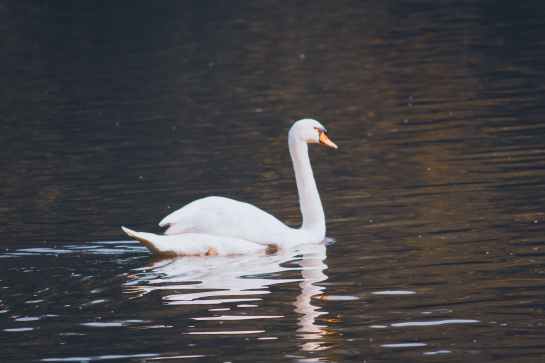
In case you are wondering, waterfowl are ducks, geese, and swans – birds in the biological order Anseriformes. Meanwhile, “waterbirds” is a more general term. Waterbirds refers to a large group including waterfowl and other water-loving birds. This includes wading birds (e.g., herons, egrets, cranes), shore birds (e.g., sand pipers, plovers), as well as loons, grebes, coots, cormorants, and more!
Try out some of these waterbird and waterfowl activity ideas with your class!
1. Waterfowl Origami
Fold an origami crane, swan, or duck. Or all three! Here are a few helpful online tutorials:
The National Crane Foundation‘s instructions for folding Origami Cranes – with printable directions and a video!
Fold an Origami Swan – with this video from Origami Plus – Easy Origami Tutorials on YouTube!
Go on a birdwatching adventure at a local wetland or lake. Bonus: before you head out, print out a species checklist of local waterfowl and waterbirds!
Here are a few online resources to help you begin birdwatching like a pro!
Read a children’s book featuring waterfowl! Possibilities include “Make Way for Ducklings” by Robert McCloskey and “The Trumpet of the Swan” by E. B. White.
Here are some websites that put together lists of bird-related books:
Ten Birdy Children’s Books to Read With Your Fledglings, a August 2019 blog post on Audubon by T. Santora
Check out GoodReads list of books for bird lovers – including several books featuring geese and ducks!
Try a bird beak lab – use different “beaks” (e.g., chopsticks, tweezers, slotted spoon), to pick up different “food sources” (pasta, seeds, peas). See which beak is the best at “catching” each food.
There are lots of versions of Bird Beaks Labs around the web. Here are a few good ones:
Experience swimming like a swan (or duck, or grebe…)! Grab a pair of swimming flippers (aka snorkeling fins) and head to a local pool or swimming area.
Bonus: toss some diving rings and practice diving under the surface of the water like a diving duck to retrieve them!
8. Duck Masks & Art Projects
Do a waterbird art or writing project! Learn to draw or paint a waterbird from your area. Write a poem about your favorite waterbird! Decorate a duck mask! Write a short story. Sit by a wetland habitat as you sketch, draw, or nature-journal!
Volunteer to help clean up waterbird habitat in your local area. Research local conservation groups to find out about park and natural area clean-up days in your community.
Try out my Waterfowl and Waterbirds Unit in your classroom! It’s got lots of activities and all the worksheets, handouts, decorations, and guides you will need for a wonderous waterbirds unit in your classroom or homeschool!
Many people misuse “bug” when talking about any insect. However, only certain insects are considered true bugs. In this post, you will learn the difference between a bug, and insect, and an arthropod and why they are not quite the same thing. Learn when to say bugs vs insects vs arthropods when talking about creepy crawly little critters!
What are bugs?
Ask an entomologist (insect scientist) what their biggest pet peeve is, and there is a good chance they will tell you it is the misuse of the word “bug”. Many people misuse “bug” when talking about any insect. However, only certain insects are considered true bugs (specifically, the ones in the order Hemiptera). Several aquatic insects are true bugs: water striders, backswimmers, and water scorpions. Also, some terrestrial insects are true bugs including aphids, leafhoppers, stink bugs, and cicadas.
Bugs vs insects
All bugs are insects, but not all insects are bugs. So, what makes bugs different from the rest of the insects? Bugs have specialized, beak-like mouthparts for piercing.
Water striderStink bugCicadaWhat do these three insects have in common? They are all true bugs!
What are insects?
“Insect” is another challenging term for many people. Insects are animals that belong to the class Insecta. They have an exoskeleton, 6 legs, and three main body segments: head, thorax, and abdomen.
Insects vs arthropods
But not all creepy-crawly little critters are insects. For example, people often mistakenly label spiders, scorpions, and centipedes as insects. Clearly, these animals have a lot in common with insects, but they do not have 3 body segments and 6 legs. Instead, you can use the word “arthropod” when talking about this larger group that includes insects and their various cousins that also have exoskeletons.
CicadaMonarch butterflyHoneybeeWhat do these three arthropods have in common? They are all insects!
What are arthropods?
Arthropods are animals in the phylum Arthropoda. This is a very diverse group. Scorpions, spiders, lobsters, millipedes, centipedes, beetles, bugs, and butterflies are just a few examples of arthropods! All arthropods have exoskeletons, segmented bodies, and jointed legs. Different arthropods have different numbers of legs and body segments.
HoneybeeTickScorpionWhat do these three animals have in common? They are all arthropods!
Intro to Taxonomy
Taxonomyis the science of organizing and classifying living beings into groups, called taxa. This was historically done based on shared traits. Today, genetic tests help scientists determine how organisms are related to one another and evolved from common ancestors. Read more about taxonomy here.
Bug Lesson Plan
If you enjoyed this post, you might also enjoy my It’s a Bug…. Right? lesson plan for kids! It’s a full set of activities and classroom materials you can use to teach kiddos about arthropods, insects, and bugs and introduce them to taxonomy!
Explore more curriculum from Wild Earth Lab:
I know you will love using my environmental science materials in your classroom! Check out these units and more!


 Polar Bundle: set of 2 units – Arctic & AntarcticaOriginal price was: $27.00.$21.60Current price is: $21.60.
 Antarctica: a complete unit with ecology and climate science activities$15.00
 The Arctic: an ecology unit for kids$12.00