Posted on Leave a comment

Comparing Arctic and Antarctic Regions: Key Differences and Similarities

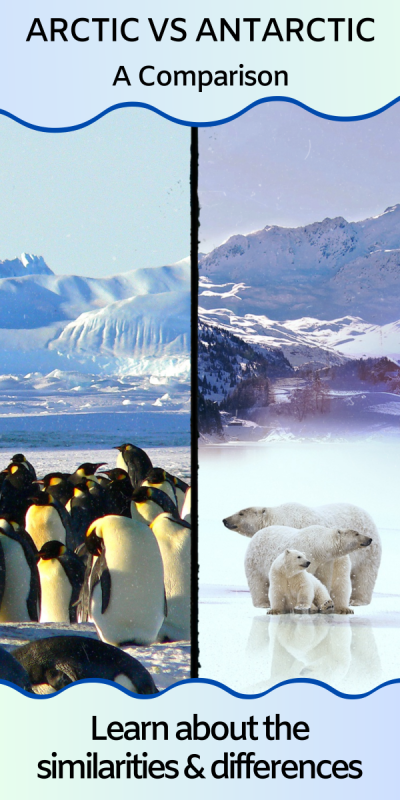
side by side picture of Arctic penguins and Antarctic polar bear
text that says share this post

The Arctic and Antarctic sit at opposite ends of the Earth. While these icy extremes share surprising similarities, there are some big differences between them too. From their unique geographies to the wildlife and weather, these polar regions offer endless opportunities for comparison. In this post, we’ll explore the fascinating ways the Arctic and Antarctic are alikeโ€”and how they differ.

Before we dive in:ย If youโ€™re an educator planning toย teach about the Arctic or Antarctica in your classroom, great learning resources are key to deepening understanding! I think you and your students will love my Arctic and Antarctica Units (plus youโ€™ll support my blog with your purchase! โค๏ธ)

Arctic vs Antarctic: key differences & similarities

The Arctic and Antarctic are polar regions, located at opposite ends of our planet. At the center of the Antarctic, you will find the South Pole. The North Pole is in the center of the Arctic. Though they are far apart, the Arctic and Antarctic are similar in many ways. For example, both have a period of round-the-clock daylight in mid-summer and a period of total darkness in mid-winter. Furthermore, both the Arctic and Antarctic experience some of the coldest temperatures on our planet.

iceberg

Geography

Geographically, there are some big differences between the Arctic and Antarctic. The Antarctic Circle is centered over one big continent: Antarctica. On the other hand, the Arctic Circle is filled by the Arctic Ocean, islands, and coastlines. Both the Arctic and Antarctic have lots of ice. Antarctica is covered in a gigantic glacial ice sheet and surrounded by seas covered in ice shelves and pack ice. The Arctic is filled with lots of floating sea ice.

Animals & Plants

The Arctic and Antarctic are home to some of the same animals. Both have whales, seals, and seabirds. But the similarities end there. For example, you wonโ€™t find penguins in the Arctic โ€“ they live in Antarctica only. This is good for the penguins because there are hungry polar bears in the Arctic. Polar bears are not the only animals found in the Arctic but not in the Antarctic. Walrus, puffins, reindeer, wolves, and foxes are all found in the far north, but not in Antarctica.

Compared to other places, both the Arctic and Antarctic have very few plants. So what do the animals eat? Tiny plants in the ocean called phytoplankton are an important food source in the Arctic and Antarctic. The phytoplankton are food for little ocean invertebrates called zooplankton (e.g., krill). The krill feed many larger animals โ€“ from fish and seabirds to baleen whales!

Emperor penguin baby penguin
close photography of white polar bear

Weather and More

Both the Arctic and Antarctic are pretty chilly year-round. However, they get their coldest weather at different times of year. In July, when it is summer in the Arctic, it is winter in the Antarctic. Then in January, it is winter in the Arctic but summer in the Antarctic.

Another cool thing about the Arctic and Antarctic is that they both have dancing polar lights in the sky at night. These lights are called the Aurora Borealis in the north and Aurora Australis in the south. These incredible, natural light shows are caused when tiny particles from the sun bump into the Earthโ€™s magnetic field.

time lapse photo of northern lights

Teaching Polar Regions in Your Classroom

Thereโ€™s no need to scramble to put together the perfect lesson for the polar regions โ€“ Iโ€™ve already created it for you! This set includes all the printable materials you need for studying this subject.

Explore More Lessons from Wild Earth Lab:

If you enjoyed reading about the Arctic vs the Antarctic in this post, I know you will also love my printable science and nature units in your classroom!


Are you interested in reading more posts about science topics? Subscribe or follow Wild Earth Lab using the links below!


Subscribe, share, and comment:

Posted on Leave a comment

Teaching Climate Change: Positive Feedback Loops & Sea Ice

positive feedback loop diagram

Are you searching for a science lesson that brings climate change to life in your classroom? Positive feedback loops are not just fascinatingโ€”theyโ€™re a powerful way to help students grasp the dynamics behind our warming planet. By teaching about positive feedback loops, like the relationship between sea ice, albedo, and temperature, youโ€™ll equip your students with a deeper understanding of one of the mechanisms fueling anthropogenic climate change. Letโ€™s explore this complex topic so you can plan an impactful and accessible lesson for your learners!

Before we dive in: If youโ€™re an educator planning to teach positive feedback loops in climate change, having great visuals to deepen understanding is key! I think you and your students will love my positive feedback loop diagram (plus you’ll support my blog with your purchase! โค๏ธ)

positive feedback loop diagram

What is a Positive Feedback Loop?

In science, a positive feedback loop is a cycle that keeps reinforcing or amplifying itself. A simple example is when laughter spreads. If your friend starts laughing, it might make you laugh too, which then makes your friend laugh even harder. This cycle continues, making everyone laugh more.

A positive feedback loop is called โ€œpositiveโ€, because each part of the cycle strengthens the next, not because it is necessarily a good thing. For example, a forest fire can create a positive feedback loop. As more trees catch fire, the fire gets bigger and hotter, which makes it easier for the flames to spread to even more trees.

What is Albedo?

Have you ever noticed that a black T-shirt feels hotter than a white one on a sunny day? This is because of something called albedo. When sunlight hits a surface, some energy reflects off while the rest is absorbed, making the surface warmer. Albedo is a measure of how much sunlight a surface reflects. Light-colored or shiny surfaces have a high albedo, meaning they reflect more sunlight. Dark surfaces, like a black T-shirt, have a lower albedo, so they absorb more energy from the sun and feel warmer.

Side note: if you’re a teacher planning a lesson on albedo, read my blog post with a step-by-step guide to an albedo and sea ice experiment for the classroom!

Positive feedback loops play a role in climate change, and it begins with albedo. Sea ice in polar regions is light-colored and reflective, so it has a higher albedo than dark ocean water. When sea ice melts because of anthropogenic (human-caused) climate change and rising temperatures, the reflective ice is replaced by dark ocean water. The dark ocean absorbs more heat from the sun without the reflective ice to protect it. This causes the ocean to warm more and faster, which increases temperatures and speeds up climate change. As more sea ice melts, it creates a cycle that leads to even more melting.

iceberg

A Positive Feedback Loop and Climate Change

Let’s break down a positive feedback loop step-by-step:

1. Temperatures Rise

Average global temperatures are rising. This is one of the main effects of climate change.

2. Sea Ice Melts

Ice melts at 32ยฐF (0ยฐC). When the average global temperatures rise, more sea ice melts.

3. Ocean’s Surface Becomes Exposed

As sea ice melts, the ocean surface is uncovered. Large areas that were once covered by light-colored ice are now dark ocean water.

4. Albedo Decreases

Light-colored sea ice reflects more sunlight than dark ocean water. When the ice melts, the ocean reflects less sunlight.

5. Ocean Water Warms

Without reflective sea ice, the oceanโ€™s water absorbs energy from the sun. This causes the ocean to warm up. And the cycle begins again.

Why it Matters

Why should you care about ice melting in faraway places like the poles? Polar ice melting is a problem for several reasons. First, as ice melts, it raises sea levels around the world. This leads to flooding along coastlines, putting coastal and island communities at risk of disappearing underwater and displacing the people living there. Another issue is the loss of important habitats for animals in the Arctic and Antarctica.

Additionally, as polar regions warm, permafrost (frozen ground) also thaws, releasing greenhouse gases and contributing to further climate change. This is a second example of a positive feedback loop in climate change because more warming causes more gases released, which causes more warming.

Teach Positive Feedback Loops and Climate Change:

Thereโ€™s no need to scramble to pull together materials for a positive feedback loop lessonย โ€“ Iโ€™ve already created them for you! Support this blog when you purchase my Positive Feedback Loop Diagrams and my Albedo Lab Activity materials:

Upgrade Option: both of these sets are also found within my complete Antarctica Unit:

Explore lessons from Wild Earth Lab:

If you enjoyed this post, I know you will love trying my other science and nature units in your classroom too!


Are you interested in reading more posts about fascinating science topics to teach in your classroom? Subscribe or follow Wild Earth Lab using the links below!

Subscribe, share, and comment:

Posted on 1 Comment

5 Fascinating Adaptations of Arctic and Antarctic Animals

several pictures of various polar animals

Antarctica and the Arctic are the coldest places on Earth, yet many animals not only survive but thrive in these icy environments. How do they do it? Polar animals have incredible adaptations that help them cope with extreme cold and scarce food in winter. Letโ€™s explore five fascinating polar animal adaptations that make life in the Arctic and Antarctica possible.

Before we dive in: If youโ€™re an educator planning a study of the polar regions, check out my Polar Bundle! It combines my full Arctic and Antarctic learning units at a discountโ€”perfect for busy teachers and homeschoolers looking to bring polar science to life in their classrooms.

1. Hibernation

Some polar animals survive the winter by hibernating. Hibernation is more than just sleeping: the animal’s breathing rate, body temperature, and heart rate become much lower than normal. This helps the animal conserve energy when food is scarce in winter. During hibernation, animals usually stay in a safe, protected space like a den or burrow.

Examples of animals that hibernate:

  • Arctic ground squirrels
  • Grizzly bears
close up photography of brown bear on gray rock
Brown bear. Photo by Pixabay on Pexels.com

2. Taking Shelter

Even if an animal doesn’t hibernate, it may still find a cozy hiding place to escape the cold. A den, borrow, or even a tunnel under the snow will keep an animal sheltered from the wind and cold. Inside, the animal will rest and reduce its activity to conserve energy, but they don’t enter full hibernation.

Examples of animals that shelter in burrows/dens:

  • Arctic lemmings
  • Polar bears (females while birthing cubs overwinter)
  • Arctic foxes
close photography of white polar bear
A polar bear. Photo by Pixabay on Pexels.com

3. Migration

Why face the brutal cold when you can avoid it? Some polar animals migrate to warmer regions during the winter, returning to the Arctic or Antarctic for the breeding season. This is a great option for animals that can cover long distances by flying, swimming, or walking. Migration helps these animals find food and better conditions to raise their young.

Examples of animals that migrate:

  • Arctic terns (famous for traveling from pole to pole!)
  • Humpback whales
humpback whale underwater
Humpback whale. Photo by Elianne Dipp on Pexels.com

4. Insulation

Thick fur, feathers, or layers of blubber act as natural insulation, helping polar animals retain body heat. This polar animal adaptation works like a winter jacket, trapping heat and keeping cold air out. Insulation is important for warm-blooded animals that need to maintain a steady body temperature.

Examples of animals with insulation:

  • Whales (blubber)
  • Seals (blubber and fur)
  • Arctic foxes (thick fur)
  • Penguins (dense feathers)
arctic fox
An Arctic fox with thick fur. Photo by Lena Heckendorn on Pexels.com

5. Huddling

Whatโ€™s warmer than a group hug? Many polar animals huddle together to share body heat and stay warm. By forming a tight group, they reduce heat loss and create a barrier against cold winds. Emperor penguins, for example, are experts at huddlingโ€”taking turns on the outer edges to keep everyone warm on the inside of the huddle!

Examples of animals that huddle:

  • Penguins
  • Arctic hares
Emperor penguin baby penguin
A penguin chick huddles close to its parent for warmth.

Polar animals have evolved some incredible strategies to survive in some of the harshest conditions on Earth. From huddling through the winter to migrating thousands of miles, these polar animal adaptations are a testament to the resilience of life on Earth!

What’s your favorite polar animal adaptation? Share it in the comments below!

Study Polar Animal Adaptations and Ecosystems with Wild Earth Lab!

Thereโ€™s no need to scramble to put together the perfect lesson on polar regions  โ€“ Iโ€™ve already created it for you! Grab my Polar Bundle, which includes my Antarctica Unit and Arctic Unit at a discount!

Looking for more info on animal adaptations? Read my post on desert animal adaptations and my post on camouflage!

Are you interested in reading more about animal adaptations and other cool environmental science topics? Subscribe or follow Wild Earth Lab using the links below!


References and Further Reading

  1. All About Birds (n.d.). Bird Guide. Arctic tern. Available: https://www.allaboutbirds.org/guide/
  2. Audubon (n.d.). Guide to North American Birds. Arctic tern, Atlantic puffin, snowy owl, tundra swan. Available: https://www.audubon.org/bird-guide
  3. Australian Antarctic Program (n.d.). Emperor Penguin. Available: https://www.antarctica.gov.au/about-antarctica/animals/penguins/emperor-penguin/
  4. Center for Biological Diversity (n.d.). ARCTIC FOX } Alopex lagopus. Natural History. Available: https://www.biologicaldiversity.org/species/mammals/Arctic_fox/natural_history.html
  5. Cool Antarctica (n.d.). Arctic Hare – Facts and Adaptations. Available: https://www.coolantarctica.com/Antarctica%20fact%20file/wildlife/Arctic_animals/arctic_hare.php
  6. Global Penguin Society (n.d.). Emperor Penguin โ€“ Aptenodytes forsteri. Available: https://www.globalpenguinsociety.org/portfolio-species-2.html
  7. Mak, M. (2023). What is hibernation? World animal protection. Available: https://www.worldanimalprotection.us/latest/blogs/what-hibernation/
  8. Manning, E. (2007). The Long Sleep: Which Animals Hibernate? Alaska Fish and Wildlife News. Available: https://www.adfg.alaska.gov/index.cfm?adfg=wildlifenews.view_article&articles_id=279
  9. National Park Service (2019). Wildlife of the Arctic. Available: https://www.nps.gov/subjects/Arctic/wildlife.htm
  10. NOAA Fisheries (n.d.). Species Directory. Humpback whale. Available: https://www.fisheries.noaa.gov/species-directory.
  11. OpenAI. (2024). ChatGPT [Large language model]. https://chatgpt.com (used for editing purposes]

Subscribe, share, and comment: