Posted on — Leave a comment

Parts of an Insect: with a free printable insect anatomy worksheet!

Insect anatomy worksheet
text that says share this post

In this post, we’ll discuss the parts of an insect and an insect’s three main body segments. At the end, download my free insect anatomy coloring worksheet and find links to more insect anatomy activities and materials – perfect for reviewing the parts of an insect in your classroom.

A note for educators: If youโ€™re an educator planning to teach insects, great learning resources are key to deepening understanding! I think you and your students will love my complete Insects Unit. It includes tons of insect anatomy activities and much, much more (plus youโ€™ll support my blog with your purchase! โค๏ธ)

Head

1.The head is the front insect body segment. The head holds the eyes and antennae, which help the insect see, touch, and smell. Insectsโ€™ mouthparts are also on the head. Different insects have different-shaped mouthparts depending on what foods they eat.

Thorax

1.The thorax is the middle body segment. The legs are attached to the thorax. If the insect has wings, the wings are also attached to the thorax.

Abdomen

1.The abdomen is the rear insect body segment. Many of an insectโ€™s organs are inside the abdomen.

Legs

The legs are attached to the insectโ€™s thorax. Insects always have 6 legs. Animals with a different number of legs are not insects, like spiders with 8 legs.

Wings (sometimes)

The wings allow some insects to fly. Not all insects have wings. If an insect has wings, they are attached to the thorax. Insects may have two or four wings.

Antennae

Insects have two antennae attached to their heads. The antennae help the insect sense the world around it. They are used for touching, smelling, and sometimes even tasting.

Specialized Mouthpart

Insects do not have teeth like you or me. Instead, they have a specialized mouthpart. This mouthpart is designed for the type of food each insect eats. It might be used for chewing, scraping, or even sipping. A great example is a proboscis, which is a long tube-like mouthpart of butterflies and moths. It lets butterflies and moths sip nectar from flowers the way you drink a milkshake through a straw.

I’ve Created this Insect Anatomy Worksheet (FREE)

You can find the insect anatomy coloring worksheet on my free resources page. You can access this free resource and all the other free resources when you join my email newsletter.

coloring worksheet with the parts of an insect

For more insect anatomy and insect lessons, try one of these…

You can find lots more insect teaching materials in the Wild Earth Lab shop. For the most complete and in-depth set of materials, I recommend my Insects Unit. Otherwise, find a la carte insect lessons below…

Explore more lessons from Wild Earth Lab:

If you enjoyed this post, I know you will love trying my other printable science and nature units in your classroom too!


Are you interested in reading more posts like this? Subscribe or follow Wild Earth Lab using the links below!


Subscribe, share, and comment:

Posted on — Leave a comment

Insect Superheroes: 9 amazing superpowers of insects + classroom writing prompt

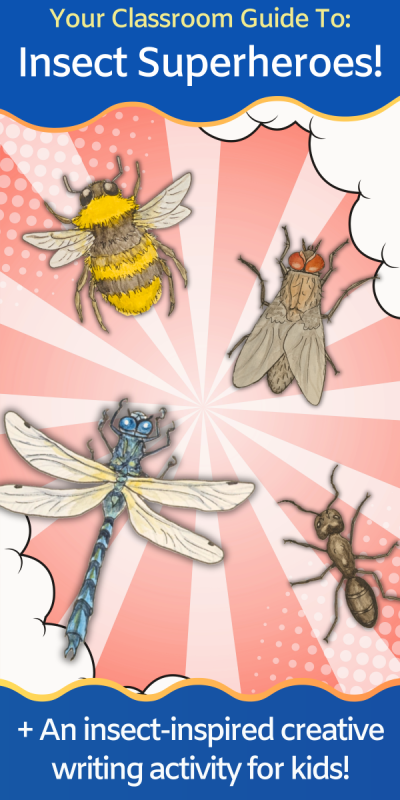
insects on a superhero background
text that says share this post

In this post, you’ll read about 9 amazing and real superpowers of insects that you might not have known about. Plus, scroll to the bottom for a classroom writing prompt inspired by insects’ incredible abilities.

A note for educators: If youโ€™re an educator planning to teach insects, great learning resources are key to deepening understanding! I think you and your students will love my complete Insects Unit (plus youโ€™ll support my blog with your purchase! โค๏ธ)

Insects may be small, but they make up for it with incredible superpowers. Just look at what these cool critters can doโ€”you’ll see that insects are like tiny superheroes living all around us!

1. Super Strength

An ant can carry 50x its own weight. A dung beetle can drag over 1,000x its own weight!

leafcutter ants carrying leaves on branch
Leaf cutter ants. Photo by Kirsten C. Staring on Pexels.com

2. Super Vision

Some insects can see types of light that humans cannot see. These include ultraviolet and infrared light, which are invisible to our eyes. Butterflies and bees can see ultraviolet light, while mosquitoes can see infrared light.

mosquito sucking blood on skin of unrecognizable person
Mosquitoes’ infrared-sensitive vision helps them detect body heat and find someone to bite! Photo by Anuj on Pexels.com

3. Super Tasters

Houseflies and butterflies can taste with the bottoms of their feet. Housefly feet are even more sensitive to sugar than the taste buds on your tongue!

4. Super Builders

Some types of termites build giant homes called mounds that can be twice as tall as an adult man. They are built to last too โ€“ some termite mounds are about 4,000 years old and are still in use. Thatโ€™s nearly as old as the Great Pyramids of Egypt!

termite mound with rock and grasses on savanna
Through teamwork, tiny termites build giant homes.

5. Super Jumpers

A grasshopper can jump up to 20x its own body length!

6. Super Fliers

Every year, monarch butterflies fly up to 3,000 miles from their summer homes in the United States to their winter homes in Mexico. This long, yearly trip is called a migration.

monarch butterfly
This monarch has a long migration ahead of it. Photo by Pixabay on Pexels.com

7. Super Pollinators

Bees help pollinate 80% of the flowering plants on Earth! About one third of all our food comes from plants pollinated by bees โ€“ including almonds, squash, and apples!

8. Space Explorers

Fruit flies were the first animals to be sent into space!

9. Time Travelers

Dragonflies have been on Earth for about 300 million years. In contrast, humans have only been around for about 300 thousand years. That means dragonflies have been around 1,000x longer than humans!

Classroom Writing Activity

After you read about the superpowers of insects, try your hand at some insect-inspired creative writing:

Writing Prompt: Write a story about a superhero insect. What insect-inspired superpower does your hero have? How do they use it? Who or what do they help?

Find this activity and more in my complete Insects Unit

Thereโ€™s no need to scramble to put together the perfect insects lesson โ€“ Iโ€™ve already created it for you! This set includes all the printable materials you need for studying insects.

Explore more lessons from Wild Earth Lab:

If you enjoyed this post, I know you will love trying my other printable science and nature units in your classroom too!


Are you interested in reading more posts like this? Subscribe or follow Wild Earth Lab using the links below!

Subscribe, share, and comment:

Posted on — Leave a comment

Insect Mashups: drawing activity for teaching the parts of an insect (head-thorax-abdomen)

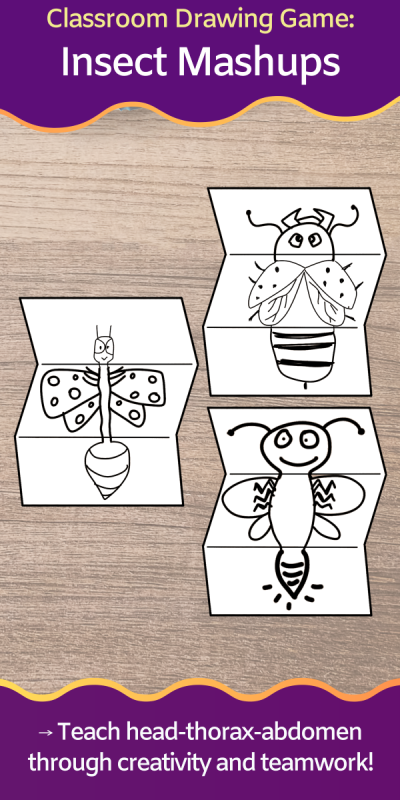
Insects drawn in 3 parts - head, thorax, and abdomen
text that says share this post

Insect Mashups is similar to the activity “Three Part Monster”. This is a playful insect drawing activity that reviews the three insect body segments (head, thorax, and abdomen) through drawing and teamwork.

Before we dive in: If youโ€™re an educator planning to use this game to teach head-thorax-abdomen, I’ve got something you will love. Printable directions for this activity are included in my Insects Unit – a complete set of activities and printables for teaching insects (plus youโ€™ll support my blog with your purchase! โค๏ธ)

Materials

This is a simple activity that can be done with minimal supplies. All you need is:

  • Paper
  • Drawing supplies
  • Creativity!

Directions

an insect drawn in three parts: head, thorax, and abdomen
Insect mashups drawing activity

Here’s how to play Insect Mashups:

  1. Students will play this game in groups of three.
  2. Before starting, instructors should introduce insect anatomy, emphasizing the three main body segments: head, thorax, and abdomen.
  3. Fold a paper to divide it into 3 equal sections.
  4. On the top section, the first student draws an insectโ€™s head. Remember to include the antennae, mouthpart, and eyes!
  5. The first student will fold the top section back, so that the head is hidden.
    • Tip: Leave the bottom of the neck visible below the crease, so that the next student knows where to start drawing the thorax.
  6. Without looking at the head, the second student draws an insectโ€™s thorax. Remember, the six legs and wings (if any) attach to the thorax โ€“ so draw those here too!
  7. The second student will fold the middle section back, so that the head and thorax are hidden.
    • Tip: Leave the bottom of the thorax visible below the crease, so that the next student knows where to start drawing the abdomen.
  8. The third student draws an insectโ€™s abdomen. Does it have a stinger? Stripes? Does the abdomen light up like a firefly? Be creative!
  9. Each group should unfold their paper together to reveal the unique insect they created as a team.

Find this activity and more in my complete Insects Unit

Thereโ€™s no need to scramble to put together the perfect insects lesson โ€“ Iโ€™ve already created it for you! This set includes all the printable materials you need for studying insects.

Explore more lessons from Wild Earth Lab:

If you enjoyed this post, I know you will love trying my other printable science and nature units in your classroom too!


Are you interested in reading more posts with educational activity ideas? Subscribe or follow Wild Earth Lab using the links below!


Subscribe, share, and comment: