Wild Earth Lab is supported by readers like you. This post includes links to my own products and affiliate products. If you purchase through links on my site, I may earn a small commission at no additional cost to you.
Birds of prey, or raptors, are top predators that can be found in almost any type of habitat, from coastal areas to mountains, wetlands to deserts, grasslands to forests. Some of these incredible birds can even adapt to live alongside humans in urban areas! Because they are so widespread, chances are your students have spotted a raptor at some point. These fierce but charismatic birds are sure to be a crowd-pleaser for students, and studying raptors provides a great opportunity to introduce topics like predation, food webs, and wildlife conservation into your classroom.
To help with your lesson planning, I’ve rounded up seven bird of prey activity ideas to try out with your class or homeschool group this school year!
1. Visit or volunteer at a raptor center

Raptor centers provide homes for injured birds of prey that can no longer survive in the wild, as well as raptor outreach and education for their local communities. You can learn all about raptors from the experts at your local raptor center or wildlife sanctuary while seeing these amazing birds up close! Many Raptor centers offer tours to school groups and homeschoolers, and some have outreach programs that will come to your school!
2. Do a raptor art project

Some of my favorite bird-of-prey activities! Get artsy with a raptor-themed craft or art project! Here are a few to try out:
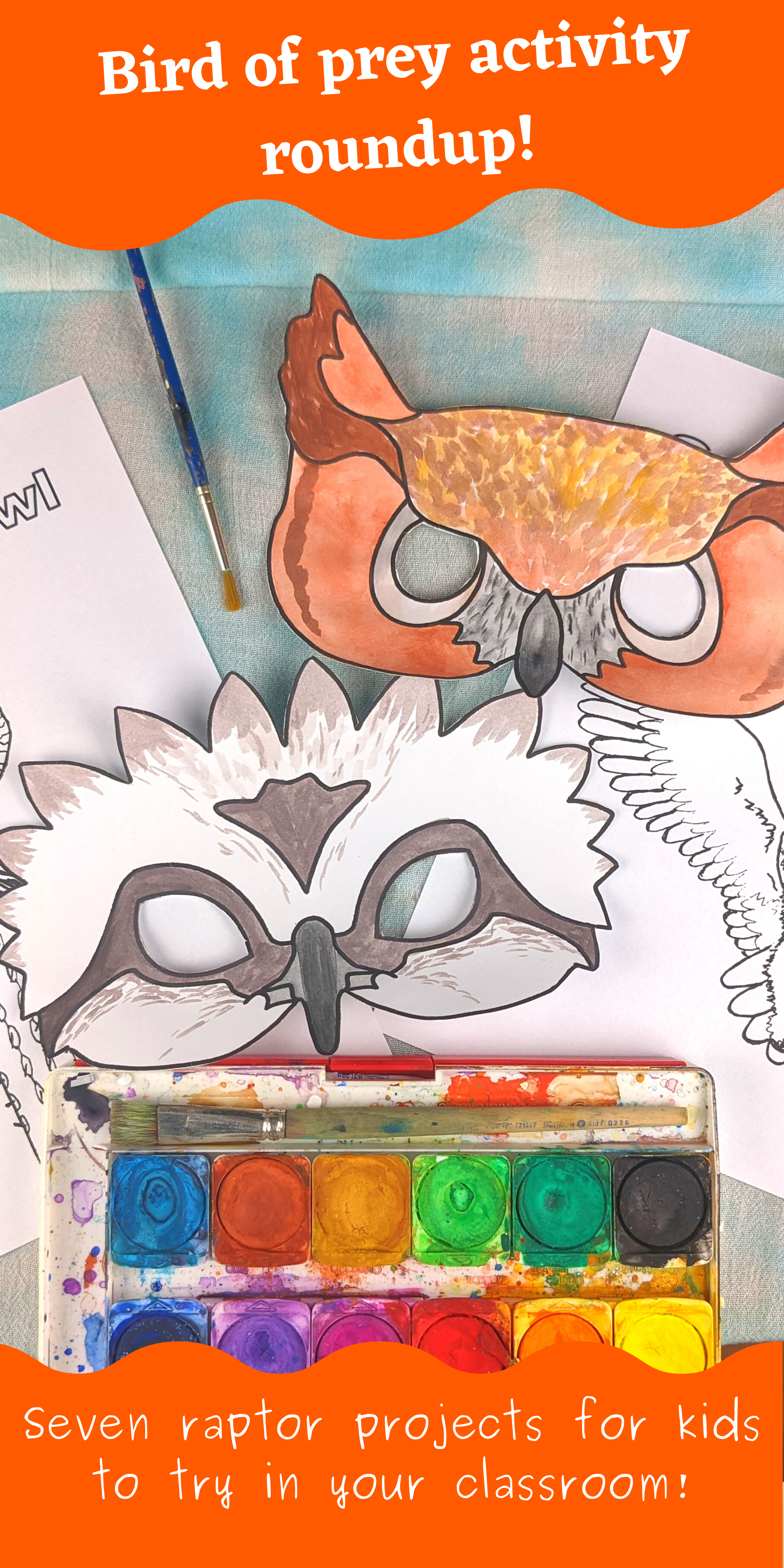
- My Birds of Prey unit includes raptor masks that you can decorate with paint, markers, glitter glue, or any medium of your choosing!
- The Audubon Society offers this owl drawing tutorial with free printable worksheets!
- Also check out this Audubon Society article about how to write a cinquain poem about raptors!
- Try out Boulder County Nature Detective’s “Questing for Kestrels”: including kestrel information and an origami activity!
3. Dissect an owl pellet

There’s no better hands-on way to learn about bird of prey diets than directing an owl pellet! After eating, owls regurgitate the parts of their food that they cannot digest, like fur, bones, and beaks. Sometimes you can find whole skeletons of mice, voles, and songbirds inside of owl pellets!
You may be able to order owl pellets through your local raptor center! If you don’t have a local raptor center, you can order owl pellets online through these raptor centers:
4. Research a favorite raptor

Research a favorite local bird of prey online or at your local library. Print my free wildlife research project worksheets for taking notes! You can also click here to see a list of online wildlife reference websites that I’ve put together to help you complete this bird of prey activity.
5. Head outside for a day of bird-watching

Nothing beats seeing raptors in their habitats! Birds of prey can be found in all sorts of different environments, from forests to grasslands, wetlands to deserts, coasts to mountains! They can even be found adapting to live in urban areas alongside humans, in some cases! If you head out hoping to see a raptor, keep in mind that it’s often easiest to see birds of prey around open, grassy fields where they can hunt.
Don’t forget to bring all the right equipment when you go bird watching. You’ll need:
- A pair of binoculars
- Sturdy footwear
- A bird ID guidebook – or my Birds of Prey ID Cards
- A camera (optional)
- A birding log (I love this one!)
6. Download a free bird of prey activity book

There are tons of free bird of prey activities on the web! Here are a few that I think you’ll love:
- The Raptor Center at the University of Minnesota offers free raptor activity books for several common raptors! Check them out here.
- The Eagle Valley Raptor Center has some owl activity books!
- Cascades Raptor Center: Activities, crafts, and more!
7. Read a Raptor Story!

Pictured books:
Baby Owls by Martin Waddel
The Book of North American Owls by Helen Roney Sattler
Guide to Backyard Birds of the Front Range by the Bird Conservancy of the Rockies
There’s no shortage of raptor children’s books! Here are some reading lists of raptor stories. Or just ask a librarian at your local library for recommendations!
- Delaware Vallery Raptor Center put together a Birds of Prey reading list!
- Cascades Raptor Center: reading list.
- The Teton Rapor Center offers a reading list organized by grade level.
8. Learn about what makes a bird a raptor!
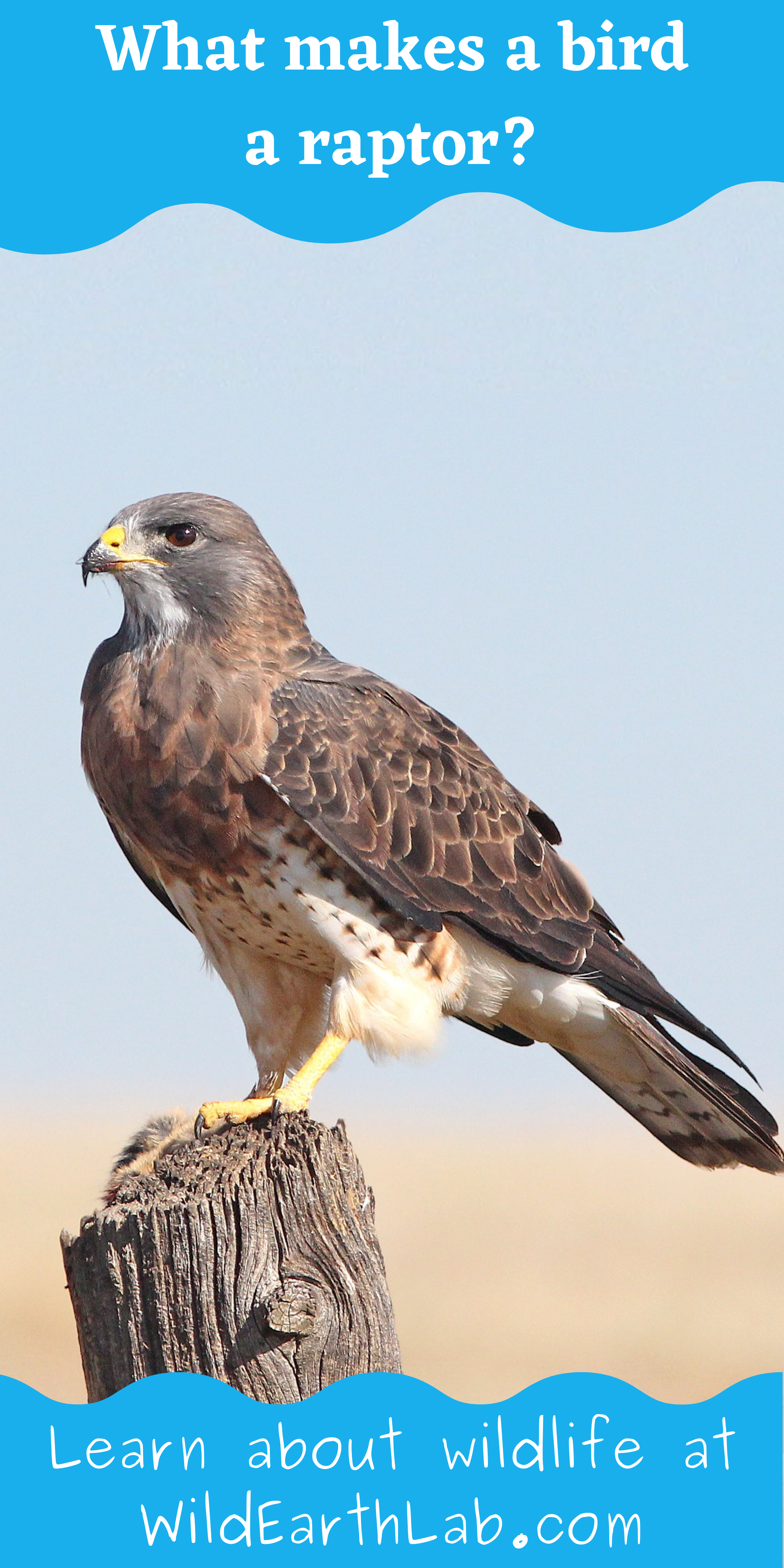
Students can learn about what makes a bird a raptor! Read my post about what makes a bird a raptor!

What makes a bird a raptor? Five characteristics of birds of prey
What is a raptor? A raptor is a predatory bird, with sharp talons, a hooked beak, and keen eyesight. Raptors are also sometimes called birds of prey. There are many different types of birds of prey, including eagles, hawks, owls, falcons, vultures, ospreys, and kites. Birds of prey come in many different sizes: from the American kestrel, the smallest of falcons, which is not much larger than a blue jay, to the golden eagle, which can have a wingspan…

9. Study Birds of Prey with Wild Earth Lab!
Even more bird of prey activities!
If you loved these bird of prey activity ideas, I know you will love this complete unit! Check out my birds of prey unit, featuring my watercolor artwork of common raptors!

Are you interested in more science and nature learning activities? Subscribe or follow Wild Earth Lab using the links below!
References and Further Reading
- Cornell Ornithology Lab (n.d.). AllAboutBirds. Available: http://www.allaboutbirds.org
- The National Audubon Society (n.d.). Audubon.org. Available: http://www.audubon.org
- Urban Raptor Concervancy (n.d.). Available: https://urbanraptorconservancy.org/